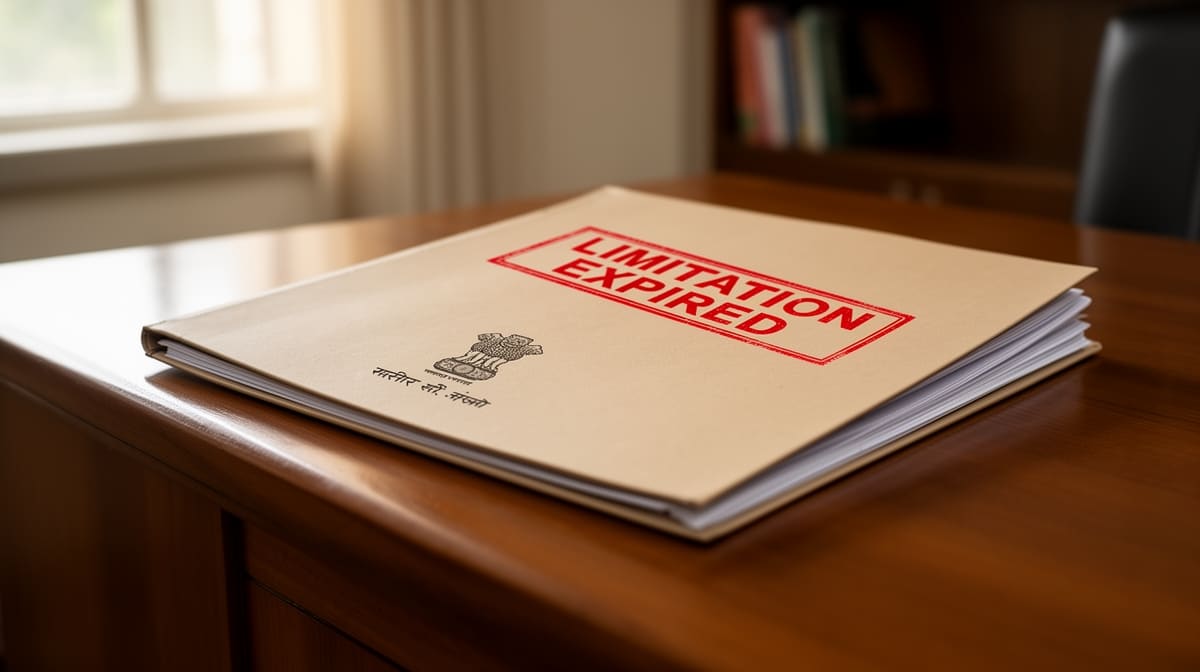
The Andhra Pradesh High Court has delivered a decisive clarification on the limits of judicial leniency toward state agencies seeking condonation of delay in criminal proceedings. In a significant ruling, the Court emphasized that administrative inefficiency and bureaucratic inertia cannot substitute for genuine, justifiable reasons under Section 5 of the Limitation Act, especially when the delay exceeds five years.
Background & Facts
The Dispute
The petitioners, management of Lekcon Infrastructure Private Limited and its representative, were discharged by a Judicial Magistrate in 2018 in a case registered under Sections 41, 102, and 120(b) of the Indian Penal Code, Section 13(2) of the UAPA, and Sections 4 and 20(A) of the Telegraphic Act. The prosecution, aggrieved by the discharge order, filed a criminal revision petition before the Sessions Court in 2024 - after a delay of 1803 days.
Procedural History
- 2016: Crime No. 2 of 2016 registered against petitioners.
- 2017: Charge sheet filed; cognizance taken as C.C. No. 30 of 2017.
- 2018: Magistrate discharged accused on 09.04.2018.
- 2021: Prosecution’s earlier revision petition against refusal of further investigation was dismissed.
- 2023: Prosecution filed Crl.M.P. No. 731 of 2023 seeking condonation of 1803-day delay.
- 2024: Sessions Judge condoned the delay, prompting this criminal revision.
Relief Sought
The petitioners sought setting aside of the Sessions Judge’s order condoning delay, arguing that the explanation offered was legally insufficient and contrary to settled Supreme Court principles.
The Legal Issue
The central question was whether Section 5 of the Limitation Act, 1963 permits condonation of a delay of over five years based solely on administrative lethargy, departmental turnover, and an unsubstantiated belief that a prior application would succeed.
Arguments Presented
For the Petitioner
The petitioners contended that the prosecution’s explanation - attributing delay to belief in the success of a dismissed revision, change of Public Prosecutor, and COVID-19 - constituted mere excuses, not sufficient cause. They relied on Postmaster General v. Living Media India and Shivamma v. Karnataka Housing Board to argue that government entities must meet the same standard as private litigants. They emphasized that the Supreme Court has repeatedly held that bureaucratic delays cannot justify condonation.
For the Respondent
The Advocate General argued that the Sessions Judge exercised discretion properly, citing Collector, Land Acquisition v. MST Katiji and Bikramjit Singh v. State of Punjab. They claimed the delay arose from administrative complexities, including file transfers and verification by a new Public Prosecutor, and that the merits of the case justified leniency. They further argued that the discharge order was illegal due to lack of Special Court jurisdiction under UAPA.
The Court's Analysis
The Court undertook a rigorous doctrinal review of the evolving jurisprudence on condonation of delay, particularly as it applies to state litigants. It held that the Sessions Judge erred by conflating the merits of the case with the question of sufficient cause.
"The purpose of Section 5 of the Limitation Act is not to determine whether the claim is legally or factually strong, but only whether the applicant had a reasonable justification for the delay."
The Court cited Shivamma v. Karnataka Housing Board to underscore that merit-based reasoning in delay applications is impermissible. It further held that the prosecution’s claim of "bona fide belief" in the success of a dismissed revision was speculative and legally untenable.
The Court rejected the reliance on the COVID-19 pandemic, noting that the limitation period had expired in 2019 - well before the pandemic’s onset in March 2020. It cited Delhi Development Authority v. Tejpal to affirm that pandemic-related extensions apply only to delays occurring within the specified window.
Crucially, the Court invoked Postmaster General v. Living Media India to declare that government departments are not entitled to a different standard. Administrative turnover, file delays, and procedural red tape cannot be accepted as sufficient cause. The Court observed:
"The law shelters everyone under the same light and should not be swirled for the benefit of a few."
The Sessions Judge’s failure to analyze whether the explanation inspired confidence, or to address the absence of any bona fide effort, rendered the order legally unsustainable.
The Verdict
The petitioners succeeded. The High Court set aside the Sessions Judge’s order condoning the 1803-day delay. The Court held that administrative lethargy does not constitute sufficient cause under Section 5 of the Limitation Act, and that state agencies must demonstrate genuine, credible reasons for delay - no less than private litigants.
What This Means For Similar Cases
Delay Cannot Be Excused by Bureaucratic Inertia
- Practitioners must now challenge condonation applications by state agencies on the ground that "file pending" or "change of officer" are legally insufficient.
- Courts must scrutinize whether the explanation inspires confidence, not merely whether it is plausible.
- Any delay exceeding one year by a government litigant must be justified with documentary evidence of active steps taken.
Merits of the Case Are Irrelevant to Condonation
- Lawyers must avoid arguing the strength of the underlying case when opposing or supporting condonation.
- Courts must confine their inquiry strictly to the cause of delay, not the likelihood of success.
- A strong case on merits cannot override the doctrine of limitation; this judgment reinforces that boundary.
Pandemic Extensions Are Time-Bound
- COVID-19-related extensions under Supreme Court orders apply only to limitation periods expiring between 15.03.2020 and 23.02.2022.
- Any delay occurring before March 2020 cannot be revived by invoking pandemic-related relief.
- Practitioners must verify the exact date of limitation expiry before invoking pandemic exceptions.