The Delhi High Court has clarified that trademark protection cannot be extended to generic dictionary words merely because they form part of a composite mark, even when the mark has substantial market presence. The judgment reinforces that courts must evaluate the overall impression of marks, not isolated components, and that transient consumer confusion does not automatically justify injunctive relief.
Background & Facts
The Dispute
The appellant, Mountain Valley Springs India Private Limited, has used the composite trademark 'FOREST ESSENTIALS' since 2000 and claims to have marketed baby care products under variations such as 'FOREST ESSENTIALS BABY' and 'FOREST ESSENTIALS - BABY ESSENTIALS' since 2006. It alleges that the respondent, Baby Forest Ayurveda Private Limited, adopted the mark 'BABY FOREST' and a similar tree logo to deliberately mimic its brand, causing consumer confusion. The appellant further claims the respondent changed its corporate name from Landsmill Healthcare to Baby Forest Ayurveda in late 2022 to capitalize on its goodwill.
Procedural History
- 2020: Respondent registered 'BABY FOREST' in multiple classes under the Trade Marks Act, 1999.
- 2022: Respondent commenced sales under 'BABY FOREST' with promotional expenditure of Rs. 1.9 crores.
- May 2023: Appellant filed suit for infringement and passing off, seeking interim injunction.
- August 2023: Respondent undertook not to use 'SAUNDARYA' and 'BABY ESSENTIALS' in court proceedings.
- May 2024: Single Judge dismissed interim injunction application.
- February 2026: Appeal heard by Division Bench of Delhi High Court.
Relief Sought
The appellant sought an interim injunction restraining the respondent from using 'BABY FOREST' and 'BABY FOREST - SOHAM OF AYURVEDA', alleging deceptive similarity, passing off, and malicious adoption of its brand.
The Legal Issue
The central question was whether the composite mark 'FOREST ESSENTIALS' grants the appellant exclusive rights over the word 'FOREST' in baby care products, and whether transient initial confusion, without evidence of lasting deception, suffices to grant an interim injunction in a passing off claim.
Arguments Presented
For the Appellant
The appellant relied on Cadila Health Care Ltd. v. Cadila Pharmaceuticals Ltd. and Pernod Ricard India Pvt. Ltd. v. Karanveer Singh Chhabra to argue that 'FOREST' had acquired secondary meaning through long-term use and advertising. It cited Shree Nath Heritage Liquor v. Allied Blenders & Distillers and Amba Shakti Steels Ltd. v. Sequence Ferro Private Limited to assert deceptive similarity. It emphasized actual confusion evidenced by hotel emails, Google search predictions, and social media queries. It contended that the respondent’s adoption of 'BABY FOREST' was mala fide, citing its name change and withdrawal of 'BABY ESSENTIALS' as admissions of bad faith.
For the Respondent
The respondent relied on Wander Ltd. v. Antox India P. Ltd. to argue that the Single Judge’s discretion should not be disturbed on appeal. It contended that 'FOREST' is a generic term in Ayurvedic and cosmetic sectors, with over 100 registrations containing the word. It cited Cadila and Pernod Ricard to argue that composite marks must be viewed as a whole and that the appellant had not established prior use of 'FOREST ESSENTIALS BABY' as a distinct sub-brand. It challenged the authenticity of the confusion evidence as litigation-driven and highlighted its own bona fide use since 2020.
The Court's Analysis
The Court began by reaffirming the limited scope of appellate review in interim injunction matters, citing Wander Ltd. to emphasize that courts must not substitute their discretion unless the lower court acted perversely or ignored settled law.
The Court applied the anti-dissection rule, holding that the appellant could not claim exclusive rights over the word 'FOREST' simply because it formed part of its composite mark 'FOREST ESSENTIALS'. The Court noted that the appellant itself had previously argued before the Trade Marks Registry that the combination of 'FOREST' and 'ESSENTIALS' was inherently distinctive, thereby acknowledging that neither word alone was registrable.
"The foundational principle in Trade Mark law is that the marks must be compared as a whole and not by dissecting them into individual components."
The Court further held that 'FOREST' is a dictionary word commonly used in the Ayurvedic and skincare industry to connote natural, herbal ingredients. The appellant failed to demonstrate that consumers exclusively associate 'FOREST' with its brand in the baby care segment, as required to establish secondary meaning.
Regarding the initial interest confusion argument, the Court acknowledged the Division Bench’s earlier observation in Under Armour Inc. v. Anish Agarwal that momentary confusion may suffice for infringement. However, it distinguished this from a passing off claim, where the burden is higher: the plaintiff must show likelihood of deception affecting goodwill. The Court found the evidence of confusion - emails from hotels, Instagram comments, and Google predictions - was either temporally suspect or insufficient to establish a prima facie case of deception.
The Court also rejected the appellant’s argument that the respondent’s name change and withdrawal of other marks amounted to mala fide. It held that these were strategic concessions, not admissions of copying, and did not establish dishonest intent under MAC Personal Care v. Laverana.
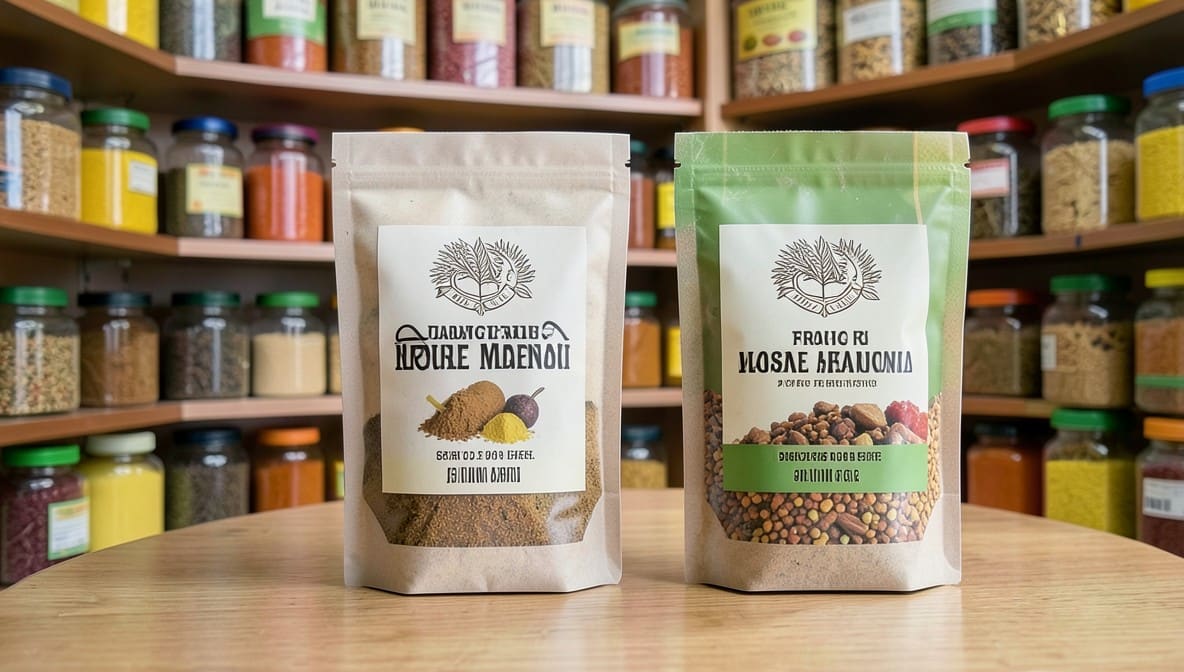
Finally, the Court found the trade dress, packaging, and logos of both parties to be visually distinct. The appellant’s tree logo had varied over time, undermining claims of consistent goodwill. The respondent’s sapling logo and overall presentation were materially different.
The Verdict
The appeal was dismissed. The Court held that the appellant failed to establish a prima facie case of deceptive similarity or likelihood of confusion. The word 'FOREST' is generic in the relevant market, and composite marks must be assessed holistically. The balance of convenience and risk of irreparable harm did not favor the appellant, and the Single Judge’s refusal of interim injunction was neither perverse nor legally erroneous.
What This Means For Similar Cases
Composite Marks Must Be Assessed As A Whole
- Practitioners cannot rely on isolated elements of a registered composite mark to claim exclusivity.
- Evidence must demonstrate that the entire mark, not its components, has acquired distinctiveness.
- Applications for registration of sub-brands (e.g., 'FOREST ESSENTIALS BABY') filed after litigation begins may be viewed as tactical, not evidentiary.
Initial Confusion Alone Is Insufficient for Injunction in Passing Off
- Transient or momentary confusion, even if proven, does not automatically satisfy the test for passing off.
- Courts require evidence of likelihood of deception affecting goodwill, not just momentary wonderment.
- Google search predictions and isolated social media comments are insufficient without corroborating consumer surveys or market data.
Generic Terms Cannot Be Monopolized Without Secondary Meaning
- Parties claiming rights over dictionary words must prove extensive, exclusive, and continuous use leading to consumer association.
- Registration of similar marks by third parties (e.g., 100+ registrations with 'FOREST') undermines claims of exclusivity.
- Evidence of use must be specific to the relevant product class - generic use in unrelated sectors does not establish secondary meaning.