The Central Administrative Tribunal set aside the respondents' reliance on a missed deadline and granted a compassionate-appointment police officer the benefit of the Old Pension Scheme, highlighting the equitable limits of laches where notice is lacking.
Background & Facts
The Dispute
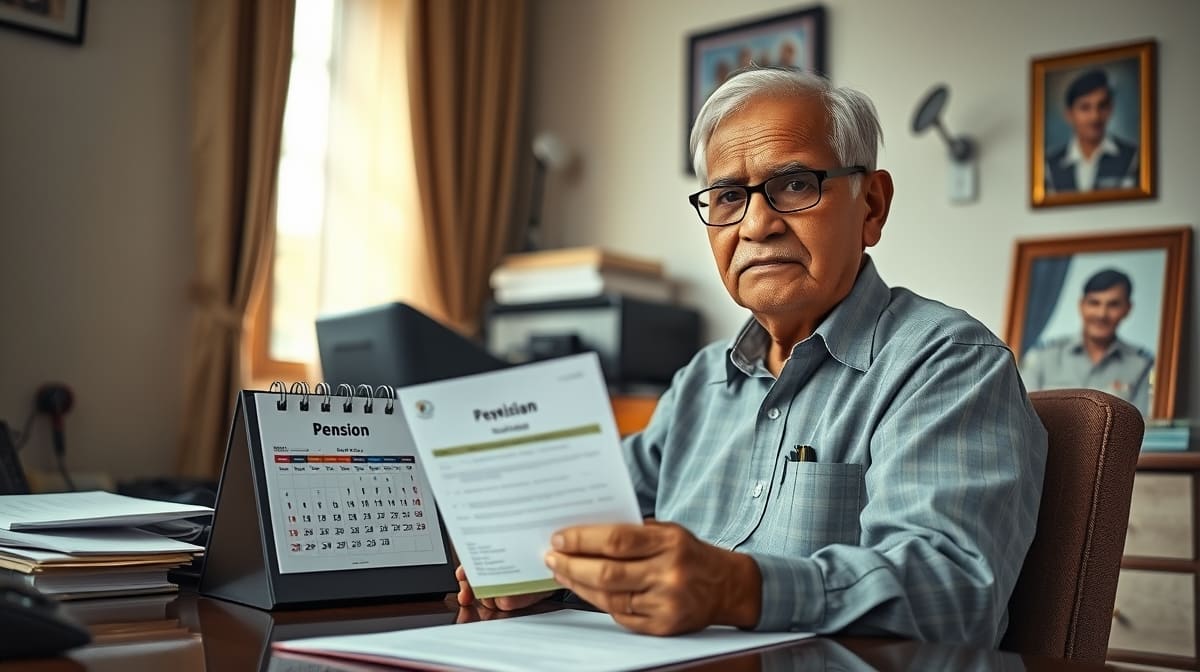
The applicant, Vineet Kumar, a former constable (Executive) in Delhi Police, sought to be placed under the Old Pension Scheme (OPS) instead of the New Pension Scheme (NPS) that applied to his post. He argued that the one-time option introduced by the Government of India in 2023 was not effectively communicated to him, and therefore he should not be penalised for missing the statutory deadline.
Key Facts
- 28.10.2003: Applicant's father, an ASI (Ex.) in Delhi Police, died of a heart attack.
- 14.11.2003: Applicant applied for a compassionate appointment.
- 25.11.2003: Physical measurement conducted.
- 18.10.2004: Recruitment order dated; applicant appointed as Constable (Executive) on 21.10.2004, placed under NPS because joining was after 01.01.2004.
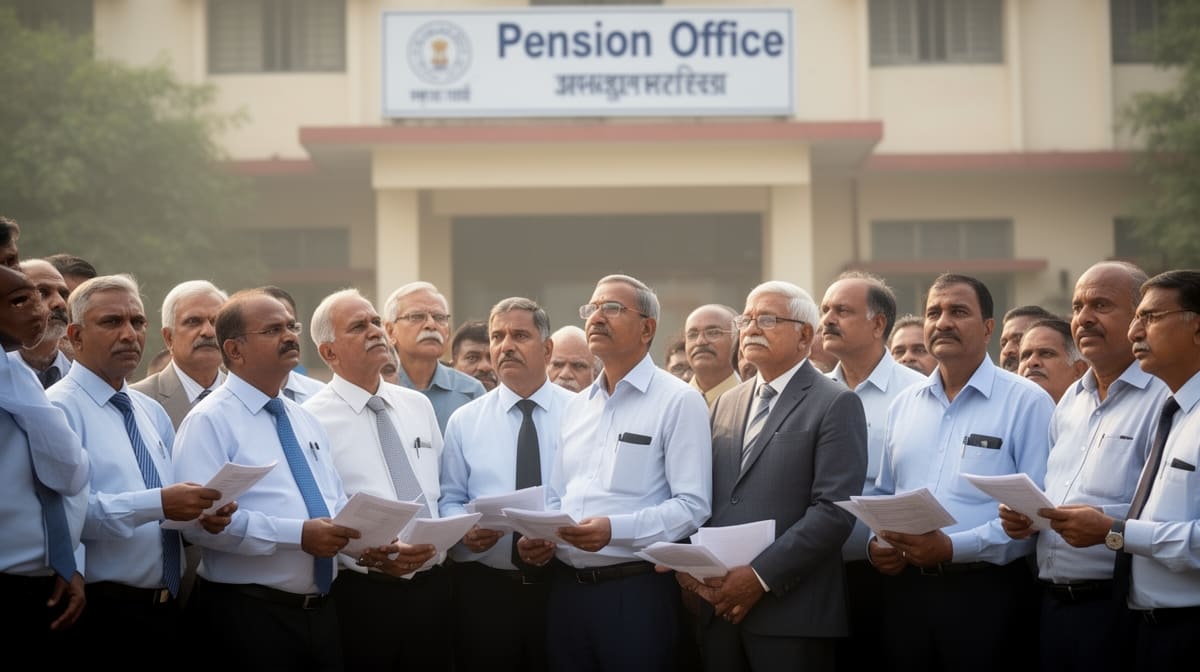
- 2020: Applicant and similarly situated officers requested OPS coverage; the request was rejected by order dated 28.08.2020.
- 03.03.2023: Government Office Memorandum (OM) provided a one-time option for employees recruited on or before 22.12.2003 but who joined after 01.01.2004 to shift from NPS to OPS.
- 22.05.2023: Delhi Police communication circulated the scheme, prescribing 16.06.2023 as the initial deadline.
- 13.07.2023: Further notification extended the deadline to 31.08.2023.
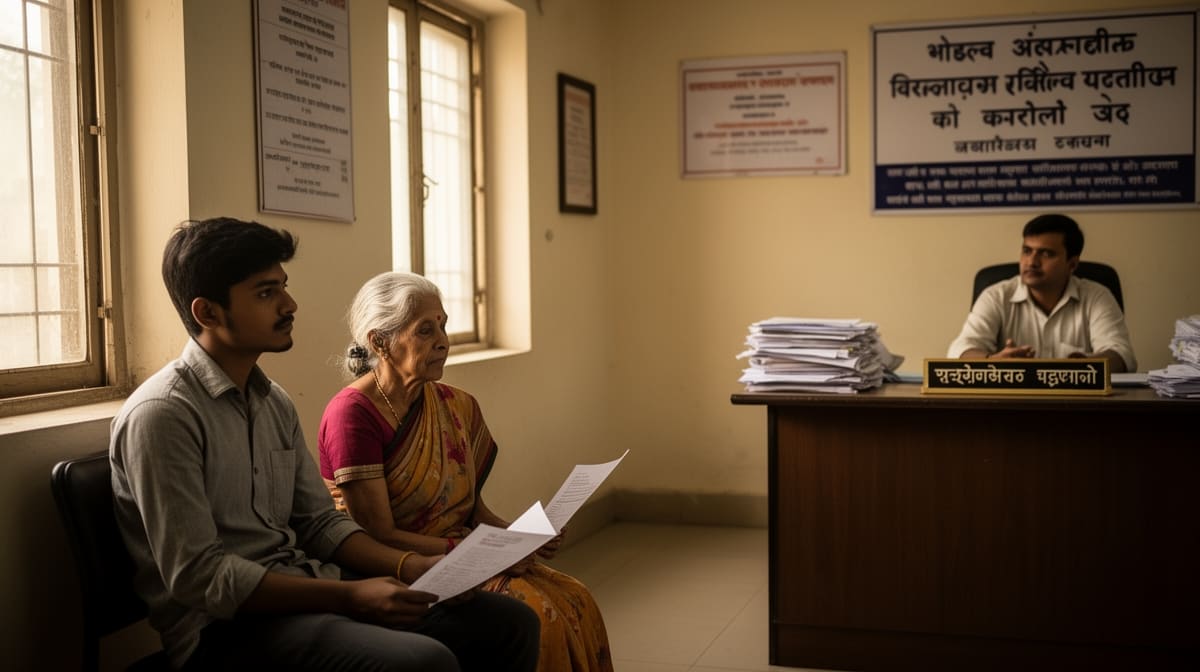
- 20.08.2024: Applicant submitted a representation seeking OPS coverage, claiming he was unaware of the 2023 notifications.
- 03.01.2025 and 27.03.2025: Respondents forwarded the representation to the PHQ, stating the deadline had expired.
- 22.06.2026: DOP&T issued an office order clarifying that the date of compassionate appointment application (14.11.2003) is the crucial date for OPS eligibility.
- 10.08.2026: Tribunal reserved the order.
- 20.08.2026: Tribunal pronounced the order granting OPS benefit.
Procedural History
- 14.11.2003: Compassionate appointment application filed.
- 21.10.2004: Appointment under NPS.
- 2020: Request for OPS coverage filed; rejected on 28.08.2020.
- 03.03.2023: Government OM introducing one-time OPS option.
- 22.05.2023: Delhi Police circular circulated.
- 13.07.2023: Notification extending option deadline to 31.08.2023.
- 20.08.2024: Applicant’s representation seeking OPS.
- 03.01.2025 & 27.03.2025: Respondents’ communications forwarding the representation.
- 22.06.2026: DOP&T office order on compassionate appointments.
- 10.08.2026: Order reserved by the Tribunal.
- 20.08.2026: Order pronounced.
Parties' Positions
- Applicant: Relied on the 2023 OM, argued lack of personal notice, cited the 2020 request and the Rohtash Kumar v. Commissioner of Police decision, and contended that the claim does not affect third parties.
- Respondents: Asserted that the applicant missed the statutory deadline of 31.08.2023, that the OM and subsequent notifications were publicly available, and that granting OPS solely on his claim would breach uniform policy.
Relief Sought
The applicant sought:
- Direction to grant the benefit of the Old Pension Scheme with all consequential benefits.
- Costs in his favour.
- Any other order the Tribunal deemed just and equitable.
The Legal Issue
The central question was whether the Tribunal could direct the respondents to allow the applicant to exercise the one-time option to shift from the New Pension Scheme to the Old Pension Scheme despite the applicant’s failure to meet the statutory deadline, considering the doctrines of delay, laches, and acquiescence.
Arguments Presented
For the Applicant
- The one-time option under the 03.03.2023 OM was a statutory right, and the applicant could not be penalised for not receiving the notification personally.
- The applicant’s earlier 2020 request demonstrated a continuous desire for OPS, constituting a “continuing wrong” that does not prejudice third parties.
- Cited Rohtash Kumar v. Commissioner of Police to argue that administrative failure to inform an employee warrants remedial action.
- Emphasised that the claim relates only to pension benefit, not seniority or promotion, and therefore the doctrine of laches should not bar relief.
For the Respondents
- The applicant missed the clear deadline of 31.08.2023; the OM and subsequent notifications were in the public domain.
- Uniform application of the policy is essential; granting OPS to a single employee would create inequity.
- Distinguished the applicant’s case from Rohtash Kumar on the basis that the latter involved a different factual matrix.
- Asserted that the applicant’s delay amounted to acquiescence and that the Tribunal should not override the statutory time-limit.
The Court's Analysis
The Tribunal examined the statutory framework governing pension schemes, the 2023 Office Memorandum, and the principles of delay, laches, and acquiescence.
"The balance of convenience lies in favour of the applicant as the respondents have not effectively established the fact that OM dated 03.03.2023 and time frame prescribed by the respondent authorities to avail option to opt OPS instead of NPS was ever personally served to the applicant."
The Tribunal noted that:
- The OM created a one-time option expressly for employees recruited before 22.12.2003 but joining after 01.01.2004. The applicant satisfied the recruitment criteria.
- The doctrine of laches applies where there is unreasonable delay causing prejudice to the other party. Here, the prejudice is minimal because the relief concerns only pension benefit, not seniority or promotion.
- Acquiescence requires a knowing, passive acceptance of the violation. The applicant’s claim of non-receipt of the notification negates the element of knowledge.
- The Tribunal relied on Bichitrananda Behra and Union of India v. Tarsem Singh to underscore that delay does not bar relief where the claim is based on a continuing source of injury and does not affect third-party rights.
- The Tribunal distinguished the respondents’ argument that the policy must be uniformly applied, observing that the purpose of the one-time option is to rectify past inequities, and the applicant’s situation falls squarely within its ambit.
- The Tribunal also considered the 2020 rejection as evidence of the applicant’s persistent pursuit of OPS, reinforcing the view that the claim is a continuing wrong rather than a belated grievance.
Consequently, the Tribunal concluded that equity demands granting the OPS benefit and that the respondents’ failure to demonstrate personal service of the notice defeats the defence of laches and acquiescence.
The Verdict
The Tribunal allowed the applicant’s petition. It directed the respondents to grant the benefit of the Old Pension Scheme to the applicant, to be effected within twelve weeks of receipt of a certified copy of the order. No order as to costs was made.
What This Means For Similar Cases
Delay and Laches Are Not Absolute Barriers
- Practitioners must assess whether the claim involves a continuing source of injury that does not prejudice third parties; if so, delay may be excused.
- Courts may look beyond strict deadlines where statutory relief is sought and the claimant can demonstrate lack of notice.
Notice and Communication Are Critical
- Employers and administrative bodies should ensure personal service or verifiable acknowledgment of statutory notifications, especially when rights are time-sensitive.
- Failure to prove actual notice can undermine a defence based on missed deadlines.
One-time Options Must Be Fairly Administered
- When a government order creates a one-time window, authorities must document dissemination and consider equitable relief for those who missed the window due to non-communication.
- Counsel should gather evidence of the claimant’s attempts to obtain information and any prior requests for the same benefit.
Takeaways for practitioners:
- Examine the nature of the relief (pension vs. promotion) to gauge laches applicability.
- Secure documentary proof of notice delivery.
- Cite relevant equitable principles (Bichitrananda Behra, Union of India v. Tarsem Singh) when arguing for relief despite delay.