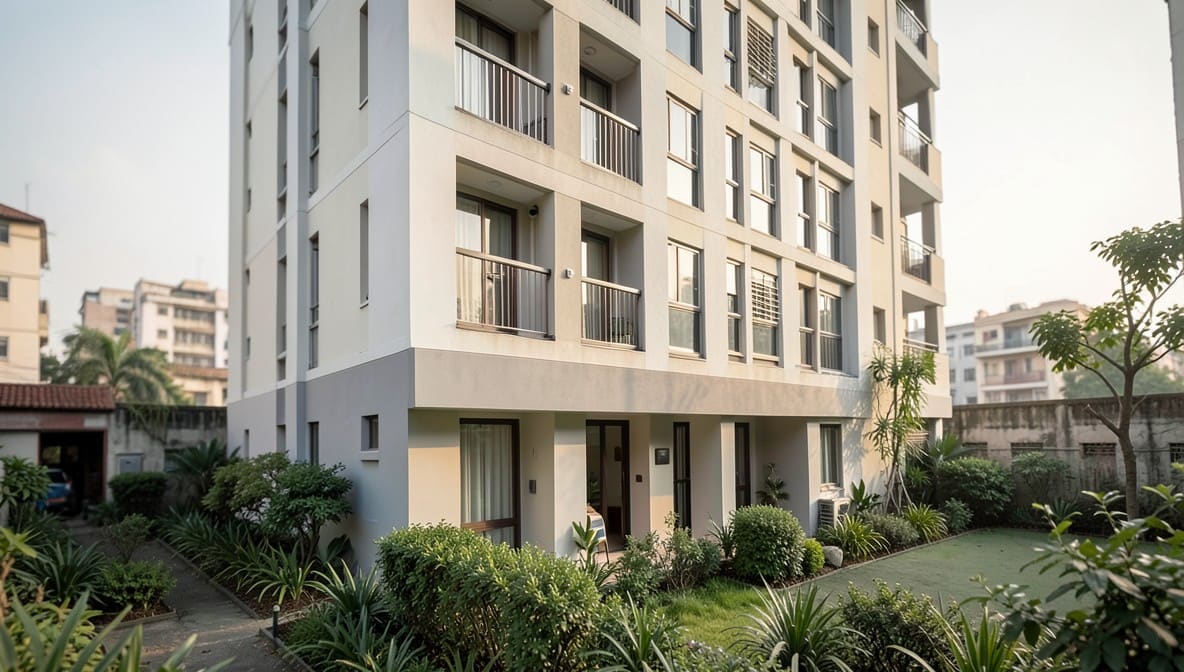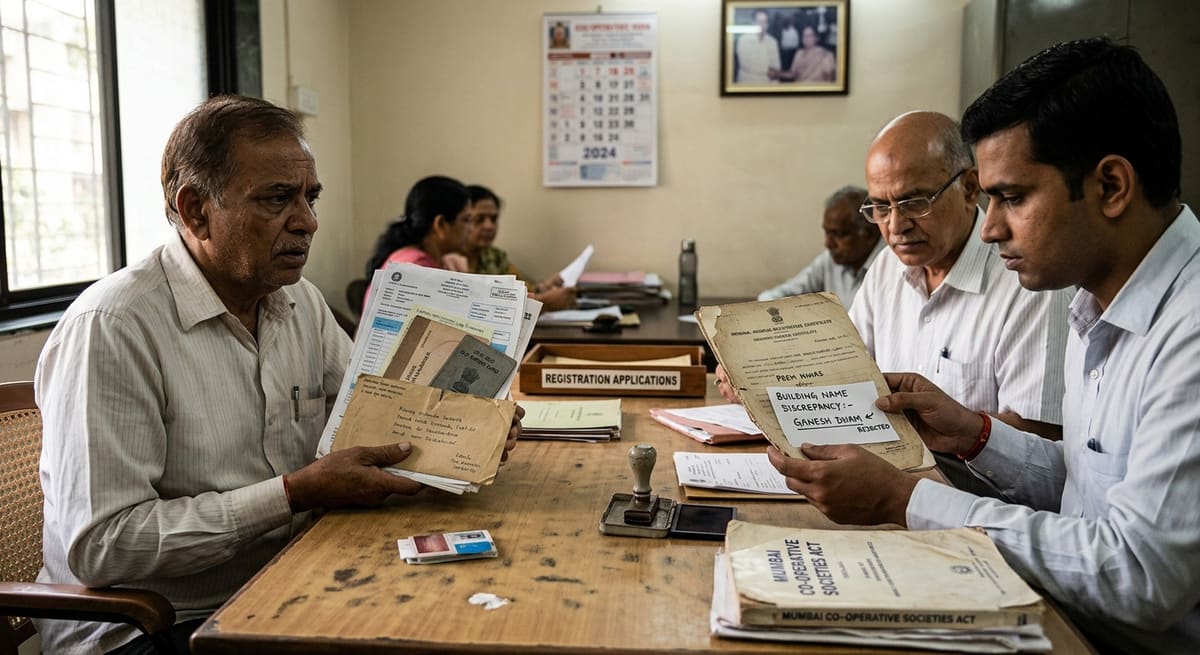
The Bombay High Court has affirmed that founder members of a co-operative housing society cannot be stripped of their rights through arbitrary internal resolutions, especially when statutory procedures for expulsion are ignored. The judgment reinforces that membership, once validated by statutory authorities, attains finality and cannot be undermined by majority will or procedural manipulation.
Background & Facts
The Dispute
The petitioner, Sudhakar Trimbak Wagh, was the Chief Promoter and founder member of Jai Himgiri Co-operative Housing Society, formed in 1977 for employees of Rashtriya Chemicals and Fertilizers Limited. He was listed as Serial No. 1 in the Government-approved membership list and paid share capital, membership fee, and land cost. Despite his foundational role, the Society’s managing committee, led by Respondent No. 2, allegedly collected Rs. 10,000 per member but issued receipts only for Rs. 1,000, retaining the balance without accounting. When the petitioner demanded transparency, he was sidelined, his name was moved to Serial No. 28 in the final membership list, and his membership was later declared "by inadvertence".
Procedural History
- 1984: Society passed resolution to restrict flat allotments to Managing Committee members.
- 1986: Society passed resolutions to cancel petitioner’s membership without following statutory procedure.
- 1990: Assistant Registrar set aside the cancellation under Section 79(2) of the Maharashtra Co-operative Societies Act, reinstating petitioner’s membership.
- 1994: Maharashtra State Co-operative Appellate Court confirmed the Assistant Registrar’s order.
- 2017: Co-operative Court directed allotment of Flat No. B-10 to petitioner but rejected his claim for a larger flat and compensation.
- 2022: Appellate Court dismissed both petitioner’s and Society’s appeals, affirming the Co-operative Court’s order.
Relief Sought
The petitioner sought: (1) allotment of a larger flat (730 sq. ft.) commensurate with his seniority and contribution; (2) compensation for financial loss due to denial of possession since 1988; (3) declaration that the Society’s flat allotment process was discriminatory and illegal; and (4) costs.
The Legal Issue
The central question was whether a founder member’s membership, once confirmed by statutory authorities under the Maharashtra Co-operative Societies Act, can be nullified by subsequent internal resolutions, and whether denial of flat allotment entitles the member to compensation for financial and practical hardship.
Arguments Presented
For the Petitioner
The petitioner relied on State of Maharashtra v. Sureshchandra and Rajendra Singh v. Co-operative Society to argue that membership, once validated by the Assistant Registrar and affirmed on appeal, attained finality under Section 79(2) of the Act. He contended that the Society’s attempt to label him a "member by inadvertence" was legally untenable and violated Section 35, which mandates a three-fourths majority, notice, and Registrar approval for expulsion. He cited documentary evidence of cheques sent via registered post, admitted by Society witnesses, to prove payment of Rs. 62,348. He argued that the Society’s flat allotment process was arbitrary, lacked transparency, and violated principles of equality and natural justice.
For the Respondent
The Society contended that the petitioner was listed in Form A for a smaller flat (Rs. 75,000) and had defaulted on payments, having paid only Rs. 18,247 against a cost of Rs. 1,10,000. It relied on K. R. Srinivasan v. Co-operative Society to argue that seniority alone cannot override flat size entitlements. It claimed the General Body resolution of 20 July 1987, granting first choice to Managing Committee members, was lawful and unchallenged. It further argued that concurrent findings of fact by two lower courts on payment default and flat entitlement could not be disturbed.
The Court's Analysis
The Court examined the statutory framework under the Maharashtra Co-operative Societies Act, particularly Sections 35 and 79(2), and the doctrine of finality of statutory orders. It held that the Assistant Registrar’s 1990 order, confirmed by the Appellate Court in 1994, was binding and could not be reopened by the Society through post-hoc justifications. The Court emphasized that "member by inadvertence" is not a statutory term and cannot override a legally confirmed membership.
"The findings recorded by the Assistant Registrar and affirmed on appeal attained finality. The Society cannot now attempt to question the membership by using a different expression such as describing the Petitioner as a 'member by inadvertence'."
Regarding payments, the Court rejected the Society’s claim of persistent default. It noted that the petitioner had submitted cheques via registered post, envelopes were opened in court, and Society witnesses admitted some cheques were returned on technical grounds. The absence of any documented reason for refusal rendered the default allegation unsustainable.
On flat allotment, the Court found the process discriminatory. The Society’s claim that larger flats were allotted based on contribution or effort was unsupported by contemporaneous records. The resolution of 20 July 1987 merely ratified a pre-determined outcome, violating principles of fairness. The Court held that the petitioner, as Chief Promoter, was entitled to equitable treatment.
On compensation, the Court recognized the petitioner’s prolonged deprivation. He had lived in employer quarters and later rented accommodation for nearly four decades. The flat allotted to him (B-10) was not vacant but occupied by others. The Court concluded that the difference in value between the smaller flat (Rs. 75,000) and the larger flat (Rs. 97,000) - Rs. 22,000 - constituted fair compensation for the loss of opportunity.
The Verdict
The petitioner won. The Bombay High Court held that founder member status, once confirmed by statutory authorities, cannot be nullified by internal resolutions. The Society’s flat allotment process was discriminatory, and the petitioner is entitled to compensation of Rs. 22,000 plus 7% interest from 1988 for the denial of a larger flat. The Society’s petition was dismissed.
What This Means For Similar Cases
Membership Finality Is Statutorily Protected
- Practitioners must argue that any attempt to revoke membership after statutory confirmation is void ab initio.
- Co-operative societies cannot use terms like "inadvertent membership" to circumvent Section 35 procedures.
- Once the Assistant Registrar or Appellate Court confirms membership, the matter is res judicata.
Compensation for Delayed Allotment Is Justifiable
- Financial loss due to prolonged denial of possession, even without direct monetary loss to the society, can be compensated.
- Courts may award compensation based on the difference in flat value if larger accommodation is no longer available.
- Interest from the date of expected allotment (e.g., 1988) is a reasonable remedy for long-term deprivation.
Transparent Allotment Procedures Are Mandatory
- Allotment of flats must follow fair, non-discriminatory criteria - seniority, contribution, or draw of lots - documented at the time of planning.
- Post-hoc resolutions justifying preferential allotment to office-bearers are invalid if no prior policy existed.
- Evidence of preferential treatment must be rebutted with contemporaneous records, not retrospective justifications.