The suspension of a customs broker’s license for failing to verify client identity and ignoring clear scanning alerts in a major heroin smuggling case underscores the non-negotiable duty of due diligence under the Customs Brokers Licensing Regulations, 2018. This decision reaffirms that brokers cannot rely on surface-level documentation when national security is at stake.
Background & Facts
The Dispute
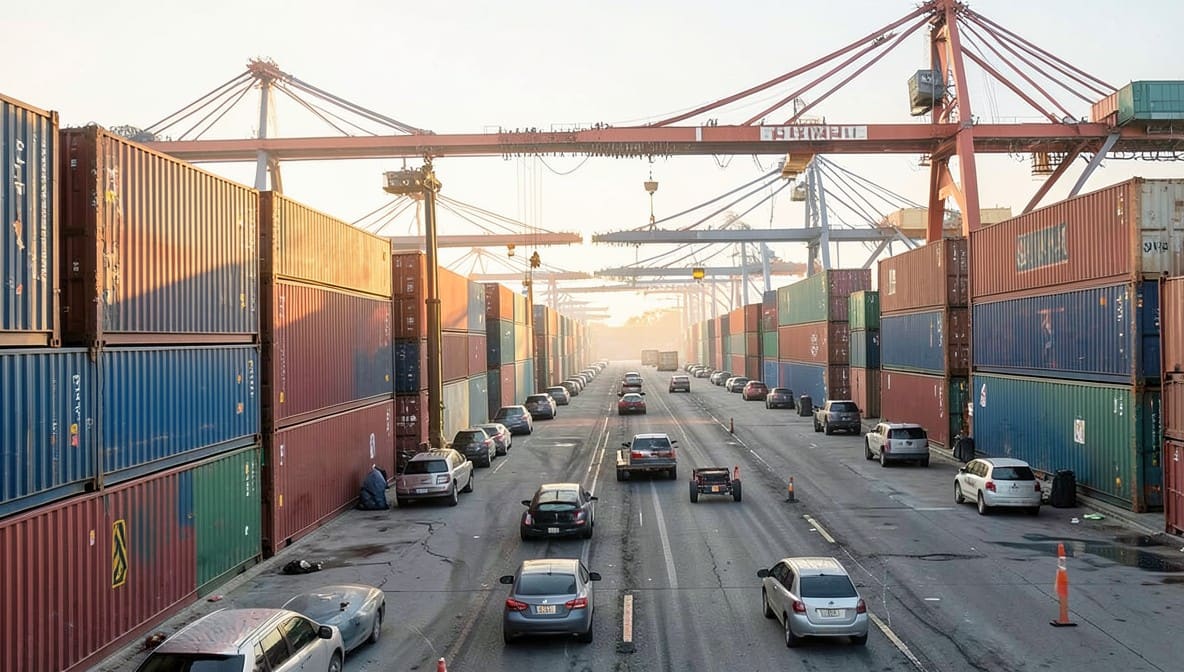
The appellant, Saarthee Shipping Co., acted as a customs broker for M/s Vyom Fashion, which imported a consignment from Iran declared as semi-processed talc stone. The container was red-flagged by Mundra Port’s scanning system for "container mismatch," triggering mandatory 100% examination under Public Notice No. 01/2018-19. Despite this, only one package was opened during examination, and the broker failed to insist on full compliance. Subsequent investigation by the National Investigation Agency revealed 2,988 kg of heroin concealed in the shipment.
Procedural History
- March 2021: Bill of Entry filed by appellant for consignment from Iran
- March 2021: Container scanned at Mundra Port; flagged for 100% examination
- 2021 - 2025: National Investigation Agency conducts investigation into smuggling network
- July 2025: Directorate General of Vigilance submits report to CBIC recommending action against broker
- 29 July 2025: Commissioner of Customs suspends broker’s license under Regulation 16(1) of CBLR, 2018
- 28 August 2025: Suspension order confirmed by Commissioner
- November 2025: Appeal filed before CESTAT Ahmedabad
Relief Sought
The appellant sought quashing of the suspension order, arguing delay of over four years, lack of urgency, violation of natural justice, and absence of intentional misconduct. It relied on multiple precedents where suspension was set aside due to lapse of time.
The Legal Issue
The central question was whether a customs broker can be suspended under Regulation 16(1) of CBLR, 2018 for failure to exercise due diligence - even without proof of intentional collusion - when critical regulatory obligations under Regulations 10(d), 10(e), 10(f), and 10(n) were clearly breached in a case involving national security and large-scale narcotics smuggling.
Arguments Presented
For the Appellant
The appellant contended that the suspension was unjustified due to the four-year delay between the import and the order, arguing that the power of suspension under Regulation 16(1) is an emergency measure meant for immediate threats. It cited multiple precedents including Perfect Cargo & Logistics v. Commissioner of Customs and Airmasters Freight Services v. CC, where suspension was overturned due to inordinate delay. It further claimed it had verified the IEC and GSTIN numbers and relied on documents provided by a person claiming to be the importer’s accountant, asserting good faith compliance.
For the Respondent
The Revenue countered that the broker’s failure to verify the identity of the person submitting documents, ignore the red-flagged container scan, and conduct a 100% examination constituted clear violations of Regulation 10(n) (verification of client identity) and Regulation 10(e) (due diligence). It relied on Commissioner of Customs v. K.M. Ganatra & Co., where the Supreme Court affirmed that a customs broker’s duty is fiduciary and breach - even without intent - is sufficient to invoke disciplinary action. The Revenue emphasized the gravity of the offense: smuggling nearly three metric tons of heroin, threatening national security and public health.
The Court's Analysis
The Tribunal rejected the appellant’s reliance on precedents involving delayed suspension, distinguishing them on grounds of context. In those cases, the violations were minor or administrative; here, the breach occurred in the context of a massive narcotics smuggling operation. The Court held that the gravity of the offense and the broker’s failure to act on clear statutory and public notice directives rendered the suspension not only justified but necessary.
"The CHA occupies a very important position in the Customs House... A lot of trust is kept in CHA by the importers/exporters as well as by the Government Agencies. To ensure appropriate discharge of such trust, the relevant regulations are framed."
The Court emphasized that Regulation 10(n) required independent verification of client identity - not mere acceptance of documents presented by an unverified individual. The authorization letter provided did not name the person who interacted with the broker, nor was it endorsed to the broker. The broker also ignored the explicit instruction under Public Notice No. 01/2018-19 to conduct 100% examination, which was triggered by a red flag. The Tribunal noted that the consignment’s nature (talc stone from a textile trader) should have raised red flags, yet no additional scrutiny was applied.
The Court acknowledged the hardship caused to the broker’s employees but held that public interest in preventing narcotics trafficking outweighs the temporary disruption to livelihood. It directed the Commissioner to complete the ongoing inquiry within the timelines prescribed under CBLR, 2018, to ensure procedural fairness.
The Verdict
The appeal was dismissed. The Court upheld the suspension of the customs broker’s license, holding that failure to exercise due diligence in verifying client identity and ignoring mandatory examination protocols constitutes sufficient grounds for suspension under Regulation 16(1) of CBLR, 2018, even without proof of criminal intent, particularly in cases involving narcotics smuggling and national security.
What This Means For Similar Cases
Due Diligence Is Not Optional
- Practitioners must verify client identity using independent, authenticated sources - not just documents handed over by intermediaries
- A client’s apparent legitimacy (e.g., valid IEC/GSTIN) does not absolve the broker of the duty to investigate unusual transactions
- Brokers must cross-check the nature of goods against the client’s declared business activity
Red Flags Demand Action, Not Excuses
- Public notices issued by customs authorities are binding operational directives
- Ignoring a "container mismatch" alert or failing to insist on 100% examination constitutes a material breach of Regulation 10(e)
- Brokers must document their verification steps; oral assurances are insufficient
Suspension Is Not Punitive - It Is Preventive
- Suspension under Regulation 16(1) is not contingent on final conviction or intent
- Delay in initiating suspension does not invalidate the order if the underlying breach is serious and ongoing
- Brokers must anticipate that involvement in high-risk smuggling cases will trigger immediate regulatory action, regardless of time elapsed