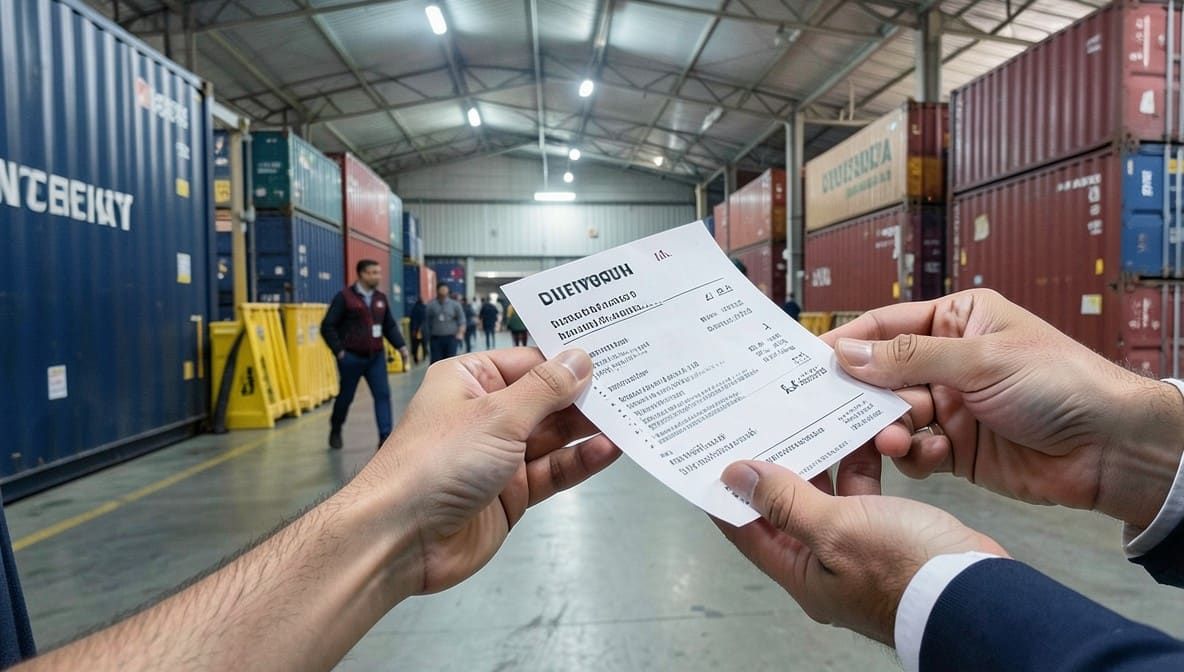
The Calcutta High Court has clarified that a customs broker cannot be penalized under Section 114(iii) of the Customs Act, 1962 merely for failing to physically meet an exporter or verify their premises, where documentary KYC compliance has been established. The judgment reinforces the limited scope of a broker’s obligations under the Customs Broker Licensing Regulations, 2018, and underscores the necessity of a specific finding of abetment for penal liability.
Background & Facts
The Dispute
The petitioner, Sudipta Bose, proprietor of M/s Bose Enterprise, acted as an authorized Customs Broker for M/s KSH International, an exporter seeking to ship energy drinks to Balaji Food Stuff Trading LLC, UAE. Five Shipping Bills dated 23.01.2024 were filed through the petitioner, declaring a total FOB value of Rs.2,59,40,250 and claiming export incentives totaling Rs.1,37,138.09 under Drawback and RoDTEP schemes. The consignment was subjected to 100% examination on 29.01.2024, leading to seizure on 16.02.2024 under Section 110(1) of the Customs Act, 1962, due to suspected overvaluation and misdeclaration.
Key Facts
- The consignment contained two types of beverages: 9,504 pink 250ml PET bottles labeled "Quarter Energy Drink" and 6,3936 red 180ml PET bottles labeled "RoohAfza Red Rush".
- The declared gross weight was 24,300 kgs; actual gross weight (excluding container tare) was 15,410 kgs.
- Labels on bottles indicated "For Export Only", while crate stickers bore MRP values of Rs.480 and conflicting manufacturing/use-by dates.
- Samples tested by FSSAI confirmed that the "Quarter Energy Drink" was unsafe; "RoohAfza Red Rush" complied with standards.
- Manufacturers Hamdard Laboratories and Balaji Agro Foods confirmed their wholesale prices were significantly lower than the declared FOB value.
- The petitioner received export documents from Shri Hariom Mishra, an intermediary, and verified the following KYC documents: Authorisation Letter, Customer Information Sheet (bank-verified signature), cancelled cheque, PAN Card, and GST Registration Certificate.
- The petitioner filed the Shipping Bills on 23.01.2024; the container arrived on 24.01.2024.
- Voluntary statements under Section 108 were recorded from the petitioner on 20.02.2024 and 21.10.2024, and from Shri Hariom Mishra on 07.08.2024 and 26.11.2024.
- Provisional release of the RoohAfza consignment was granted on 13.05.2024 upon execution of a bond for Rs.1,84,27,953.60 and a bank guarantee of Rs.60,00,000.
Procedural History
- 23.01.2024: Five Shipping Bills filed by M/s Bose Enterprise on behalf of M/s KSH International.
- 29.01.2024: 100% examination of container conducted at Transworld Terminals CFS.
- 16.02.2024: Goods seized under Section 110(1) of the Customs Act, 1962.
- 20.02.2024: First voluntary statement recorded from petitioner under Section 108.
- 07.08.2024: Shri Hariom Mishra summoned; denied knowledge of consignment.
- 30.09.2024: Second summons issued to petitioner.
- 21.10.2024: Second voluntary statement recorded from petitioner.
- 13.02.2025: Show Cause Notice issued to petitioner under Section 114(iii) alleging failure of due diligence.
- 01.05.2025: Petitioner filed written reply, citing KYC compliance and judicial precedents.
- 22.07.2025: Additional Commissioner of Customs (Export) passed order imposing penalty of Rs.50 lakh.
- 27.04.2026: Writ Petition (WPO 679 of 2025) decided by Calcutta High Court.
The Parties' Positions
Petitioner (Sudipta Bose): Argued that he acted in good faith, verified all statutory KYC documents issued by government authorities, and had no role in determining FOB value or detecting misdeclaration. Cited World Cargo Movers v. Commissioner of Customs, Sunglory Agency v. Commissioner of Customs, and Kunal Travels (Cargo) v. CC (I&G) to assert that valuation and physical verification are outside a broker’s duty.
Respondent (Union of India): Contended that the petitioner’s failure to meet the exporter in person or physically verify the firm’s address amounted to gross negligence and abetment of fraud. Relied on Regulation 10(e) and 10(n) of the CBLR 2018 to argue that the broker had a heightened duty of due diligence.
Relief Sought
The petitioner sought quashing of the penalty order dated 22.07.2025, setting aside the Rs.50 lakh penalty, and a direction to the adjudicating authority to reconsider the matter in accordance with law, after properly considering all submissions and binding precedents.
The Legal Issue
The central question was whether a customs broker can be held liable under Section 114(iii) of the Customs Act, 1962 for failure to physically verify an exporter’s premises or meet the exporter in person, where the broker has verified statutory KYC documents and there is no finding of intentional abetment or knowledge of overvaluation at the time of filing.
Arguments Presented
For the Petitioner
The petitioner relied on World Cargo Movers v. Commissioner of Customs (2002) to argue that it is not the broker’s duty to compare declared FOB values with market prices. Cited Sunglory Agency v. Commissioner of Customs (2023) to establish that physical verification of client premises is not mandated under Regulation 10(n) of the CBLR 2018. Invoked Kunal Travels (Cargo) v. CC (I&G) (2017) to assert that a broker is not liable for misdeclaration if documents are innocently filed in good faith based on client-provided information. Argued that the adjudicating authority ignored binding precedents, violating principles of natural justice as per Artee Overseas Pvt. Ltd. v. Union of India (2016).
For the Respondent
The respondents contended that Regulation 10(n) required the broker to verify the "functioning" of the client, which they interpreted as necessitating physical verification. They relied on the petitioner’s statement under Section 108, arguing that his awareness of price discrepancies (after being shown Hamdard’s website) indicated knowledge of overvaluation. Asserted that the broker’s failure to personally engage with the exporter amounted to abetment under Section 114(iii), given the scale of potential revenue loss.
The Court's Analysis
The Court undertook a meticulous review of the Customs Broker Licensing Regulations, 2018, particularly Regulation 10(n), which mandates verification of the client’s identity and functioning "by using reliable, independent, authentic documents, data or information." The Court held that this provision does not require physical visitation or personal meeting with the client.
"It will be extremely difficult, if not totally impossible for Customs broker to physically visit the premises of each of its client for verification."
The Court affirmed this principle, citing its own Division Bench decisions in Sunglory Agency and Granada Air Services. It observed that the adjudicating authority had ignored the petitioner’s detailed submission on KYC compliance - including verification of IEC, GSTIN, bank details, and PAN - and instead focused on an irrelevant criterion: absence of physical verification.
The Court further noted that the order failed to address the binding precedent in World Cargo Movers, which squarely holds that customs brokers are not required to verify the correctness of declared values. The adjudicating authority’s failure to distinguish or apply this precedent constituted a violation of natural justice, as held in Artee Overseas.
The Court emphasized that Section 114(iii) requires a finding that the person either committed an act or omission, or abetted such act, which rendered the goods liable to confiscation under Section 113. Mere negligence or failure to detect overvaluation, without evidence of intent or active participation, cannot sustain liability. The order contained no finding that the petitioner had knowledge of the overvaluation at the time of filing the shipping bills on 23.01.2024.
"The conclusion is based merely on a possibility and not on a finding of fact."
The Court rejected the respondent’s attempt to impute knowledge from the petitioner’s later statement (recorded on 21.10.2024), noting that the order did not even consider the petitioner’s explanation that the statement was made only after being shown the website. Such factual disputes, the Court held, must be resolved by the adjudicating authority on remand, not in writ proceedings.
The Verdict
The writ petition was allowed. The order imposing a penalty of Rs.50 lakh on the petitioner dated 22.07.2025 was set aside. The matter was remanded to the adjudicating authority for a fresh decision, after considering all submissions, including the binding precedents cited by the petitioner, and after making specific findings on whether the petitioner had knowledge of overvaluation at the time of filing the shipping bills and whether there was any abetment under Section 114(iii). No costs were awarded.
What This Means For Similar Cases
Documentation Over Physical Verification
- Customs brokers are not required to physically visit client premises to discharge due diligence under Regulation 10(n) of the CBLR 2018.
- Verification of IEC, GSTIN, bank details, and PAN through official portals constitutes sufficient compliance.
- Practitioners must document and retain digital verification records to defend against allegations of negligence.
No Liability for Valuation Errors
- A customs broker cannot be penalized for overvaluation of goods unless there is clear evidence of intentional participation or knowledge at the time of filing.
- Judicial precedents (World Cargo Movers, Kunal Travels) establish that valuation is the exporter’s responsibility, not the broker’s.
- Brokers may rely on client-provided invoices and declarations unless there is obvious fraud on the face of documents.
Judicial Precedents Must Be Addressed
- Adjudicating authorities must explicitly consider and distinguish binding precedents cited by the accused.
- Failure to do so renders the order void for violation of natural justice, as per Artee Overseas.
- Practitioners should cite relevant judgments in written replies and request specific reference in the order.
Abetment Requires Active Intent
- Section 114(iii) requires a finding of abetment - mere omission or failure to detect fraud is insufficient.
- Penalties under Section 114(iii) cannot be imposed based on speculative reasoning or "difficult to digest" assertions.
- The burden lies on the revenue to prove active connivance, not to prove the broker’s failure to act.