The Bombay High Court has affirmed that a landlord may seek eviction of an unlawful sub-tenant under the Bombay Rent Act even if the tenant is labeled a trespasser, provided the underlying relationship falls within the Act’s ambit. The judgment clarifies that technical objections regarding pleading or nomenclature cannot defeat statutory jurisdiction when the factual matrix establishes a landlord-tenant dispute.
Background & Facts
The Dispute
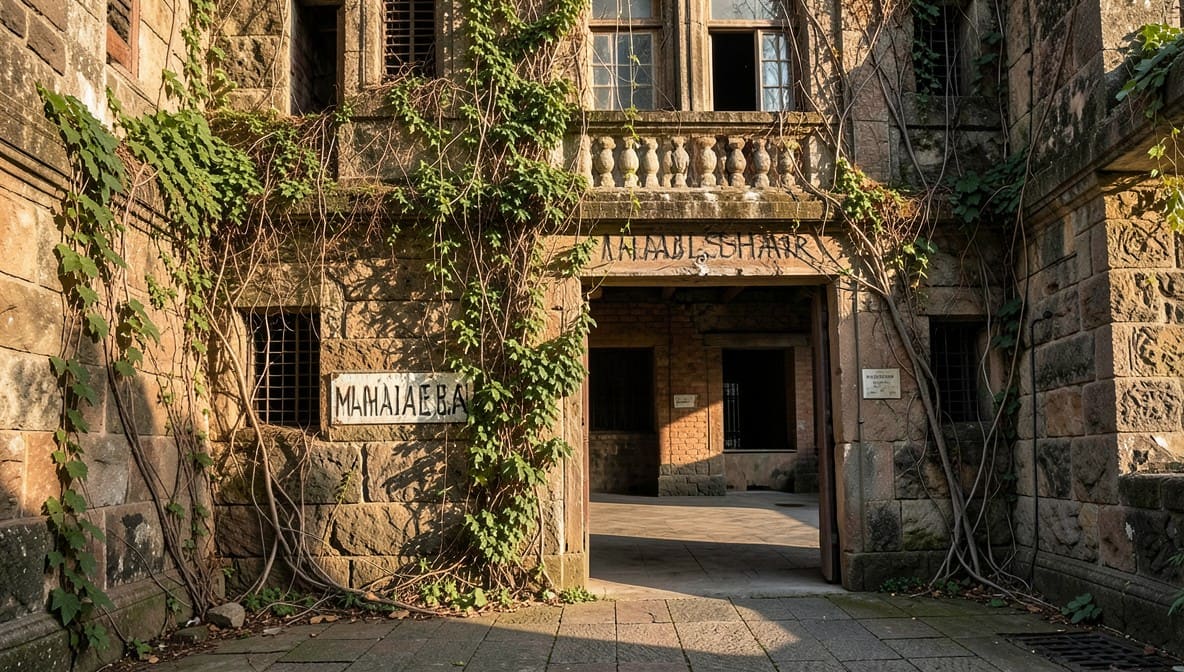
The dispute centers on the possession of Rajendra Kutir @ Shanti Niketan, a 19-room building located at CTS No. 41, Mahabaleshwar, Satara. The property is owned by the Gangadhar Makharia Charitable Trust, a registered public trust. The Trust originally granted licenses to Defendant Nos. 1 and 2 in 1970 and 1976 for operating a hotel business, with each license valid only until 30th September of the following year. The last license expired in September 1977.
Key Facts
- The Trust’s registered office is in Mumbai; its Trustees reside there.
- In or about 1996, unauthorized construction was carried out on the property, prompting local authority action and removal of the structure in March 1997.
- In 1996, Defendant No. 3 (Dixit Hotel Private Limited) began operating the hotel, with Defendant No. 4 (Sau. Sumita Pradeepkumar Dixit), its director, in exclusive physical possession.
- Defendant No. 4 claims she was inducted as a tenant in 1986 with the Trust’s oral consent and through a purported Power of Attorney held by Defendant No. 1.
- She alleges she paid deposit and advance rent, invested heavily in renovations, and paid utility bills in her name.
- The Trust issued two notices: 10.04.1993 and 21.03.1996, terminating the license/tenancy and demanding possession.
- Defendant No. 4 executed so-called "conducting agreements" with Defendant No. 1, which she admits were designed to circumvent the requirement of obtaining prior permission from the Charity Commissioner for long-term leasing of trust property.
- Defendant No. 2 admitted in writing that Defendant No. 3 was inducted without permission.
- Defendant No. 4’s claim of a Power of Attorney was never produced in court; she admitted she had never seen it.
- Rent was paid in advance until 2006; thereafter, the Trust demanded increased rent, which Defendant No. 4 refused.
Procedural History
- 1999: Suit filed by Trust (Regular Civil Suit No. 69 of 2010, originally No. 187 of 1999) seeking eviction under the Bombay Rent Act.
- 02.03.2012: Civil Judge (Junior Division), Mahabaleshwar, decreed the suit for eviction and dismissed Defendant No. 4’s counterclaim.
- 2012 & 2015: Defendant No. 4 filed two appeals: Regular Civil Appeal No. 144 of 2012 and No. 18 of 2015.
- 15.06.2020: District Judge-2, Satara, dismissed both appeals in a common judgment, upholding the eviction decree.
- 2021: Civil Revision Applications Nos. 23 and 24 of 2021 filed before Bombay High Court, Kolhapur Bench, under Section 115 CPC.
- 20.02.2026: Reserved.
- 16.06.2026: Judgment pronounced via video conferencing.
The Parties' Positions
Plaintiff/Trust: Contended Defendant Nos. 1 and 2 were licensees whose unauthorized induction of Defendant No. 3 (and by extension, Defendant No. 4) constituted unlawful sub-tenancy under Section 13(1)(e) of the Bombay Rent Act. Asserted bona fide requirement for educational expansion.
Defendant No. 4 (Revision Applicant): Claimed to be a lawful tenant since 1986, inducted through a Power of Attorney. Argued the Trust’s conduct estopped it from denying tenancy. Denied sub-tenancy and asserted irrevocable license. Claimed investment and hardship.
Relief Sought
The Trust sought eviction and vacant possession. Defendant No. 4 sought declaration of tenancy, injunction against interference, and recognition of her rights.
The Legal Issue
Can a landlord invoke jurisdiction under Section 28 of the Bombay Rents, Hotel and Lodging House Rates Control Act, 1947 to evict a person labeled a "trespasser" or "unlawful sub-tenant" when the factual relationship between the parties constitutes a landlord-tenant dispute, even if the pleadings use inconsistent terminology?
Arguments Presented
For the Appellant/Petitioner
The Revision Applicant, through Senior Advocate Mr. Anil V. Anturkar, argued:
- The Trust treated Defendant Nos. 1 and 2 as licensees, not tenants; hence, the ground of unlawful sub-tenancy under Section 13(1)(e) was legally unsustainable.
- Section 28 of the Bombay Rent Act does not empower courts to evict licensees or persons inducted by them; it only governs recovery of license fees.
- The Trust’s pleadings referred to Defendant No. 4 as a "trespasser," thereby excluding her from the Act’s purview.
- No prayer for relief was specifically framed against Defendant No. 4 after her impleadment, rendering the suit defective.
- The suit was filed in 1999, but the alleged unauthorized construction was removed in 1997, leaving no live cause of action.
- Relied on Hiralal Vallabhram v. Sheth Kasturbhai Lalbhai, Om Prakash Gupta v. Rattan Singh, and Laxmidas Morarji v. Miss. Behrose Darab Madan to argue jurisdictional limits.
For the Respondent/State
The Trust, through Mr. Vijay Killedar, countered:
- The plaint, read as a whole, clearly invokes the Bombay Rent Act, pays court fees accordingly, and alleges unlawful sub-tenancy.
- Defendant No. 4 herself claimed to be a tenant, triggering the Act’s jurisdiction.
- The term "trespasser" is legally synonymous with unlawful sub-tenant under the Act; labeling does not oust jurisdiction.
- The prayer for "responsible defendant" to vacate includes Defendant No. 4.
- The Supreme Court in Importers And Manufacturers Ltd. v. Pheroze Framroze Taraporewala held that unlawful sub-tenants, even if called trespassers, are within the Act’s scope.
- The concurrent findings of fact by two lower courts cannot be disturbed under Section 115 CPC.
- The Power of Attorney was never produced; the "conducting agreements" were admitted to be a sham to avoid regulatory compliance.
The Court's Analysis
The Court began by noting that Mahabaleshwar has no Court of Small Causes, making the Civil Judge (Junior Division) the competent Rent Court under Section 28(1)(b) of the Bombay Rent Act. This established concurrent jurisdiction.
"It is settled law that plaint cannot be read in isolated sentences. It has to be read and construed by the Court as a whole."
The Court examined the plaint and found that while Defendant Nos. 1 and 2 were initially described as licensees, the last license expired in 1977. The 1996 notice explicitly terminated "license/tenancy," indicating the Trust treated the occupant as a tenant thereafter. The suit was valued at "rent-rack," consistent with Section 6(xii)(d) of the Maharashtra Court Fees Act, further confirming the nature of the dispute.
Defendant No. 4’s own admission that she was inducted under a "conducting agreement" to avoid Charity Commissioner approval was pivotal. The Court held this admission undermined her claim of lawful possession.
"The genesis of Revision Applicant’s entry in the suit property remains without permission of the Plaintiff-Trust."
The Court relied on Importers And Manufacturers Ltd. v. Pheroze Framroze Taraporewala, where the Supreme Court held that labeling a sub-tenant as a trespasser does not oust the Rent Court’s jurisdiction. The Court emphasized that allowing such technical objections would encourage multiplicity of litigation.
The Court rejected the argument that no relief was prayed against Defendant No. 4, noting the prayer for "responsible defendant" was broad enough to include her. The Court also dismissed the argument about the 1997 demolition, clarifying that the ground for eviction was unlawful sub-tenancy, not unauthorized construction.
The concurrent findings of fact by two lower courts, based on documentary and oral evidence, were deemed free from perversity or jurisdictional error. The Court held that Section 115 CPC does not permit re-appreciation of evidence.
The Verdict
The Civil Revision Applications were dismissed. The Court upheld the eviction decree dated 15.06.2020. The Revision Applicant was granted 8 weeks to vacate the suit property. She and all adult family members were directed to file an undertaking in court within 2 weeks, confirming that the property will be vacated within 8 weeks and no third party will be inducted during that period. No costs were awarded.
What This Means For Similar Cases
Trespasser Labeling Does Not Defeat Rent Jurisdiction
- Practitioners must not assume that pleading "trespasser" or "unauthorized occupant" automatically excludes a case from the Bombay Rent Act.
- Courts will examine the substance of possession, not the label used in pleadings.
- If the occupant claims tenancy or pays rent, jurisdiction under Section 28 is triggered regardless of the landlord’s terminology.
Conducting Agreements Are Not a Shield Against Eviction
- Agreements disguised as "conducting agreements" to avoid regulatory approvals (e.g., Charity Commissioner consent) will be treated as sham transactions.
- Courts will look at the actual nature of possession, payment of rent, and intent behind documentation.
- Such documents will not confer legal tenancy rights if they are designed to circumvent statutory requirements.
Concurrent Findings Are Nearly Immune to Revision
- Section 115 CPC is not a forum for re-evaluating evidence.
- Revision petitions challenging factual findings must show jurisdictional error, perversity, or illegality - not mere disagreement.
- Practitioners should focus appeals on legal errors, not factual disputes, in rent matters.