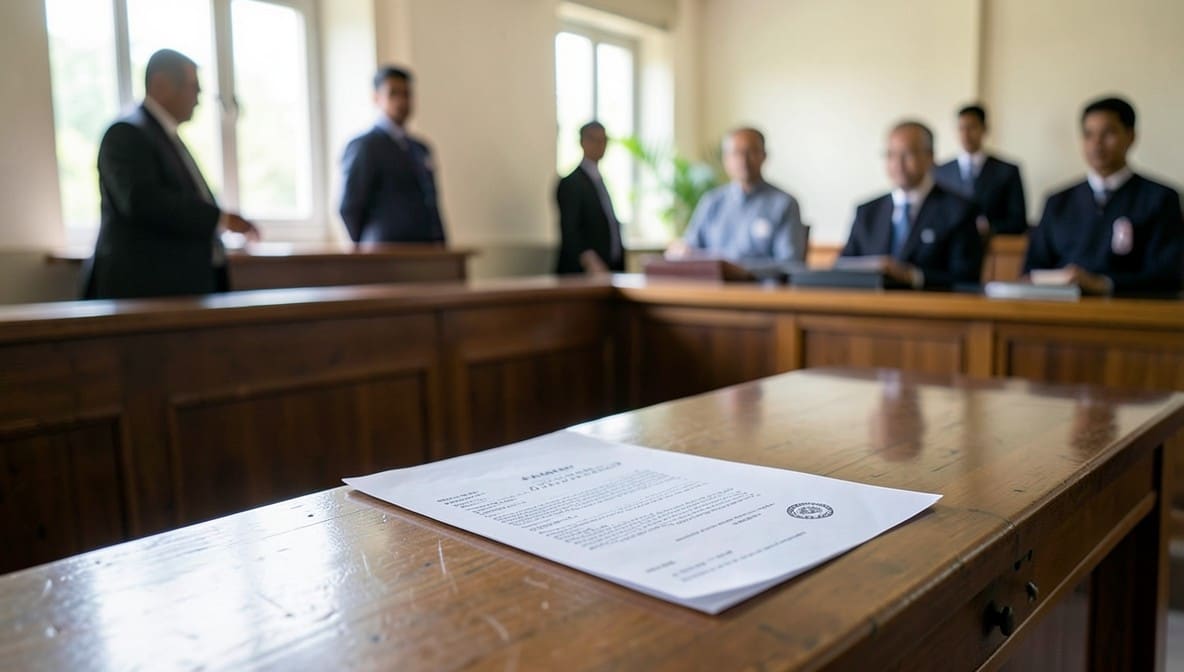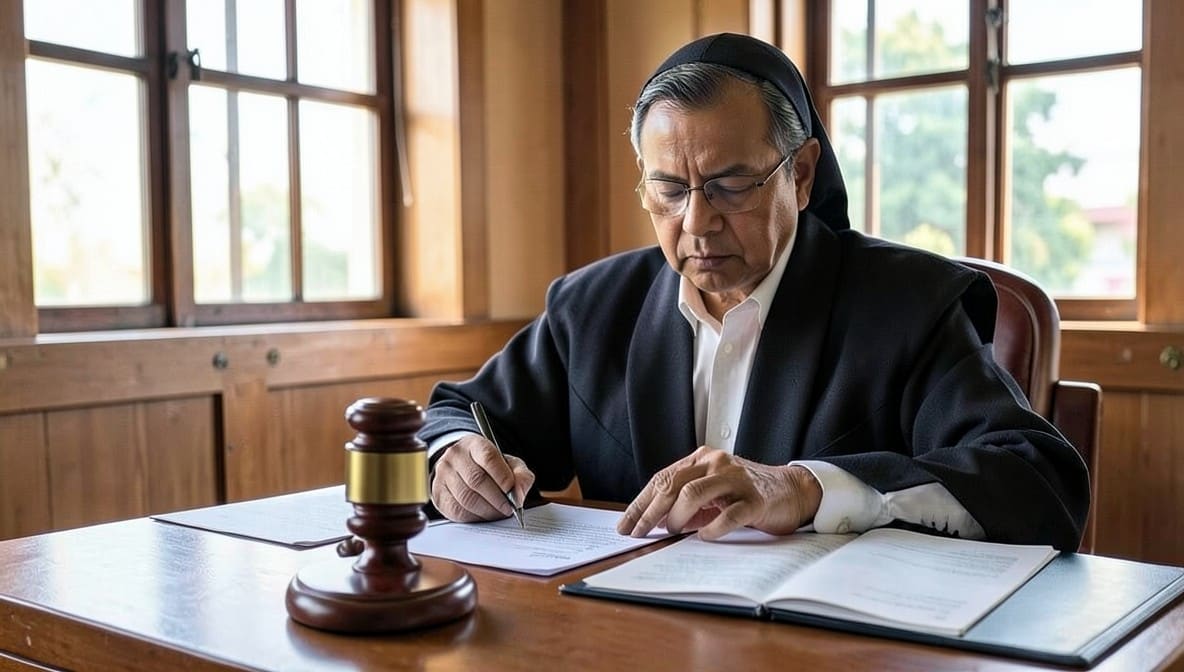
The Telangana High Court has reinforced a foundational principle of criminal procedure: trial courts cannot summarily dismiss bail applications without assigning reasons. This ruling clarifies the mandatory duty of magistrates under the Bharatiya Nagarik Suraksha Sanhita, 2023, ensuring that liberty is not denied on procedural indifference.
Background & Facts
The Dispute
The petitioners, Smt. Boddu Preethi and Madan Mohan Boddu, were arrested in connection with Crime No.312 of 2026, filed at Uppal Police Station. The allegations, though serious, pertain to offences punishable with imprisonment below seven years, making them triable exclusively by a Metropolitan Magistrate under the BNSS. The petitioners filed a bail application under Section 438 of the Bharatiya Nagarik Suraksha Sanhita (BNSS), 2023, seeking regular bail.
Procedural History
- 03.03.2026: Petitioners were remanded to judicial custody.
- 05.03.2026: The VI Additional Metropolitan Magistrate rejected the bail petition without assigning any reasons.
- 08.03.2026: Petitioners filed Criminal Revision Case No.239 of 2026 before the High Court, challenging the non-speaking order.
- No order was recorded explaining why the bail petition was not entertained, despite the petitioners’ prompt filing within 48 hours of remand.
Relief Sought
The petitioners sought direction to the trial court to dispose of the bail application on merits, with reasons recorded, and to treat the revision as a mechanism to enforce procedural compliance.
The Legal Issue
The central question was whether Section 438 of the BNSS permits a trial court to reject a bail application without assigning any reasons, particularly when the offences are non-bailable but punishable with less than seven years’ imprisonment.
Arguments Presented
For the Petitioner
Sri S. Keshava Rao argued that the trial court’s non-speaking order violated the principles of natural justice and the mandate of Section 438 BNSS, which requires courts to consider bail applications with due diligence. He cited Arnesh Kumar v. State of Bihar to emphasize that bail is the rule, jail the exception, and that mechanical rejections without reasoning undermine constitutional rights under Article 21. He further contended that since the offences were not triable by the Sessions Court, the Magistrate had full jurisdiction to decide bail, and refusal without reasons was arbitrary.
For the Respondent
The Additional Public Prosecutor did not contest the absence of reasons but argued that the court retained discretion to reject bail based on the nature of allegations. However, no statutory or precedential basis was cited to justify a non-speaking order, and no substantive grounds for denial were advanced.
The Court's Analysis
The Court examined the statutory framework under Section 438 BNSS, which replaces the old Section 437 CrPC, and noted that the new provision retains the obligation to consider bail applications with judicial scrutiny. The Court held that a non-speaking order, especially in cases where the accused are not accused of heinous offences, amounts to a denial of fair hearing.
"The right to liberty is not a privilege to be granted at the whim of the court, but a constitutional guarantee that demands reasoned adjudication. A mechanical rejection without reasons is a violation of the principles of natural justice and renders the bail process a farce."
The Court distinguished this from cases involving grave offences or flight risk, where reasons may be more complex. Here, the offences were bailable in nature, the petitioners were not absconding, and the application was filed promptly. The Court emphasized that procedural compliance is non-negotiable in bail matters, even for magistrates.
The Court further noted that the absence of reasons prevents meaningful appellate review and denies the accused an opportunity to challenge the denial on substantive grounds. This undermines the very purpose of statutory bail provisions.
The Verdict
The petitioners succeeded. The Court held that trial courts must assign reasons when rejecting bail applications under Section 438 BNSS, and directed the Magistrate to record reasons for the rejection of the bail petition and dispose of it on merits within seven days.
What This Means For Similar Cases
Reasons Are Mandatory, Not Discretionary
- Practitioners must now insist on recorded reasons in every bail rejection, regardless of the court’s perceived discretion.
- A non-speaking order is grounds for immediate revision or writ petition under Article 226.
- Courts cannot rely on "summary dismissal" as a procedural shortcut.
Bail Jurisprudence Now Explicitly Applies to Magistrate Courts
- The principles from Arnesh Kumar and Siddharam Satlingappa Mhetre now bind Magistrates handling non-sessions triable offences.
- Even in petty cases, the presumption of innocence and right to liberty must be actively protected.
- Prosecutors must now anticipate reasoned opposition, not blanket denials.
Appellate Courts Will Not Tolerate Procedural Lapses
- Revision petitions under Section 442 BNSS will be routinely allowed where reasons are absent.
- High Courts may issue contempt notices or administrative warnings to courts that repeatedly issue non-speaking orders.
- Law clerks and court staff must ensure bail orders are properly reasoned and signed.