The Madras High Court has established a critical procedural safeguard for accused persons under the Scheduled Castes and Scheduled Tribes (Prevention of Atrocities) Act, 1989, by mandating that bail applications be heard on the same day as surrender. This ruling reinforces the constitutional right to speedy justice while acknowledging the statute’s protective intent.
Background & Facts
The Dispute
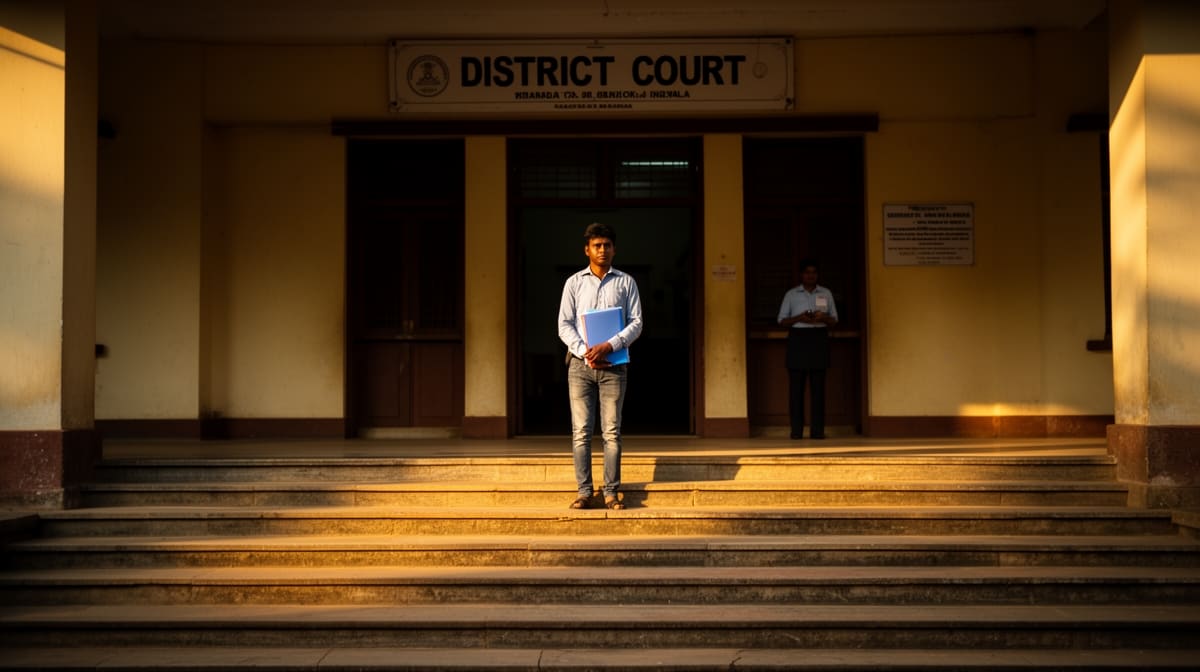
The petitioners, three individuals named Sathiyaprakash, Kathiravan Kannappan, and Vetrirasan, were named in Crime No.54 of 2026 registered at Sirkazhi Police Station under the Scheduled Castes and Scheduled Tribes (Prevention of Atrocities) Act, 1989. They sought to surrender before the Special Court and requested that their bail applications be heard immediately upon surrender, arguing that prolonged pre-trial detention without prompt judicial review violated their fundamental rights.
Procedural History
- The petitioners approached the High Court under Section 482 Cr.P.C. and Section 528 of the Bharatiya Nagarik Suraksha Sanhita seeking direction to the Special Court.
- No bail application had been filed or heard in the lower court prior to this petition.
- The petitioners were not in custody but sought to regularize their position by surrendering and securing immediate bail consideration.
Relief Sought
The petitioners sought a direction to the Special Court to accept their surrender and decide their bail petitions on the same day, ensuring no undue delay in judicial scrutiny of their liberty.
The Legal Issue
The central question was whether the Special Court under the SC & ST (POA) Act is obligated to hear and decide a bail application on the same day an accused surrenders, despite the non-bailable nature of offences under Section 18 of the POA Act.
Arguments Presented
For the Petitioner
Counsel for the petitioners relied on the principle of personal liberty under Article 21 and cited Arnesh Kumar v. State of Bihar to argue that arrest and detention must not be automatic, even in cases under special statutes. They emphasized that Section 18, while denying anticipatory bail, does not prohibit regular bail or mandate delayed hearings. The petitioners contended that prompt bail consideration is not inconsistent with the statute’s objectives and prevents arbitrary detention.
For the Respondent
The State, represented by the Government Advocate, acknowledged the seriousness of offences under the POA Act but did not oppose the petition. The State conceded that while Section 18 bars anticipatory bail, it does not preclude the court from hearing bail applications promptly upon surrender, provided due process is followed.
The Court's Analysis
The Court examined the interplay between Section 18, which prohibits anticipatory bail, and Section 15-A, which mandates victim consultation and protection. It held that while Section 18 bars pre-arrest bail, it does not justify post-surrender delay in bail hearings. The Court emphasized that Article 21 guarantees the right to a speedy trial and timely adjudication of liberty.
"The pious intention of Parliament to protect marginalized communities cannot be permitted to become a tool for indefinite detention of the accused without judicial scrutiny."
The Court distinguished between the denial of anticipatory bail and the obligation to hear regular bail applications without undue delay. It noted that Section 15-A already provides safeguards for victims through mandatory consultation, and this does not conflict with timely bail hearings. The Court further observed that procedural fairness demands that courts not treat bail applications as mere formalities to be deferred.
The Verdict
The petitioners succeeded. The Court held that the Special Court must hear and decide bail applications on the same day of surrender, after affording due opportunity to victims under Section 15-A. The petitioners were directed to surrender within fifteen days.
What This Means For Similar Cases
Bail Hearings Cannot Be Deferred
- Practitioners must now file bail applications immediately upon surrender and insist on same-day hearing.
- Courts cannot postpone bail hearings under the POA Act on grounds of "urgency of investigation" or "gravity of offence" alone.
- Delay in bail hearings without justification may attract writ jurisdiction under Article 226.
Victim Consultation Is Procedural, Not Prohibitive
- Section 15-A requires notice to victims but does not mandate their physical presence or prolonged delay.
- Courts may conduct brief, recorded consultations via phone or written submission to comply without adjourning hearings.
- Failure to afford victim consultation invalidates the order, but consultation itself cannot be used to indefinitely delay bail.
Surrender Is a Strategic Legal Step
- Accused persons should surrender voluntarily to trigger the right to immediate bail hearing.
- Lawyers must prepare bail petitions in advance and submit them with surrender to ensure prompt adjudication.
- This ruling applies equally to all special statutes with non-bailable offences where no express bar on post-surrender bail exists.