The Supreme Court has reaffirmed that bail cannot be granted by prematurely dissecting medical evidence or demanding precise attribution of injuries in cases involving unlawful assembly and atrocities against Scheduled Castes and Scheduled Tribes. The judgment underscores that bail proceedings are not trials, and courts must not substitute their assessment of evidence for that of the trial court.
Background & Facts
The Dispute
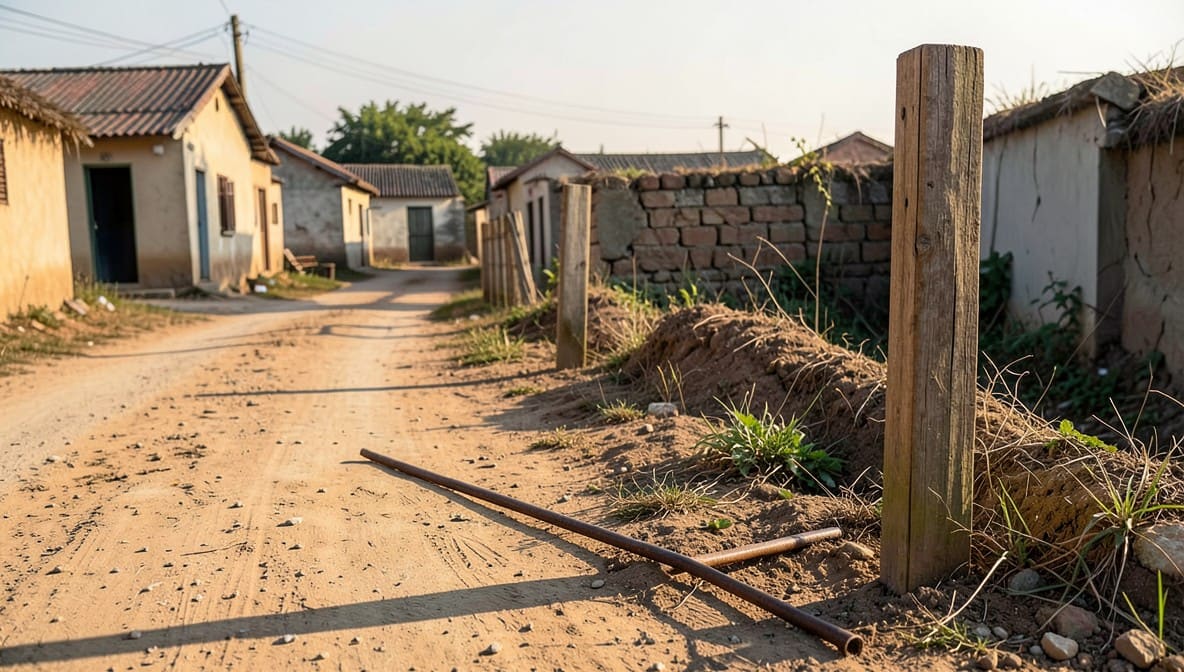
The case arose from a violent assault on Shri Namdev Sonavane, a member of a Scheduled Caste community, on 19th August 2022. The incident occurred near Tilekar’s shop on the Shirdi-Lasalgaon Road, following a long-standing civil dispute over a right of way to agricultural land. Six individuals, including respondents Samadhan Bajirao Sonvane and Ganesh Shankar Gawand, allegedly assaulted Namdev with iron rods and sticks. When the complainant, Shobha Namdev Sonavane, and her relatives arrived at the scene, they too were attacked. The accused reportedly removed their pants and uttered caste-based slurs during the assault.
Procedural History
- 19 August 2022: FIR No. 322 of 2022 registered at Kopargaon Taluka Police Station under multiple sections of the Indian Penal Code and the Scheduled Castes and Scheduled Tribes (Prevention of Atrocities) Act, 1989.
- 24 August 2022: Shri Namdev Sonavane died from injuries sustained during the assault; Section 302 IPC was added.
- March 2023: High Court of Bombay (Aurangabad Bench) granted bail to respondents-accused, citing gaps in witness testimony and the delay between assault and death.
- 2026: Supreme Court heard appeal against bail order under Article 136 of the Constitution.
Relief Sought
The appellant sought cancellation of the bail order granted by the High Court, arguing that the court erred in evaluating evidentiary credibility at the bail stage and ignored the gravity of offences under the SC/ST Act and the doctrine of common object in unlawful assembly.
The Legal Issue
The central question was whether a High Court can grant bail in a case involving murder and atrocities under the SC/ST Act by requiring the prosecution to precisely attribute specific injuries to each accused, and by treating the pendency of a civil dispute as a ground to doubt the veracity of the complaint.
Arguments Presented
For the Appellant
Learned counsel argued that the High Court misapplied bail jurisprudence by treating the bail hearing as a trial. The FIR clearly established an unlawful assembly with a common object to commit violence based on caste. The complainant and other witnesses corroborated the role of the accused in the assault. The High Court’s reliance on the delay between injury and death, and the inability to pinpoint which accused caused the fatal head injury, was legally impermissible at the bail stage. Counsel cited Shabeen Ahmad v. State of Uttar Pradesh and Victim ‘X’ v. State of Bihar to emphasize that gravity of offence and societal impact must override speculative doubts.
For the Respondent
Counsel for the accused contended that bail was rightly granted because the prosecution failed to establish individual roles of the accused. Only eight injuries were recorded despite six assailants, raising doubt about over-implication. The gap of five days between assault and death, coupled with the pending civil litigation, suggested possible fabrication. Counsel relied on the principle that bail once granted should not be cancelled unless there is abuse of liberty or risk of evidence tampering, none of which were present.
The Court's Analysis
The Supreme Court held that the High Court committed a fundamental error by applying trial-stage standards to a bail proceeding. The Court emphasized that bail is not a trial, and courts must not evaluate the credibility of witnesses or dissect medical evidence to determine individual culpability at this stage.
"The approach adopted by the High Court... recording that the prosecution was required to indicate the individual role of the accused in the incident, and that failure to do so, entitled the respondents-accused to bail, is erroneous on the face of record."
The Court reiterated the doctrine of common object under Section 149 IPC, holding that in an unlawful assembly, every member is equally liable for acts done in furtherance of the shared criminal purpose. The presence of six assailants, the use of weapons, the caste-based abuse, and the multiple injuries inflicted collectively established a clear common object to assault and kill.
The Court rejected the High Court’s reasoning that the number of injuries (eight) being less than the number of assailants (six) created doubt. It noted that multiple injuries can arise from a single blow or from coordinated attacks, and that the post-mortem revealed severe trauma including a fractured bone and cerebral damage - consistent with a lethal assault.
The Court also dismissed the notion that a pending civil dispute could be used to cast doubt on the complainant’s veracity. It observed that such disputes often serve as the very motive for caste-based violence, and using them to justify bail undermines the protective intent of the SC/ST Act.
"The prior litigation between the parties... can work both ways. This litigation could, very well, have fuelled the respondents-accused with the motive to launch the assault."
The Court concluded that the High Court’s order was based on extraneous considerations and ignored the gravity of the offences, the societal impact of caste violence, and the settled principles in Shabeen Ahmad and Victim ‘X’.
The Verdict
The Supreme Court allowed the appeal and cancelled the bail granted to the respondents-accused. The Court held that in cases involving unlawful assembly and atrocities under the SC/ST Act, bail cannot be granted by requiring precise attribution of injuries or by doubting the complaint due to pending civil disputes. The accused must surrender within four weeks, and the trial court is directed to conclude the trial within one year.
What This Means For Similar Cases
Bail Cannot Be Denied Solely On Lack Of Individual Injury Attribution
- Practitioners must argue that in cases under Section 149 IPC, the prosecution need not prove which accused inflicted which injury - only that the accused were part of an unlawful assembly with a common object.
- Courts must not demand forensic precision at the bail stage; such scrutiny belongs to trial.
- Cite Shabeen Ahmad and Victim ‘X’ to oppose bail in cases with collective violence and caste-based motive.
Civil Disputes Are Not Grounds To Doubt Credibility In Atrocities Cases
- A pending civil dispute cannot be invoked to suggest fabrication of criminal complaints under the SC/ST Act.
- Courts must recognize that such disputes often trigger caste-based violence, not false accusations.
- Argue that using civil litigation as a shield for bail violates the protective spirit of the SC/ST Act.
Medical Evidence Must Not Be Dissected At Bail Stage
- Delay between injury and death, or ambiguity in cause of death, are matters for trial court evaluation.
- Post-mortem reports showing multiple severe injuries, especially to the head, support a strong prima facie case for murder.
- Do not concede bail on grounds of medical uncertainty unless there is clear evidence of alternative cause of death.