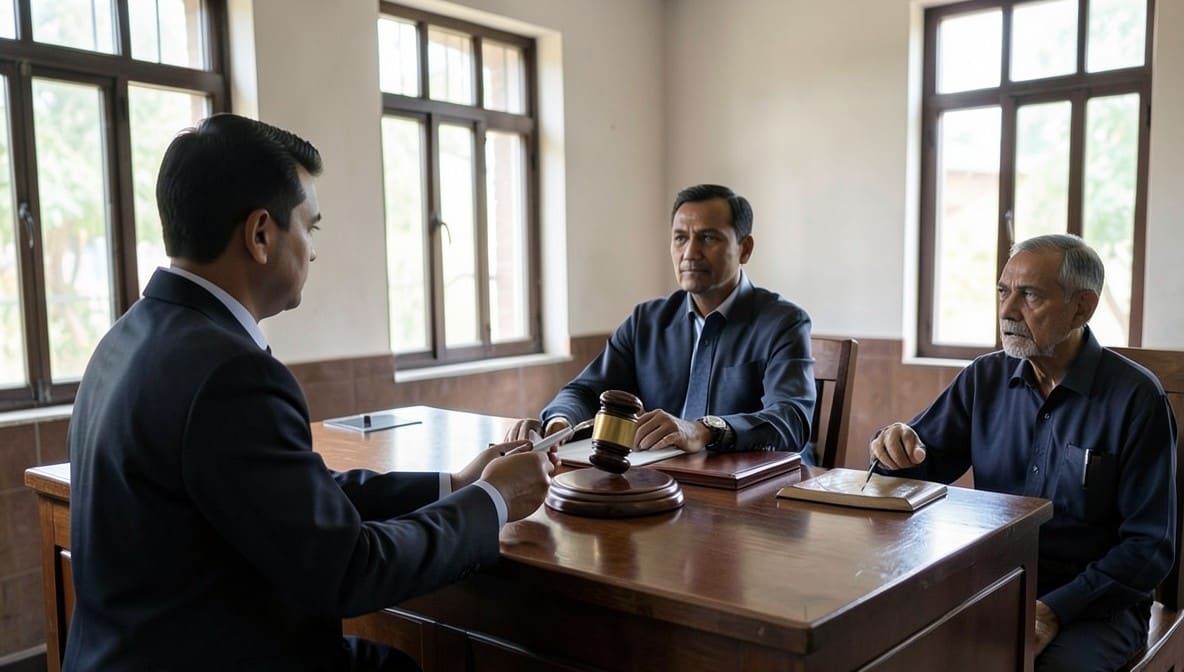
The Madhya Pradesh High Court has reaffirmed that the mere registration of subsequent criminal cases based on a disclosure memo is insufficient grounds for cancelling bail under Section 483(3) of the Bharatiya Nagarik Suraksha Sanhita, 2023 (BNSS). The Court emphasised that the parameters for bail cancellation, as laid down by the Supreme Court, must be satisfied before revoking bail, particularly when the accused has already been granted bail in the subsequent cases.
Background & Facts
The Dispute
The State of Madhya Pradesh filed an application under Section 483(3) of the BNSS seeking cancellation of bail granted to the respondent, Ramprasad @ Karan, in connection with Crime No. 1193/2023 registered at Police Station Industrial Area, Dewas. The offence alleged was punishable under Sections 34(2) and 49(A) of the M.P. Excise Act. The bail was granted vide order dated 16.02.2024 in Miscellaneous Criminal Case No. 5573/2024.
Key Facts
- The respondent was initially granted bail on 16.02.2024 in connection with Crime No. 1193/2023.
- Subsequently, three new cases were registered against the respondent:
- Crime No. 309/2024 (Police Station Kshipra, Indore) for Section 379 IPC (theft).
- Crime No. 391/2024 (Police Station Kshipra, Indore) for Section 303(2) BNSS (offences against public tranquillity).
- Crime No. 606/2025 (Police Station Industrial Area) for Sections 305(A) and 331(4) BNSS (abetment of suicide and criminal intimidation).
- The State argued that the respondent had breached bail conditions due to the registration of these new cases.
- The respondent contended that he was falsely implicated in all three cases based solely on a disclosure memo, with no material evidence linking him to the offences. He further pointed out that he had already been granted bail in all three cases by the competent court.
Procedural History
- 16.02.2024: Bail granted to the respondent in M.Cr.C. No. 5573/2024.
- Subsequent dates: Registration of Crime Nos. 309/2024, 391/2024, and 606/2025.
- Application filed: The State filed the present application under Section 483(3) BNSS for cancellation of bail.
- 14.07.2026: The High Court dismissed the State's application.
Relief Sought
The State sought cancellation of the bail granted to the respondent on the ground that he had breached the conditions of bail by allegedly committing subsequent offences.
The Legal Issue
The central question before the Court was whether the registration of subsequent criminal cases against the respondent, based solely on a disclosure memo, constituted sufficient grounds for cancelling bail under Section 483(3) of the BNSS.
Arguments Presented
For the State
The State contended that the respondent had breached the conditions of his bail by allegedly committing three subsequent offences. The State relied on the registration of Crime Nos. 309/2024, 391/2024, and 606/2025 to argue that the respondent's bail should be cancelled under Section 483(3) BNSS.
For the Respondent
The respondent argued that he was falsely implicated in all three subsequent cases based solely on a disclosure memo, with no substantive evidence linking him to the offences. He further submitted that:
- He had already been granted bail in all three cases by the competent court.
- The offences registered against him were not of a similar nature to the original offence.
- He had not been convicted in any of the cases, and the State's reliance on the disclosure memo was insufficient to establish a breach of bail conditions.
The Court's Analysis
The Court examined the rival submissions and noted the following key points:
-
Bail in Subsequent Cases: The respondent had already been enlarged on bail in all three subsequent cases, indicating that the competent courts did not find sufficient grounds to deny bail.
-
Disclosure Memo Insufficiency: The Court observed that the respondent was implicated in the subsequent cases based solely on a disclosure memo, with no material evidence connecting him to the offences. This raised doubts about the merits of the State's case for bail cancellation.
-
Parameters for Bail Cancellation: The Court reiterated the legal principle that the parameters for cancellation of bail, as laid down by the Supreme Court, must be satisfied. In this case, the Court found that the State had not prima facie established that the respondent had breached the conditions of his bail or that the subsequent cases warranted revocation.
"Taking note of the fact that the respondent has already been enlarged on bail in the subsequent offence registered against him and also taking into account that he has been implicated in all those cases based on disclosure memo, and further considering that the parameters for cancellation of bail as laid down by the Hon'ble Apex Court, in prima facie view of this Court are not being satisfied at this stage of the proceedings of the subsequent cases, no case for cancellation of bail is made out."
The Verdict
The Court dismissed the State's application for cancellation of bail. However, it directed the respondent to mark his presence before the concerned police station on the last Sunday of every alternate month. The order dated 14.07.2026 was treated as part of the original bail order dated 16.02.2024.
What This Means For Similar Cases
Disclosure Memo Alone Cannot Justify Bail Cancellation
- Practitioners must note that the mere registration of subsequent cases based on a disclosure memo, without substantive evidence, is insufficient to satisfy the test for bail cancellation under Section 483(3) BNSS.
- Courts are likely to scrutinise the merits of the subsequent cases, particularly whether the accused has already been granted bail in those cases, before ordering bail revocation.
Bail Conditions Must Be Clearly Breached
- The State must demonstrate a clear breach of bail conditions to succeed in an application for cancellation. Mere allegations or registration of new cases, without evidence of wrongdoing, are unlikely to suffice.
- The parameters for bail cancellation, as established by the Supreme Court, require a prima facie case of breach or misconduct, which the State failed to establish in this instance.
Judicial Scrutiny of False Implication
- The judgment underscores the judiciary's role in protecting accused persons from false implication, particularly when the allegations are based on flimsy grounds such as a disclosure memo.
- Defence counsel can rely on this judgment to argue against bail cancellation where the State's case rests solely on procedural formalities rather than substantive evidence.