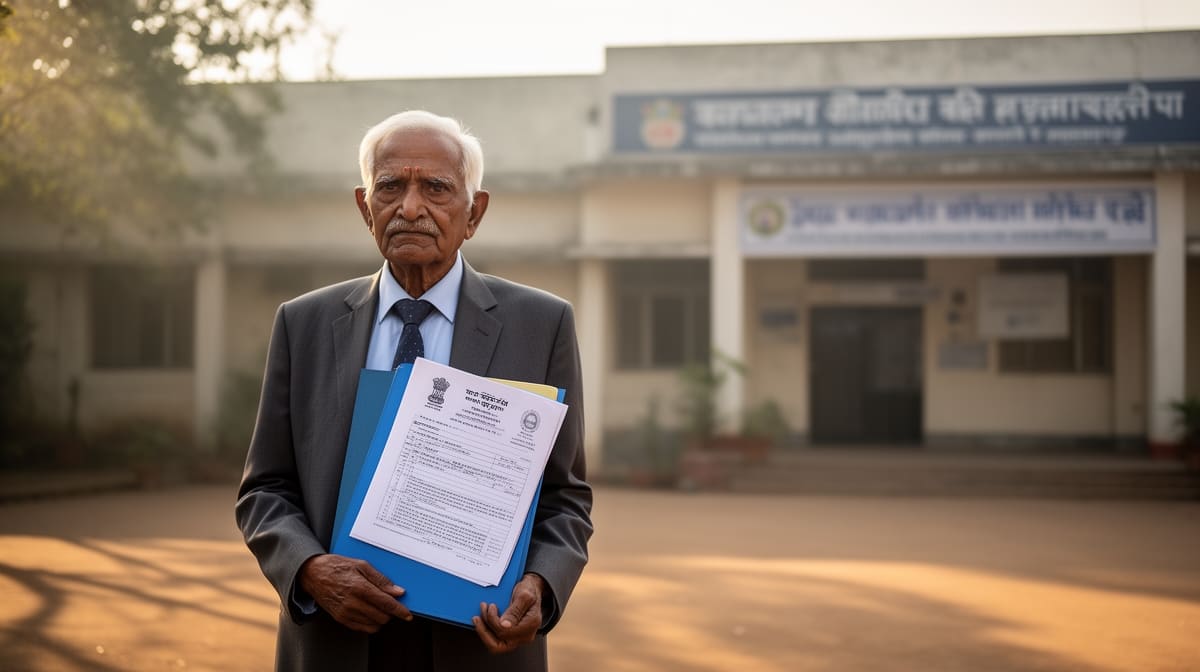
A 47-year delay in adjudicating a writ petition for reinstatement and back wages has led the Calcutta High Court to draw a critical distinction between notional service benefits and monetary compensation. While the Court refused to grant arrears of salary due to the petitioner’s inaction and unexplained delay, it upheld the principle that prolonged administrative inaction cannot deprive a public servant of the foundational benefit of recognized service tenure for pension purposes.
Background & Facts
The Dispute
The dispute arose from a contested appointment to the post of Headmaster at Mahanayak Nehru Colony Naba Bharati Siksha Niketan (Junior High School), North 24 Parganas. Sri Mani Krishna Bhakta (Mani) was initially appointed Headmaster but resigned on 22.06.1975. On 25.06.1975, the Managing Committee appointed Panchanan Majumder as Headmaster. A civil suit filed by Panchanan against Mani was compromised on 22.09.1976, wherein both parties agreed not to claim the post, leaving the Managing Committee free to appoint another person.
On 20.12.1976, Chittaranjan Roy (Chitta) was provisionally appointed Headmaster. This appointment was formally approved by the District Inspector of Schools on 09.05.1977, effective from 20.12.1976. Chitta received salary from December 1976 until January 1985.
On 11.05.1978, the West Bengal Board of Secondary Education (Board) issued a memo reinstating Mani as Headmaster, effectively displacing Chitta. Chitta filed a writ petition (WPA 3871 of 1978) on 16.06.1978 seeking to set aside the reinstatement order. No interim relief was sought to prevent his removal from the school premises.
Key Facts
- Chitta was appointed provisionally on 20.12.1976 and approved on 09.05.1977
- He received salary until January 1985, after which his pay was stopped without any formal order of suspension or termination
- He did not physically report to duty after January 1985
- On 13.03.1986, he submitted a representation to the District Inspector alleging forcible prevention from joining duty
- Police complaints were lodged in 1983 and 1984, but no action followed
- He enrolled as an advocate with the Bar Council of West Bengal on 10.05.1988 and began practicing law
- He did not take any steps to expedite the writ petition between 1988 and 2000
- The writ petition was dismissed for default in 2000
- An appeal (MAT 3729/2004) was filed in 2004, with a delay of 1,828 days
- The appeal was allowed on 19.09.2005, restoring the writ petition
- Chitta attained superannuation on 31.05.2004
- On 25.02.2025, the learned single Judge granted leave to amend the prayer to include a claim for back wages from February 1985 to superannuation
- The writ petition was disposed of on 11.03.2025, nearly 47 years after filing
- The Board issued a compliance order on 30.04.2025, treating Chitta’s absence as "spent on duty"
Procedural History
- 22.06.1975: Mani resigns as Headmaster
- 25.06.1975: Panchanan Majumder appointed Headmaster
- 22.09.1976: Civil suit compromised; Managing Committee free to appoint new Headmaster
- 20.12.1976: Chitta appointed provisional Headmaster
- 09.05.1977: Appointment approved by District Inspector
- 11.05.1978: Board issues memo reinstating Mani
- 18.06.1978: Chitta issues demand notice challenging reinstatement
- 16.06.1978: Writ Petition (WPA 3871 of 1978) filed
- 10.04.1981: Supplementary affidavit filed
- 13.03.1986: Representation made to District Inspector alleging forcible exclusion
- 10.05.1988: Chitta enrolled as advocate
- 2000: Writ petition dismissed for default
- 2004: Appeal filed (MAT 3729/2004)
- 19.09.2005: Appeal allowed; writ petition restored
- 25.02.2025: Leave granted to amend prayer to claim back wages
- 28.02.2025: Amended prayer filed
- 11.03.2025: Single Judge’s order passed directing back wages and pension
- 30.04.2025: Board partially complies, treating absence as "spent on duty"
- 17.04.2026: Division Bench delivers judgment
Relief Sought
Chitta sought:
- Declaration that his service from 20.12.1976 to 31.05.2004 was continuous
- Payment of full back wages from February 1985 to superannuation
- Revision of pay scale with consequential arrears
- Pension with arrears from superannuation date
- Provisional pension if regular pension could not be disbursed
The Parties' Positions
The Appellant (District Inspector) argued that the writ petition had become infructuous due to 47 years of inaction, that Chitta had not been forcibly restrained from duty, and that his subsequent career as an advocate demonstrated abandonment of the post. The Board had paid Mani’s salary from 1978 to 1993, creating a risk of double payment.
The Respondent (Chitta) contended that he was illegally prevented from joining duty, no disciplinary proceedings were initiated, and the employer’s failure to act could not be used to deny him rightful dues. He relied on Deepali Gundu Surwase v. Kranti Junior Adhyapak Mahavidyalaya to argue that the burden of proof lay on the employer.
The Legal Issue
Can a writ petition pending for 47 years, filed to challenge an unlawful appointment, justify an award of full back wages when the petitioner neither pursued the matter diligently nor proved forcible prevention from duty, and had subsequently pursued an alternative career?
Arguments Presented
For the Appellant
Mr. Avishek Prasad argued that the writ petition had become infructuous due to the petitioner’s prolonged inaction. No pleading or evidence established that Chitta was forcibly restrained from joining duty. His enrollment as an advocate in 1988 indicated abandonment of the post. The petition was dismissed for default in 2000 and only restored after a delay of over 1,800 days. The amendment to claim back wages in 2025 was impermissible as it introduced a new cause of action after the original petition had lapsed. The State could not be compelled to pay two salaries for the same post between 1978 and 1993.
For the Respondent
Mr. Bikash Goswami contended that Chitta was never suspended or terminated, and his salary was illegally stopped without any order. Representations were made in 1986 and police complaints filed. The failure of the State to act could not be attributed to the petitioner. The amendment to the prayer was permitted by the learned single Judge and was not objected to by the State. The judgment in Deepali Gundu Surwase supported the principle that an employee cannot be penalized for the employer’s wrongful conduct.
The Court's Analysis
The Court acknowledged that Chitta’s appointment as Headmaster was lawful and approved in 1977. His service from 20.12.1976 to January 1985 was undisputed. However, the Court emphasized that the writ petition, filed in 1978, remained pending for nearly five decades without any meaningful progress. The petitioner did not seek interim relief, did not file any application for expedited hearing, and took no steps to revive the petition after its dismissal in 2000 until 2004.
"It is well settled position of law that the relief under Article 226 is discretionary. A remedy is called discretionary when it is not available as a matter of right and may be refused by the Court when the conduct of a person is such that he does not deserve the discretionary relief."
The Court noted that Chitta’s enrollment as an advocate in 1988, and his subsequent professional life, strongly suggested that he had lost interest in the post. The claim for back wages was introduced only in 2025, nearly 40 years after the cessation of service, and without any prior pleading that he was willing and ready to work but was unlawfully prevented.
The Court further observed that the State had already paid Mani’s salary from 1978 to 1993, and granting back wages to Chitta for the same period would result in double payment from the public exchequer - an outcome the Court found untenable.
However, the Court also recognized that the State had failed to initiate any disciplinary proceedings or issue a formal order terminating Chitta’s service. The unilateral cessation of salary without due process was legally flawed. The Court held that while monetary relief was barred due to laches and lack of diligence, the petitioner was entitled to the recognition of his entire service tenure for the purpose of pensionary benefits.
"The equities need to be balanced among the parties."
The Court distinguished between notional service benefits - which accrue to the employee as a matter of fairness and statutory entitlement - and monetary back wages, which require proof of actual loss and active pursuit of remedy.
The Verdict
The appeal was allowed in part. The Calcutta High Court quashed the direction for payment of back wages from February 1985 to 31.05.2004. However, Chitta’s entire service period from 20.12.1976 to 31.05.2004 shall be treated as qualifying service for pensionary benefits, including revision of pay scale on a notional basis. The direction for provisional pension from May 2025 was set aside. The State shall disburse full pensionary benefits and arrears to Chitta within 8 weeks of communication of this order, subject to his compliance with formalities. The school authorities are directed to extend all assistance for disbursement. There shall be no order as to costs.
What This Means For Similar Cases
Delay Can Bar Back Wages Even in Legally Valid Claims
- Practitioners must act diligently in service disputes; unexplained delays exceeding 15 - 20 years may bar monetary relief under Article 226
- Courts will examine conduct over time - inaction, career shifts, and failure to seek interim relief weigh heavily against claimants
- Back wages are not automatic; they require pleading and proof of forcible prevention and willingness to serve
Notional Service Benefits Are Distinct from Monetary Relief
- Even where back wages are denied, courts may still recognize service tenure for pension, increments, and seniority
- This protects employees from administrative arbitrariness without imposing undue financial burden on the State
- Employers cannot benefit from their own failure to act - service records must reflect actual tenure, even if pay is not awarded
Procedural Compliance by the State Is Non-Negotiable
- Stopping salary without suspension or termination order is illegal
- Employers must initiate disciplinary proceedings before terminating service
- Administrative silence cannot be converted into legal termination
- Petitioners must be given opportunity to explain absence, but State must also act promptly to resolve disputes