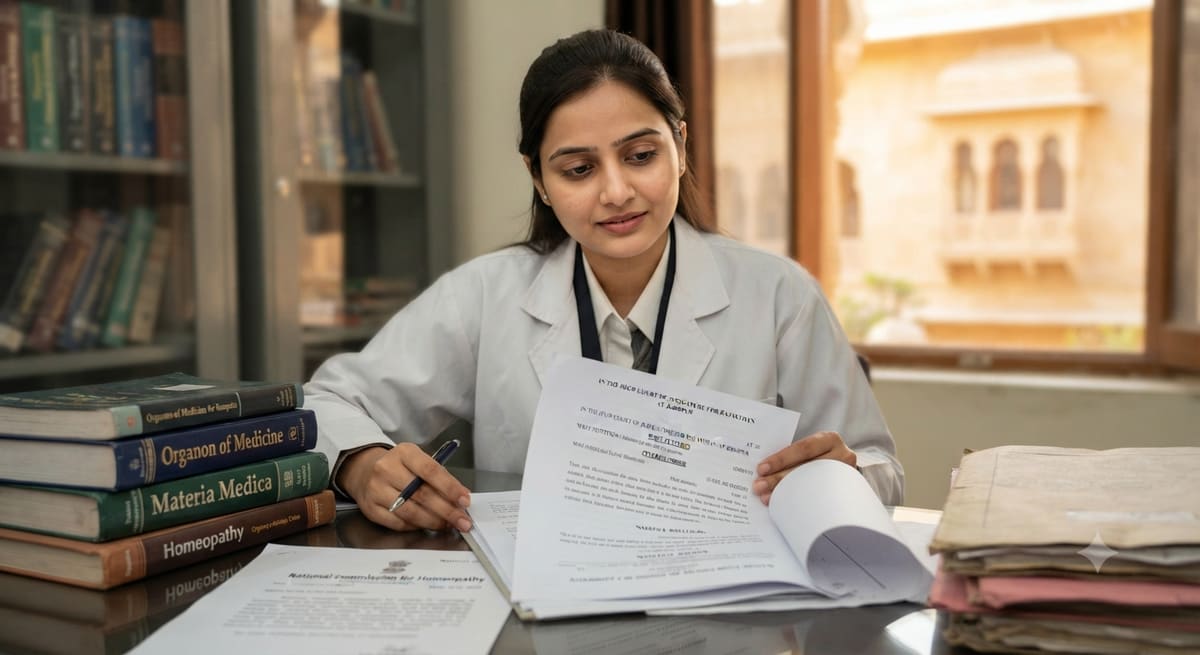
The Madhya Pradesh High Court has definitively closed the door on unregulated practice of Ayurveda by individuals holding qualifications from the Hindi Sahitya Sammelan, reinforcing that statutory recognition under the Ayurveda Act, 1970, is non-negotiable for lawful medical practice. This judgment reaffirms the supremacy of legislative intent over traditional or informal credentialing systems in the healthcare sector.
Background & Facts
The Dispute
The petitioner, the All India Ayurvedic Congress, sought to challenge an order dated 3.2.2012 that refused recognition to practitioners holding the Vaidya Visharad or Ayurved Ratna degrees awarded by the Hindi Sahitya Sammelan, Prayag. The petitioner contended that these practitioners, despite their training and experience, should be permitted to practice Ayurveda under the broader cultural and historical recognition of traditional systems.
Procedural History
- The petition was filed under Article 226 of the Constitution seeking writ relief.
- The respondents, including the Madhya Pradesh Board of Ayurvedic and Yunani System of Medicine, filed a return citing the Supreme Court’s judgment in Rajasthan Pradesh v. Sardarshahar & Others (AIR 2010 SC 2221).
- The return, supported by Annexure R-1, argued that the legal issue was already conclusively decided by the Apex Court.
- No additional evidence or affidavits were submitted by the petitioner to distinguish the present case from the precedent.
Relief Sought
The petitioner sought: (i) quashing of the impugned order; and (ii) recognition of practitioners with Hindi Sahitya Sammelan qualifications to practice Ayurveda, along with any other relief the Court deemed appropriate.
The Legal Issue
The central question was whether individuals holding qualifications from the Hindi Sahitya Sammelan, Prayag, issued after 1967, are legally entitled to practice Ayurveda under the Ayurveda Act, 1970, in light of the Supreme Court’s binding precedent.
Arguments Presented
For the Petitioner
The petitioner’s counsel acknowledged the binding nature of Rajasthan Pradesh v. Sardarshahar but argued that the cultural legitimacy and long-standing recognition of the Hindi Sahitya Sammelan warranted a more flexible interpretation. He contended that denying practice rights to experienced practitioners violated Article 19(1)(g) and amounted to arbitrary discrimination under Article 14.
For the Respondent/State
The State, through its panel lawyer, relied entirely on the Supreme Court’s judgment in Rajasthan Pradesh v. Sardarshahar. It emphasized that the Hindi Sahitya Sammelan is not a recognized educational institution, has never sought statutory recognition under Section 14 of the Ayurveda Act, 1970, and does not meet the minimum educational standards prescribed in Schedule III, Entry 4 of the Act. The State argued that allowing such qualifications would undermine public health safeguards.
The Court's Analysis
The Court conducted a meticulous review of the Supreme Court’s reasoning in Rajasthan Pradesh v. Sardarshahar, which had conclusively held that the Hindi Sahitya Sammelan is neither a university nor an educational institution recognized under any statutory framework. The Court noted that the Apex Court had explicitly ruled that no person possessing a qualification from the Sammelan after 1967 is entitled to practice Ayurveda, regardless of experience or reputation.
"A person not possessing the qualification prescribed in Schedule III, Entry 4 to the Act, 1970 is not entitled to practice. Mere inclusion of name in the State Register is not enough making him eligible to practice."
The Madhya Pradesh High Court found no material distinction between the facts in the Supreme Court case and the present petition. The petitioner had not demonstrated any change in statutory provisions, regulatory framework, or factual circumstances that would warrant a different outcome. The Court emphasized that the right to practice medicine under Article 19(1)(g) is subject to reasonable restrictions under Article 19(6), and the Act’s qualifications are precisely such a restriction.
The Court further observed that the petitioner’s reliance on cultural or historical legitimacy could not override the legislative mandate established by Parliament and upheld by the highest court. The absence of any attempt by the Sammelan to seek recognition under Section 14 of the Act was fatal to the petitioner’s claim.
The Verdict
The petition was dismissed. The Court held that qualifications awarded by the Hindi Sahitya Sammelan after 1967 do not confer legal eligibility to practice Ayurveda, and the Supreme Court’s precedent in Rajasthan Pradesh v. Sardarshahar is binding and conclusive. The impugned order was upheld.
What This Means For Similar Cases
Statutory Recognition Is Mandatory
- Practitioners must hold qualifications listed in Schedule III, Entry 4 of the Ayurveda Act, 1970 to lawfully practice.
- Degrees from unregistered societies, even if culturally respected, carry no legal weight.
- State medical boards are obligated to reject registrations based on non-statutory qualifications.
Precedent Overrides Cultural Claims
- Arguments based on tradition, longevity, or public acceptance cannot override statutory compliance.
- Courts will not entertain challenges to the Act’s qualification framework absent legislative amendment.
- Any attempt to circumvent the Act through alternative certification bodies will be summarily dismissed.
Enforcement Duty Rests with State Boards
- State Ayurvedic boards must proactively verify qualifications before registration.
- Practitioners holding Sammelan degrees must be removed from state registers if found to be non-compliant.
- Legal action against unauthorized practice may now proceed without fear of procedural challenge under this precedent.