The Andhra Pradesh High Court has delivered a definitive ruling on the procedural necessity of naming the State, not its administrative arm, as the proper party in litigation involving state contracts. This judgment reinforces the constitutional mandate under Article 300 and clarifies that failure to sue the State in its correct legal name renders arbitral proceedings and subsequent appeals non-maintainable, regardless of substantive merits.
Background & Facts
The Dispute
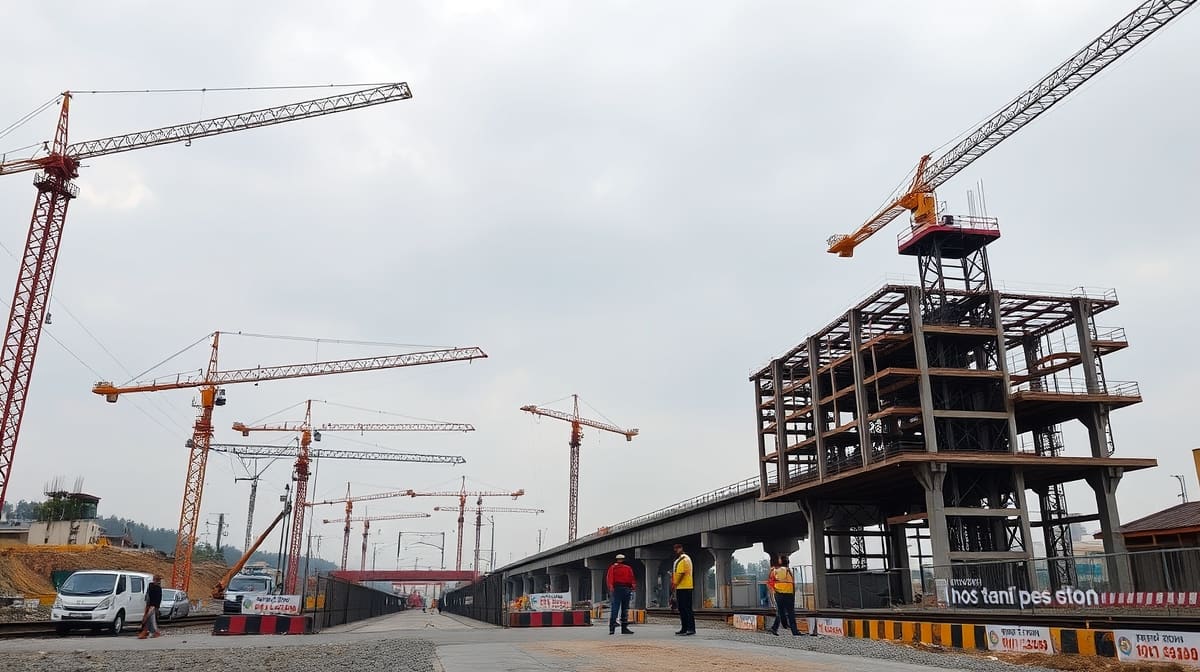
The dispute arose from a contract for the construction of the Pulichintala Project’s balancing reservoir headworks, awarded to M/s. SCLCR 18G Joint Venture under an EPC turnkey model. The contract incorporated FIDIC-based general conditions, with a two-tier dispute resolution mechanism: first, a Dispute Adjudication Board (DAB), followed by arbitration under the Arbitration and Conciliation Act, 1996. The contractor raised 28 claims for compensation related to delays, cost escalations, and unauthorized deductions. The Second DAB awarded partial relief, which the Government of Andhra Pradesh challenged by issuing a notice of dissatisfaction, triggering arbitration.
Procedural History
- 2004: Contract executed between the Superintending Engineer (Pulichintala Project Circle) and the contractor.
- 2012: Second DAB issued its decision; Government of Andhra Pradesh filed notice of dissatisfaction.
- 2013: Arbitral Tribunal awarded Rs. 199.96 crores to the contractor via majority award.
- 2015: Government filed A.O.P. No. 23/2015 before the Principal District Judge, Krishna, seeking to set aside the award - naming itself as "Government of Andhra Pradesh."
- 2016: District Judge dismissed the petition.
- 2018: Government filed CMA No. 1141/2018 before the High Court, continuing the misnaming.
- 2018: Civil Revision Petition CRP No. 6787/2018 filed challenging execution proceedings, again misnaming the party.
Relief Sought
The appellant sought to set aside the arbitral award on grounds of non-joinder of the State and violation of contractual caps under APDSS. The respondent sought enforcement of the award. The High Court, however, did not reach the merits, dismissing both appeals on procedural grounds.
The Legal Issue
The central question was whether proceedings under the Arbitration and Conciliation Act, 1996, and subsequent appeals under Section 37, are maintainable when the State is sued as "Government of Andhra Pradesh" instead of "State of Andhra Pradesh" under Article 300 of the Constitution.
Arguments Presented
For the Appellant
The Advocate General contended that Article 300 mandates that the State must be sued in its official name - "State of Andhra Pradesh." Relying on Shyamala Reddy v. Hindustan Petroleum and General Manager, Central Organisation for Railway Electrification v. Y. Parthasarathy, the appellant argued that naming the Superintending Engineer or "Government of Andhra Pradesh" as the respondent rendered the arbitral proceedings and the Section 34 petition nullities. The appellant further cited Chief Conservator of Forests v. Collector to assert that such defects are fatal and cannot be cured at the appellate stage.
For the Respondent
The respondent, through Senior Counsel B. Adinarayana Rao, argued that the Superintending Engineer was expressly designated as the "Employer" under the contract’s Clause 1.5, which prioritized the Contract Agreement over General Conditions. He contended that the Government of Andhra Pradesh had actively participated in the arbitration by filing the notice of dissatisfaction and the Section 34 petition, thereby estopping it from raising the defect belatedly. Reliance was placed on Union of India v. Susaka Private Limited to argue that objections to party description must be raised at the earliest opportunity.
The Court's Analysis
The Court undertook a rigorous analysis of Article 300 and its judicial interpretation across multiple precedents. It distinguished between misdescription and non-joinder, holding that describing the State as "Government of Andhra Pradesh" is not a mere misnomer but a fundamental misidentification of the legal entity. The Court emphasized that Article 300 is not a procedural formality but a substantive constitutional requirement.
"The State is an organised political institution which has several of the attributes of a corporation. Under Article 300 of the Constitution, the Government of the Union and the Government of a State are enabled to sue and be sued in the name of Union of India and of the Government of the State, as the case may be."
The Court critically examined Chief Conservator of Forests v. Collector, which held that proceedings against a statutory officer in the absence of the State are void for non-joinder of a necessary party. It rejected the respondent’s reliance on Susaka Private Limited, noting that while delay in raising objections may bar challenges to arbitral proceedings, it does not cure a jurisdictional defect rooted in constitutional mandate.
The Court further clarified that the designation of the Superintending Engineer as "Employer" in the contract did not override Article 300. The contractual definition governed internal obligations, but the constitutional requirement governed the legal capacity to be sued. The Court held that the State’s participation in the arbitration - even through its officers - did not cure the defect in the cause title.
The Verdict
The appellant lost. The High Court dismissed both the Civil Miscellaneous Appeal and the Civil Revision Petition on the ground of non-maintainability. The Court held that suing the State as "Government of Andhra Pradesh" instead of "State of Andhra Pradesh" violates Article 300 and renders all proceedings null and void. No relief could be granted on the merits because the proceedings lacked legal standing from inception.
What This Means For Similar Cases
State Must Be Named Correctly in All Arbitration Proceedings
- Practitioners must ensure that any arbitration notice, petition under Section 34, or execution application against a State names the entity as "State of [State Name]" - never "Government of [State Name]."
- Even if the State is represented by its officers or departments, the cause title must reflect the constitutional entity.
- Failure to do so invites dismissal at any stage, including during enforcement.
Contractual Definitions Cannot Override Constitutional Requirements
- While contracts may define "Employer" as a departmental officer, this does not alter the legal identity of the State for litigation purposes.
- Arbitrators and courts cannot validate proceedings based on contractual nomenclature if they contravene Article 300.
- Legal teams must conduct a dual review: contractual compliance and constitutional compliance.
Correction Must Occur at the Primary Stage
- Courts will not permit amendment of the cause title at the appellate or execution stage if the defect was known and uncorrected.
- Practitioners must file applications for substitution under Order I Rule 10 CPC at the earliest opportunity - ideally before the arbitral tribunal issues its award.
- Delay in seeking substitution, even with good faith, will not save proceedings.