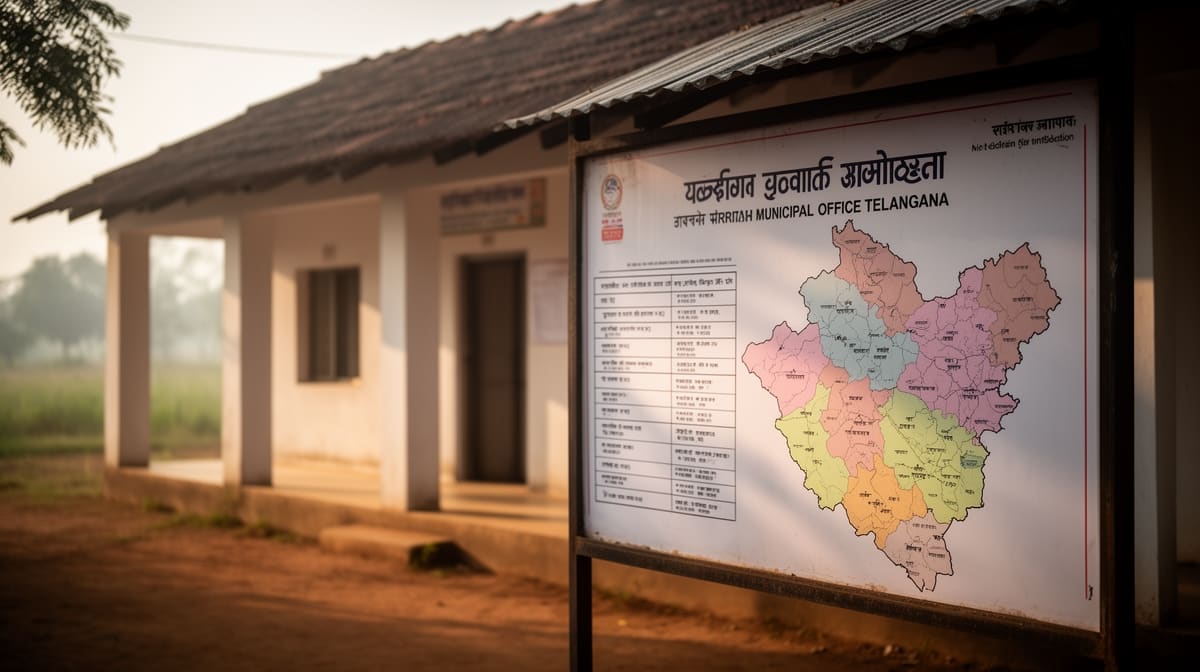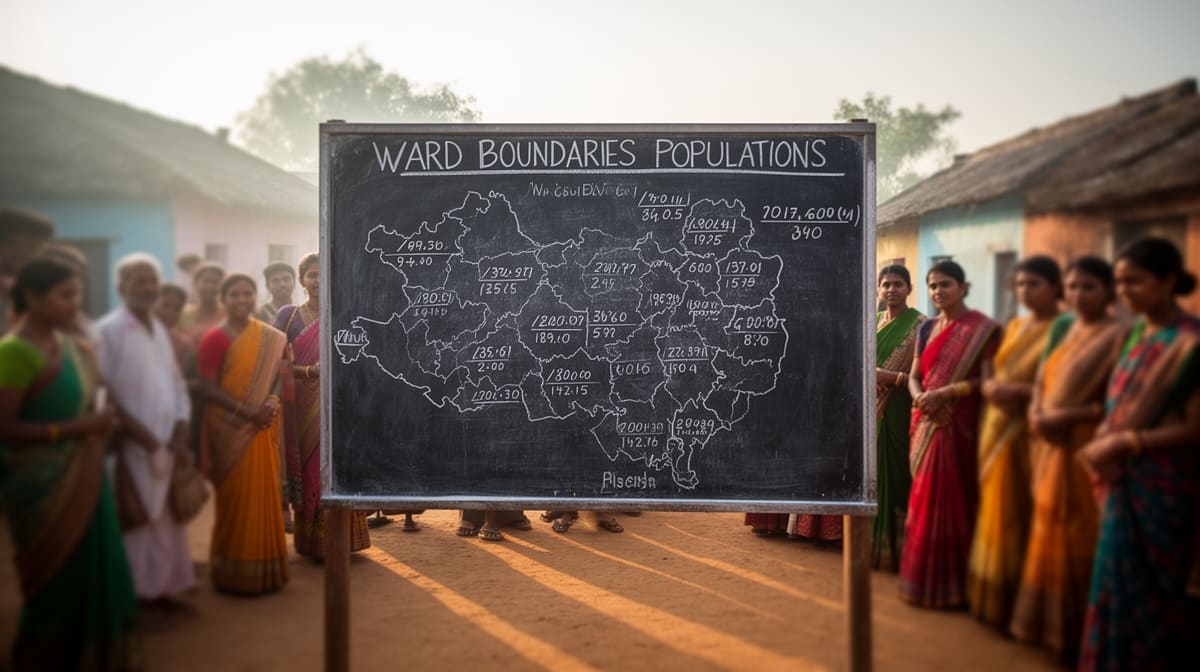
The Punjab and Haryana High Court has invalidated a state notification reducing reserved seats for Scheduled Castes in the Panchkula Municipal Corporation, holding that constitutional mandates under Article 243T require reliance solely on the last published Census - 2011 - and not on any other data source, including the Family Information Data Repository. This ruling reaffirms the non-negotiable statutory and constitutional framework governing electoral representation for marginalized communities in urban local bodies.
Background & Facts
The Dispute
The petitioners, former Councilors of the Municipal Corporation Panchkula, challenged Notification No. 6/44/2025-4CI dated 04.09.2025, which reduced the number of seats reserved for candidates belonging to the Scheduled Castes (SCs) from four to three in the upcoming municipal elections. The petitioners contended that this reduction violated Articles 243P(g) and 243T of the Constitution of India and Section 6 of the Haryana Municipal Corporation Act, 1994, which are pari materia to the constitutional provisions.
Key Facts
- The Municipal Corporation of Panchkula has 20 wards, all to be filled by direct election.
- In the 2020 elections, four seats were reserved for SC candidates based on the 2011 Census data.
- The 2011 Census recorded the SC population in Panchkula as 18.1% of the total population of 2,67,413, which mathematically yielded 3.62 seats, rounded up to four under the prescribed formula.
- In 2020, the boundaries of the Municipal Corporation were altered: areas including Kalka and Pinjore were excluded, and new areas were added.
- A spot survey was conducted in 2020 using the Family Information Data Repository (FIDR), which recorded an SC population of 70,679 out of a total population of 3,17,476, yielding 4.45 seats, rounded to four.
- The impugned notification dated 04.09.2025 reduced SC-reserved seats to three, relying on the 2011 Census figures applied to the new boundaries, which yielded 15.51% SC population (41,467 out of 2,67,413), resulting in 3.10 seats, rounded down to three.
- The FIDR was established under the Haryana Parivar Pehchan Act, 2021 (Act No. 20 of 2021), and is a dynamic, voluntary database for welfare scheme eligibility.
- The State admitted that FIDR data was used for determining total seats and for reservation of seats for Backward Classes 'A' and 'B', but claimed that for SC reservations, only the 2011 Census was used.
- The petitioners demonstrated that if the 2011 Census data (18.1%) were correctly applied to the reconstituted boundaries, the SC reservation would still be four seats.
Procedural History
- 29.07.2020: Notification issued altering boundaries of Panchkula Municipal Corporation.
- 2020: Municipal elections held with four SC-reserved seats based on FIDR-based spot survey.
- 16.05.2023: Amendment to Section 6 of the Haryana Municipal Corporation Act, 1994, effective from this date, substituting Census data with FIDR data for total seat fixation.
- 26.05.2023: Amendment to Rule 3 of the Haryana Municipal Corporation Delimitation of Ward Rules, 1994, incorporating FIDR for total seat calculation.
- 16.06.2023: Government notification added sub-rule (3) to Rule 3, explicitly stating that for SC reservations, population shall be based on the last preceding Census.
- 04.09.2025: Impugned notification issued reducing SC-reserved seats from four to three.
- 03.03.2026: Counter affidavit filed by the State.
- 04.03.2026: Reply affidavit filed by petitioners.
- 08.04.2026: Judgment pronounced by the Division Bench.
The Parties' Positions
Petitioners: Argued that the reduction in SC seats was arbitrary and unconstitutional. They asserted that Article 243T mandates that reservation be based exclusively on the last preceding Census (2011), applied uniformly to the current municipal boundaries. They contended that the State’s reliance on FIDR for total population but Census for SC population created a contradictory and discriminatory methodology. They submitted that even under the State’s own calculation using 2011 Census data, the SC reservation should be four seats.
Respondents (State of Haryana): Argued that the reduction was due to territorial changes and that the State had complied with the law by using the 2011 Census for SC reservations, as mandated by the 2023 amendment to Rule 3. They claimed that FIDR was used only for total seat calculation and not for SC reservation, and that the process was transparent and non-malafide.
Relief Sought
The petitioners sought quashing of the notification dated 04.09.2025, restoration of four SC-reserved seats, and a direction to conduct future delimitation strictly in accordance with Articles 243P(g) and 243T of the Constitution.
The Legal Issue
The central question was whether the reduction of reserved seats for Scheduled Castes in a Municipal Corporation, following a change in territorial boundaries, may be based on the 2011 Census data applied to the new boundaries, or whether the State may substitute or supplement this data with information from the Family Information Data Repository (FIDR) under the Haryana Parivar Pehchan Act, 2021.
Arguments Presented
For the Petitioner
The petitioners relied on Article 243T(1) of the Constitution, which mandates that the number of seats reserved for Scheduled Castes must bear, "as nearly as may be," the same proportion to the total number of seats as the SC population bears to the total population of the Municipal area. They emphasized that Article 243P(g) defines "population" as "the population as ascertained at the last preceding census of which the relevant figures have been published." They argued that the 2011 Census was the only legally recognized source for such calculations. They cited the 2023 amendment to Rule 3 of the Delimitation Rules, which explicitly preserved the 2011 Census for SC reservations, and contended that the State’s application of FIDR for total population while using Census for SC population was internally inconsistent and violated the principle of equal treatment. They further argued that the State’s calculation was mathematically flawed: applying 18.1% SC population to the 2011 total population (2,67,413) yielded 3.62 seats, which under standard rounding rules (0.5 and above) must be rounded to four, not three.
For the Respondent
The State, through the Advocate General, argued that the reduction in seats was a consequence of territorial realignment and that the State had strictly followed the amended provisions of Section 6 of the Haryana Municipal Corporation Act and Rule 3 of the Delimitation Rules. They contended that FIDR was used only for determining the total population for seat allocation, while the 2011 Census was used exclusively for SC reservation, as required by the 2023 amendment. They asserted that the State acted in good faith and that the reduction from four to three seats was a neutral outcome of demographic changes, not an attempt to dilute representation. They maintained that the use of FIDR for total population was lawful under the amended statute and that the 2011 Census data, when applied to the new boundaries, legitimately yielded 3.10 seats.
The Court's Analysis
The Court undertook a rigorous textual and constitutional analysis of Articles 243P(g) and 243T, and the statutory framework under the Haryana Municipal Corporation Act and its Rules. It observed that the constitutional mandate under Article 243T is not merely procedural but substantive: it ensures that the proportion of reserved seats reflects the actual demographic reality as captured by the most recent official census. The Court noted that the 2023 amendments to Section 6 and Rule 3 introduced FIDR as a source for total population calculation, but simultaneously preserved the 2011 Census as the exclusive source for SC reservation under sub-rule (3) of Rule 3. This distinction was deliberate and legally binding.
"The State cannot simultaneously rely on FIDR for total population and on the 2011 Census for SC population while ignoring the fact that the 2011 Census data must be recalibrated to the current municipal boundaries."
The Court rejected the State’s argument that the 2011 Census figures could be applied mechanically to the new boundaries without adjusting for the areas that were excluded. It held that the correct methodology required recalculating the SC population within the current municipal limits using the 2011 Census data, not the old boundaries. The State had failed to do this. Instead, it had used the 2011 Census data from the old boundaries and applied it to the new boundaries, resulting in an artificially low SC population percentage.
The Court further held that the State’s reliance on FIDR for total population while excluding it for SC reservation created an arbitrary and irrational classification. If FIDR was deemed reliable enough to determine total population for seat allocation, it could not be dismissed as unreliable for SC reservation without violating the principle of equal protection under Article 14. The Court emphasized that the Constitution does not permit piecemeal application of data sources for different categories within the same delimitation exercise.
The Court also noted that the State’s own calculation, when correctly applied, yielded 3.62 seats, which under the established rounding rule (0.5 and above) must be rounded to four. The State’s decision to round down to three was mathematically incorrect and legally unsustainable.
The Verdict
The petition succeeded. The Court quashed and set aside the notification dated 04.09.2025 to the extent it reduced the number of seats reserved for Scheduled Castes in the Municipal Corporation of Panchkula from four to three. The Court directed that the number of seats reserved for Scheduled Castes shall be restored to four, based on the 2011 Census data recalibrated to the current municipal boundaries. All pending applications are disposed of. The State is directed to issue a fresh notification within four weeks, consistent with this judgment.
What This Means For Similar Cases
Census Data Is Non-Negotiable for SC/ST Reservation
- Practitioners must insist that any delimitation involving SC/ST reservation under Part IXA of the Constitution must use only the last published Census data, applied to the current territorial boundaries.
- Any attempt to substitute or supplement Census data with administrative surveys, FIDR, or electoral rolls for SC/ST reservation is constitutionally invalid.
- Rounding rules must be applied consistently: 0.5 and above must be rounded up.
FIDR Cannot Be Used Selectively in Delimitation
- If a state uses a non-Census database (like FIDR) for total population calculation, it cannot exclude that same database for SC/ST reservation without violating Article 14.
- The State must adopt a uniform methodology across all categories of reservation within the same delimitation exercise.
- Any statutory amendment that permits differential treatment of data sources for different categories must be scrutinized for arbitrariness.
Territorial Changes Require Recalibration, Not Just Reapplication
- When municipal boundaries change, the Census data must be recalculated for the new area, not merely re-applied from the old area.
- Excluded areas must be subtracted from the old Census data; included areas must be added using the same Census data.
- Failure to do so results in an inaccurate and constitutionally defective delimitation.