The Allahabad High Court has affirmed that a minor, unintentional error in an online recruitment application - such as incorrectly marking a dependency claim - cannot justify cancellation of candidature when the candidate is otherwise eligible and the error does not affect selection integrity. This ruling reinforces the constitutional imperative of fairness over hyper-technical disqualifications.
Background & Facts
The Dispute
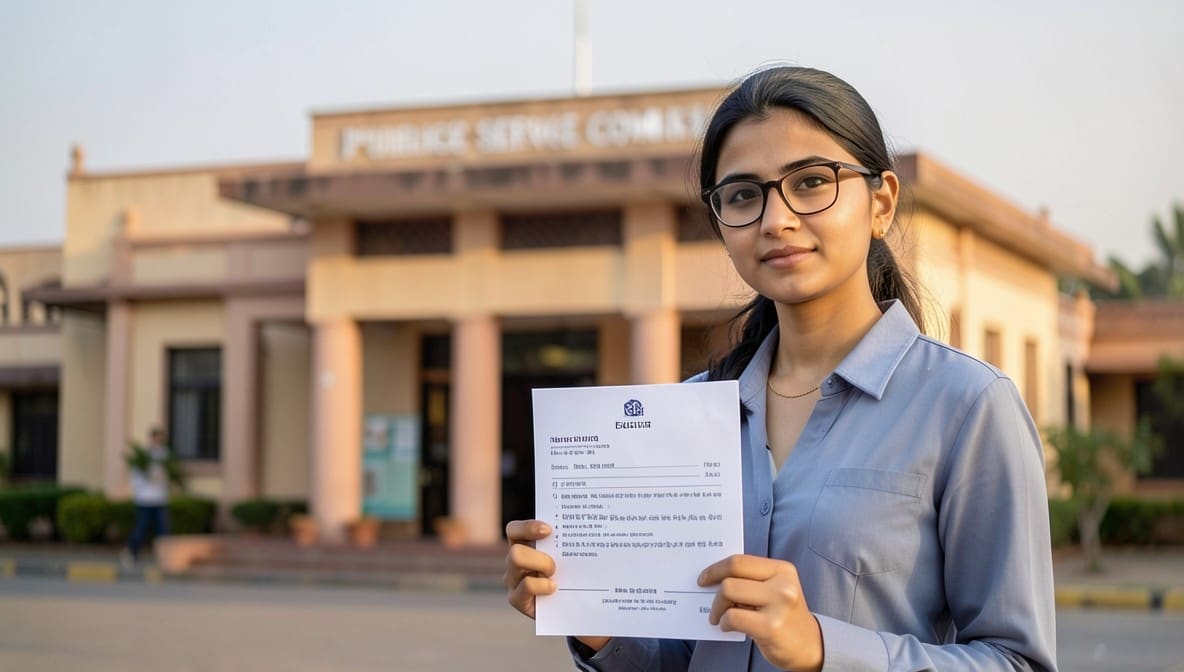
The petitioner, Babita Shakya, applied online for the post of Assistant Teacher (Trained Graduate Grade, Home Science) in Government Secondary Schools under the Uttar Pradesh Public Service Commission (UPPSC). The recruitment process required candidates to declare whether they were dependents of freedom fighters, with corresponding eligibility benefits. The petitioner, who was not a dependent of a freedom fighter, inadvertently marked "Yes" in this column during online submission due to technical or network-related issues.
Key Facts
- The petitioner possessed all requisite educational qualifications for the post of Assistant Teacher in Home Science.
- The online application window closed on 28.08.2025.
- A correction window was available from 29.08.2025 to 04.09.2025, which the petitioner did not utilize.
- The petitioner’s application ID: 009148743003285; Roll No.: 0413946; OTR No.: 500336429650.
- No document supporting the claim of being a dependent of a freedom fighter was uploaded.
- The petitioner’s candidature was rejected on 06.05.2026, listed at Serial No. 9 of the rejection list, solely on the basis of the "Yes" marking.
- On 07.05.2026, the petitioner submitted a written representation requesting correction of the inadvertent error.
- The UPPSC and other respondents did not respond to the representation before the examination date.
- The Mains Examination was scheduled for 16.05.2026.
Procedural History
- 28.08.2025: Deadline for online application submission.
- 04.09.2025: Deadline for correction of application details.
- 06.05.2026: Petitioner’s candidature rejected without considering her representation.
- 07.05.2026: Petitioner submitted representation seeking correction.
- 15.05.2026: Writ Petition filed before the Allahabad High Court.
- 15.05.2026: Court heard the matter urgently due to the imminent examination date.
The Parties' Positions
For the Petitioner: The error was a bona fide, inadvertent mistake caused by technical glitches during online submission. There was no intent to misrepresent. The petitioner was otherwise fully eligible. The rejection was arbitrary, disproportionate, and violated principles of natural justice.
For the Respondents (UPPSC and State): The petitioner failed to avail the correction window provided between 29.08.2025 and 04.09.2025. The application form was clear and unambiguous. Any deviation, however minor, invalidates the application as per recruitment rules. The petitioner cannot be granted relief after the deadline.
Relief Sought
The petitioner sought immediate direction to the respondents to issue her admit card and permit her to appear in the Mains Examination scheduled for 16.05.2026.
The Legal Issue
Can a candidate’s candidature be cancelled solely on the basis of an inadvertent, non-fraudulent error in an online application form - such as mismarking a dependency status - when the error does not affect eligibility, no supporting document was submitted, and the candidate has sought correction before the examination?
Arguments Presented
For the Petitioner
The petitioner’s counsel relied on the principle that recruitment processes must be conducted with fairness and pragmatism, not rigid technicality. He cited Vashist Narayan Kumar v. State of Bihar (2024) 11 SCC 785, where the Supreme Court held that trivial clerical errors in online applications cannot be treated as fatal. He argued that the petitioner’s error was neither deliberate nor material, as no benefit was claimed or attempted to be claimed through the false declaration. The rejection without considering her representation dated 07.05.2026 violated the principles of audi alteram partem.
For the Respondent
The respondents contended that the application form had a clear correction window, and the petitioner’s failure to use it rendered her ineligible for any relief. They argued that allowing exceptions for inadvertent errors would open floodgates to manipulation and undermine the integrity of the selection process. The rules were uniformly applied, and no discretion could be exercised after the deadline.
The Court's Analysis
The Court examined the nature of the error and its impact on the recruitment process. It noted that the petitioner had not uploaded any document to substantiate the claim of being a dependent of a freedom fighter, and there was no evidence of intent to deceive. The Court emphasized that the distinction between a deliberate misrepresentation and a bona fide human error is well-established in constitutional jurisprudence.
"The law is now well settled that recruitment authorities are required to adopt a pragmatic and justice-oriented approach while dealing with curable and insignificant defects, particularly where such defects do not impinge upon the fairness of the selection process."
The Court distinguished this case from those involving fraud or material misstatement. It held that the marking of "Yes" in the dependent of freedom fighter column, without any supporting document and without any claim for benefit, was a clerical oversight, not a substantive violation. The Court further observed that the rejection was mechanical and failed to consider the petitioner’s representation, thereby violating principles of natural justice.
The Court also noted the proximity of the examination date (16.05.2026) and the irreversible prejudice that would result if the petitioner were barred from appearing. It invoked its equitable jurisdiction under Article 226 to prevent manifest injustice.
The Verdict
The petitioner was permitted to provisionally appear in the Assistant Teacher Mains Examination scheduled for 16.05.2026. The UPPSC was directed to decide her representation regarding the inadvertent error within three weeks of receiving a certified copy of this order. The provisional admission carries no pre-judgment on the final decision and remains subject to the Commission’s final determination. No costs were awarded.
What This Means For Similar Cases
Inadvertent Errors Are Not Fatal
- Practitioners must argue that mechanical rejection of candidature for non-material, non-fraudulent errors violates Article 14 and Article 21.
- Candidates who submit representations before the examination should be given a fair hearing before rejection.
Correction Windows Are Not Exhaustive Remedies
- Failure to use a correction window does not automatically bar relief if the error is demonstrably inadvertent and the candidate acts promptly upon discovery.
- Courts may intervene where the recruitment authority fails to exercise discretion or apply common sense.
Procedural Fairness Trumps Rigid Compliance
- Recruitment authorities must distinguish between substantive disqualifications and clerical oversights.
- The burden is on the authority to prove intent to deceive; absence of such proof must favor the candidate.
No Precedent for Other Cases
- This order is confined to its unique facts: imminent examination date, no benefit claimed, no document submitted, prompt representation.
- Practitioners should not cite this as a blanket rule but as a precedent for equitable intervention in exceptional circumstances.