The Madras High Court has underscored the fundamental right of a detenu to receive translated copies of detention grounds and annexures in a language they understand. In a significant ruling, the Court set aside a preventive detention order under the Tamil Nadu Preventive Detention Act, 1982, holding that the non-supply of a translated accident register deprived the detenu of the opportunity to make an effective representation, violating principles of natural justice.
Background & Facts
The Dispute
The petitioner, Abithabanu, wife of Peer Haneef, filed a Habeas Corpus petition under Article 226 of the Constitution challenging the preventive detention of her husband. Peer Haneef, aged 31, was detained under Section 2(f) of the Tamil Nadu Preventive Detention Act, 1982, by an order dated 18.08.2025 passed by the Commissioner of Police, Greater Chennai. The detention order branded him as a "Goonda," a term defined under the Act to include individuals engaged in prejudicial activities.
Key Facts
- The detenu, Peer Haneef, was detained pursuant to Order No. 567/BBCDEFGISSSV/2025 dated 18.08.2025
- The grounds of detention and annexures, including an accident register, were supplied to the detenu
- The detenu had studied in Miasi School, Mannadi, until the 8th Standard, indicating his limited proficiency in languages other than Tamil
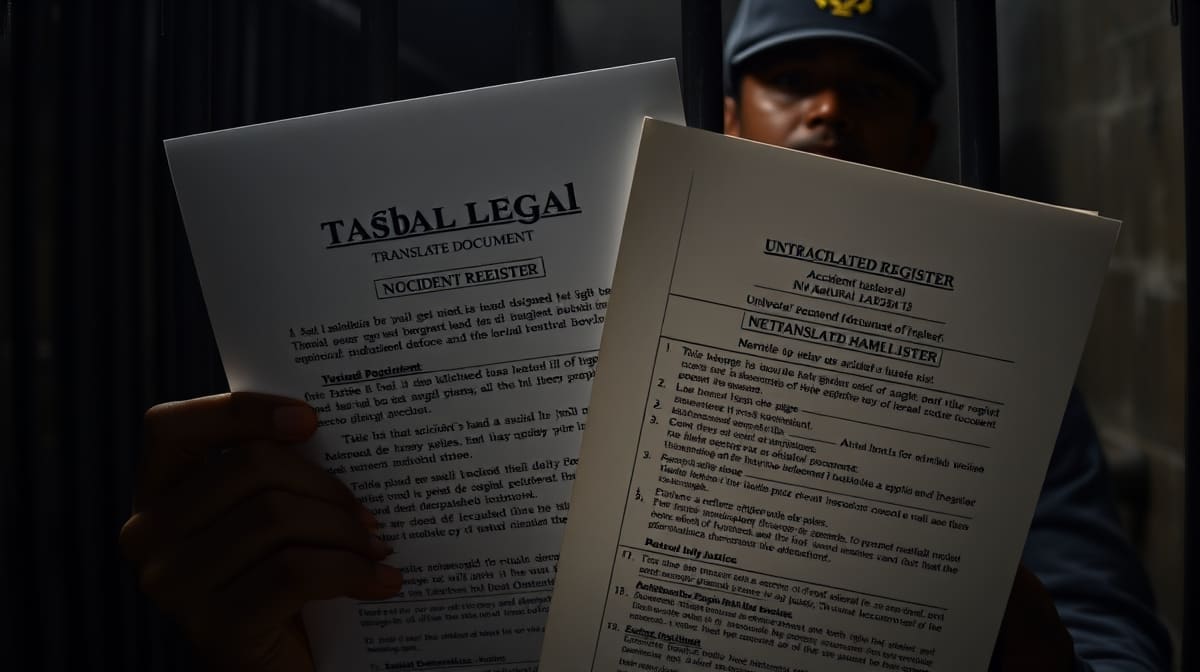
- The accident register, a critical document relied upon in the grounds of detention, was not translated into Tamil, the language known to the detenu
- The detenu, in his statement dated 26.07.2025, affirmed his inability to understand the untranslated document
Procedural History
- 18.08.2025: Detention order passed by the Commissioner of Police, Greater Chennai
- 26.07.2025: Detenu’s statement recorded, affirming his lack of understanding of the untranslated document
- HCP No. 1840 of 2025: Habeas Corpus petition filed before the Madras High Court on an unspecified date
- 26.03.2026: Madras High Court delivers judgment, allowing the petition
Relief Sought
The petitioner sought:
- Quashing of the detention order dated 18.08.2025
- Production of the detenu before the Court
- Release of the detenu from detention, unless his presence was required in connection with any other case
The Legal Issue
The central question before the Court was whether the non-supply of a translated copy of a document relied upon in the grounds of detention - specifically, the accident register - deprived the detenu of his constitutional right to make an effective representation, thereby rendering the detention order illegal.
Arguments Presented
For the Petitioner
The learned counsel for the petitioner argued that:
- The non-supply of the translated accident register violated the detenu’s right under Article 22(5) of the Constitution, which mandates that the detenu be afforded the opportunity to make an effective representation
- The detenu’s statement dated 26.07.2025 clearly established that he had studied only until the 8th Standard in a Tamil-medium school, rendering him incapable of understanding the untranslated document
- The failure to supply the translated document was fatal to the detention order, as it denied the detenu the opportunity to defend himself effectively
- Reliance was placed on the Supreme Court’s decision in Powanammal v. State of Tamil Nadu ((1999) 2 SCC 413), which held that non-supply of translated documents amounts to a denial of the right to representation
For the Respondent
The learned Additional Public Prosecutor, representing the State, had no defence to the petitioner’s contention regarding the non-supply of the translated document. The State did not dispute the factual position that the accident register was not translated.
The Court's Analysis
The Court relied heavily on the principles laid down in Powanammal v. State of Tamil Nadu, which crystallized the legal position regarding the right of a detenu to receive translated copies of detention grounds and annexures. The Court observed:
"8. The law relating to preventive detention has been crystallized and the principles are well neigh settled. The amplitude of the safeguard embodied in Art. 22(5) extends not merely to oral explanation of the grounds of detention and the material in support thereof in the language understood by the detenue but also to supplying their translation in script or language which is understandable to the detenue. Failure to do so would amount to denial of the right of being communicated the grounds and of being afforded the opportunity of making a representation against the order."
The Court further distinguished between documents relied upon in the grounds of detention and documents merely referred to in the grounds. It held that:
"Whereas the non-supply of a copy of the document relied upon in the grounds of detention has been held to be fatal to continued detention, the detenu need not show that any prejudice is caused to him. This is because the non-supply of such a document would amount to denial of the right of being communicated the grounds and of being afforded the opportunity of making an effective representation against the order."
Applying this principle to the present case, the Court noted that the accident register was a document relied upon in the grounds of detention, and its non-translation into Tamil - the language understood by the detenu - was a clear violation of his constitutional rights. The Court emphasized that the detenu’s statement dated 26.07.2025 categorically affirmed his inability to understand the untranslated document, as he had studied only until the 8th Standard in a Tamil-medium school.
The Court concluded that the non-furnishing of the translated document was contrary to the principles of natural justice and fatal to the impugned detention order.
The Verdict
The Madras High Court allowed the Habeas Corpus petition and set aside the detention order dated 18.08.2025 passed by the Commissioner of Police, Greater Chennai. The Court directed that the detenu, Peer Haneef, be set at liberty forthwith, unless his presence was required in connection with any other case.
What This Means For Similar Cases
Non-Supply of Translated Documents Is Fatal to Detention
- The judgment reaffirms that preventive detention orders under the Tamil Nadu Preventive Detention Act, 1982, or similar statutes, must strictly comply with the constitutional safeguards under Article 22(5)
- Non-supply of translated copies of documents relied upon in the grounds of detention automatically vitiates the detention order, without requiring the detenu to prove prejudice
- Practitioners should scrutinize detention orders for compliance with translation requirements, particularly where the detenu’s educational background suggests limited proficiency in the language of the documents
The Burden of Compliance Lies on the Detaining Authority
- The detaining authority bears the burden of ensuring that all documents relied upon in the grounds of detention are translated into a language understood by the detenu
- Failure to discharge this burden cannot be cured by the detenu’s inability to prove prejudice, as the right to representation is absolute in such cases
- This judgment serves as a warning to authorities to strictly adhere to procedural safeguards, failing which detention orders will be liable to be set aside
Practical Implications for Detenues and Legal Practitioners
- Detenues should immediately verify whether all documents relied upon in their detention orders have been translated into a language they understand
- Legal practitioners should raise this issue as a preliminary ground in habeas corpus petitions, as it is likely to succeed without requiring proof of prejudice
- Lower courts and tribunals must ensure compliance with translation requirements before upholding detention orders, as non-compliance is fatal to the order