The Telangana High Court has unequivocally held that educational institutions have no legal authority to withhold a student’s original academic certificates, even in the presence of alleged financial dues. This ruling reinforces the principle that personal educational documents are not collateral for debt recovery and their retention violates fundamental rights under Articles 14 and 300A of the Constitution.
Background & Facts
The Dispute
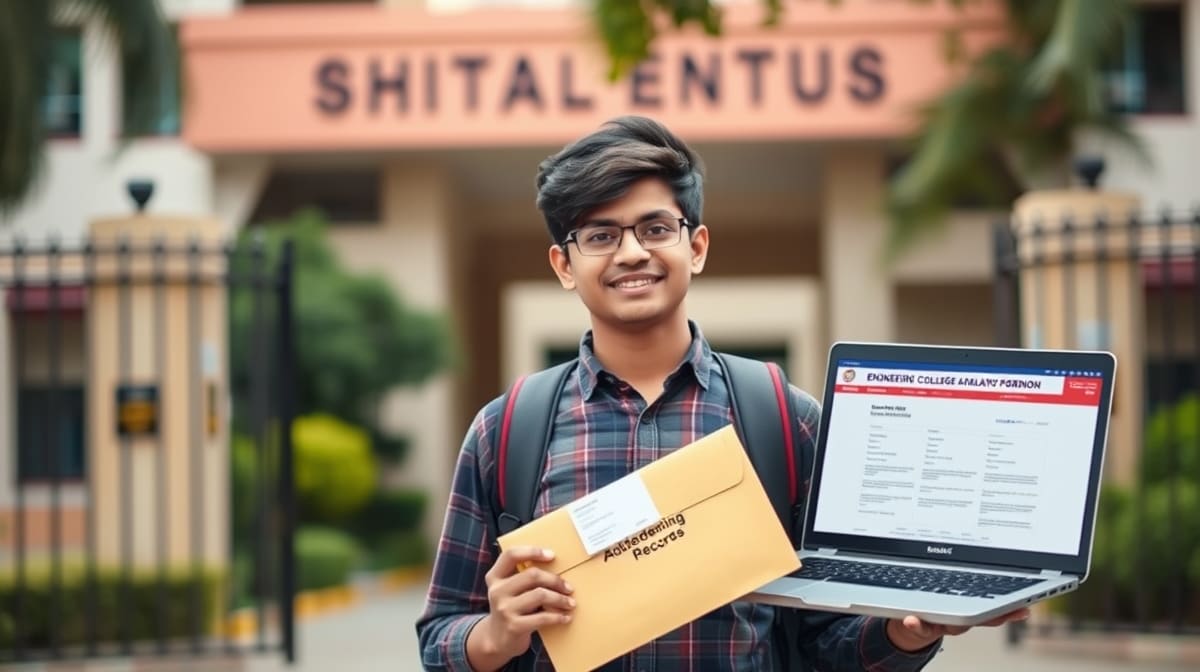
The petitioner, Sri Khaja Noor Uddin Chishty, a 22-year-old engineering student, completed his B.Tech program at TKR College of Engineering and Technology, Respondent No.4. Upon completion of his course, he requested the return of his original academic documents, including his SSC Certificate, Intermediate Certificate, B.Tech Provisional Certificate, and Consolidated Marks Memo. The college refused to return these documents unless he paid an alleged outstanding fee of Rs. 2,10,000, despite his eligibility for fees reimbursement under state schemes.
Key Facts
- The petitioner was enrolled in the B.Tech program at TKR College of Engineering and Technology, Medchal (Rangareddy District), Telangana.
- He completed all academic requirements and was eligible for degree conferral.
- At the time of admission, he submitted original academic documents as required by institutional policy.
- The college withheld these documents after course completion, citing unpaid fees of Rs. 2,10,000.
- The petitioner is eligible for full fees reimbursement under Telangana State Government schemes and has submitted the requisite documentation.
- He is not in a financial position to pay the demanded amount and requires his original certificates to apply for employment.
- No formal demand notice, invoice, or adjudication of dues was issued by the college prior to withholding documents.
Procedural History
- Date of course completion: Early 2026 (exact date not specified, but petition filed in April 2026)
- Date of request for document return: Shortly after completion of studies in early 2026
- Date of refusal by Respondent No.4: Early 2026
- 15.04.2026: Writ Petition No. 4747 of 2026 filed before the High Court for the State of Telangana
- 15.04.2026: Order passed by the Court
The Parties' Positions
Petitioner: Argued that withholding original academic certificates is arbitrary, illegal, and violates his right to livelihood under Article 21 and right to equality under Article 14. He emphasized that the documents are personal property and not security for payment.
Respondent No.4 (TKR College): Did not appear or file any counter-affidavit or representation.
Respondents 1 - 3 (State, TCHE, JNTU): Were represented but did not contest the core issue, as the dispute pertained solely to the college’s conduct.
Relief Sought
The petitioner sought a writ of mandamus directing Respondent No.4 to immediately return his original SSC Certificate, Intermediate Certificate, B.Tech Provisional Certificate, Consolidated Marks Memo, and all other educational documents in its custody.
The Legal Issue
The central question was whether an educational institution can legally withhold a student’s original academic certificates on account of alleged unpaid fees, and whether such retention constitutes an arbitrary violation of Article 14 and Article 300A of the Constitution.
Arguments Presented
For the Petitioner
Learned counsel for the petitioner submitted that original academic certificates are personal property, essential for securing employment and further education. Withholding them as leverage for debt recovery is not only legally impermissible but also violates the principle of proportionality. He cited Article 300A (right to property) and Article 21 (right to livelihood), arguing that the college’s action is arbitrary and lacks any statutory backing. He emphasized that the petitioner is eligible for reimbursement and that no due process was followed.
For the Respondent/State
No arguments were presented by Respondent No.4. The State and other respondents did not defend the college’s action, effectively conceding the illegality of the practice.
The Court's Analysis
The Court observed that academic certificates are not mere administrative records but personal documents that form the foundation of a student’s professional identity. The retention of such documents by an institution, even if there is a claim for unpaid fees, is not a recognized legal remedy under any statute or regulation.
"The said certificates, being personal and academic credentials, are undoubtedly the property of the petitioner. In such circumstances, respondent No.4-college has no authority whatsoever to retain the said certificates and the retention of the petitioner's original certificates by respondent No.4 is wholly unjustified and cannot be sustained."
The Court further held that even if a legitimate monetary claim exists, the proper legal recourse is to initiate recovery proceedings under civil law or debt recovery mechanisms - not to deprive the student of essential documents. The Court rejected any notion that retention of documents could serve as a coercive tool for payment, calling it an abuse of power and a violation of natural justice.
The Court emphasized that the right to livelihood, protected under Article 21, is directly impacted when a graduate cannot present original certificates to prospective employers. The college’s conduct, therefore, was found to be arbitrary, unreasonable, and violative of Article 14.
The Verdict
The writ petition was allowed. The Court directed Respondent No.4, TKR College of Engineering and Technology, to return the petitioner’s original SSC Certificate, Intermediate Certificate, B.Tech Provisional Certificate, Consolidated Marks Memo, and all other educational documents within one week from the date of receipt of a copy of this order. No costs were awarded. All pending miscellaneous applications were closed.
What This Means For Similar Cases
Retention of Certificates Is Per Se Illegal
- Educational institutions across India cannot legally withhold original certificates for any reason, including unpaid fees, library dues, or hostel charges.
- Practitioners must immediately challenge such practices under Article 226 as violations of Article 14 and Article 300A.
- Any institution continuing this practice exposes itself to writ jurisdiction and potential contempt proceedings.
Remedies for Institutions Are Legal, Not Coercive
- Institutions must pursue recovery of dues through civil suits, small claims courts, or debt recovery tribunals.
- No statutory provision permits document retention as a mode of enforcement.
- Institutions should issue formal demand notices and follow due process before initiating any legal action.
Students Must Act Promptly
- Students facing document withholding should file writ petitions immediately, as courts treat such matters with urgency due to impact on livelihood.
- Affidavits must clearly state eligibility for reimbursement, if applicable, to strengthen the claim of no valid dues.
- Keep copies of all submitted documents and correspondence to establish possession and lawful entitlement.