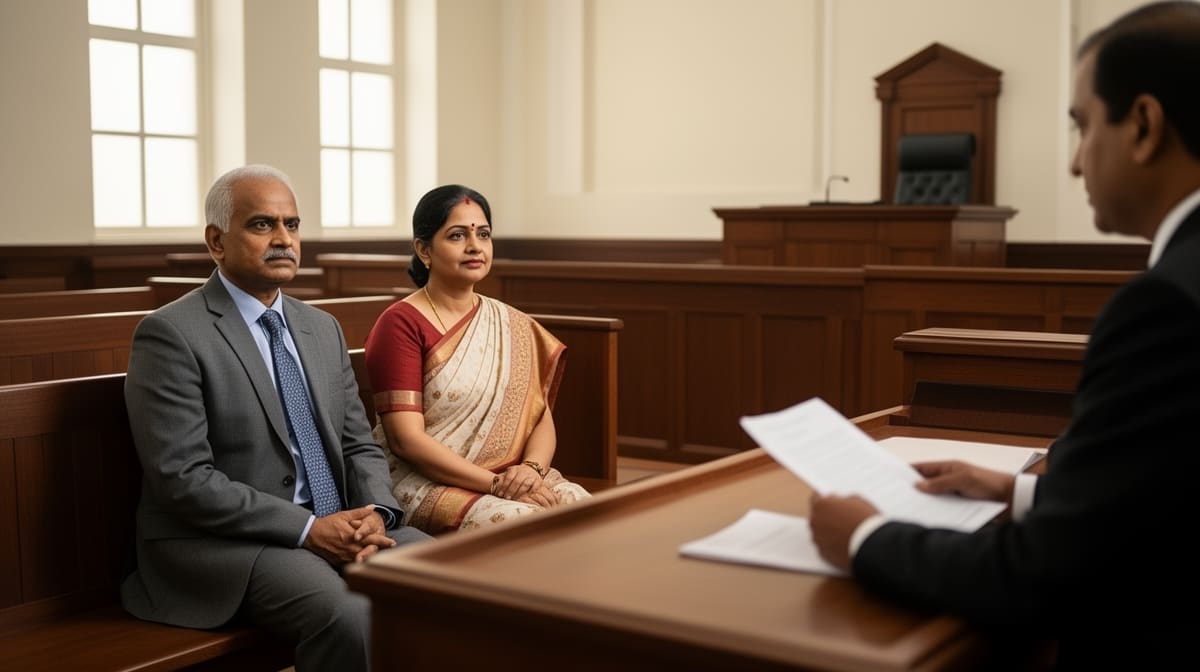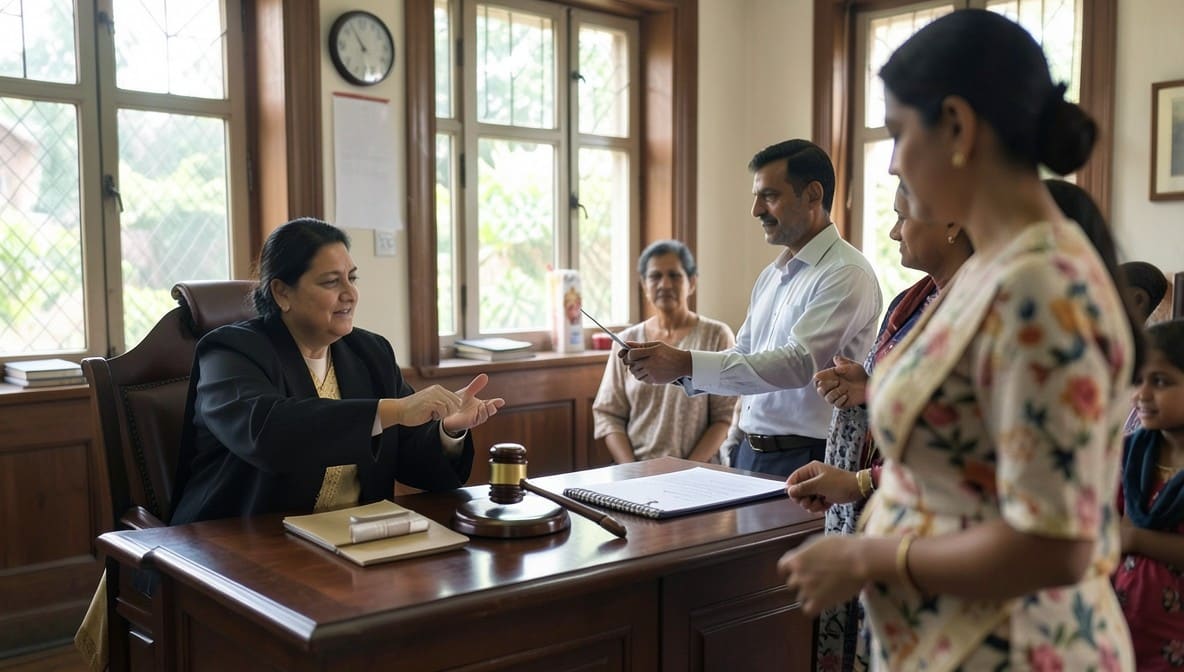
The High Court of Telangana has clarified that personal attendance in domestic violence proceedings is not an absolute requirement when the accused demonstrates genuine livelihood constraints. This ruling affirms judicial discretion to balance procedural compliance with practical realities, particularly for economically vulnerable individuals.
Background & Facts
The Dispute
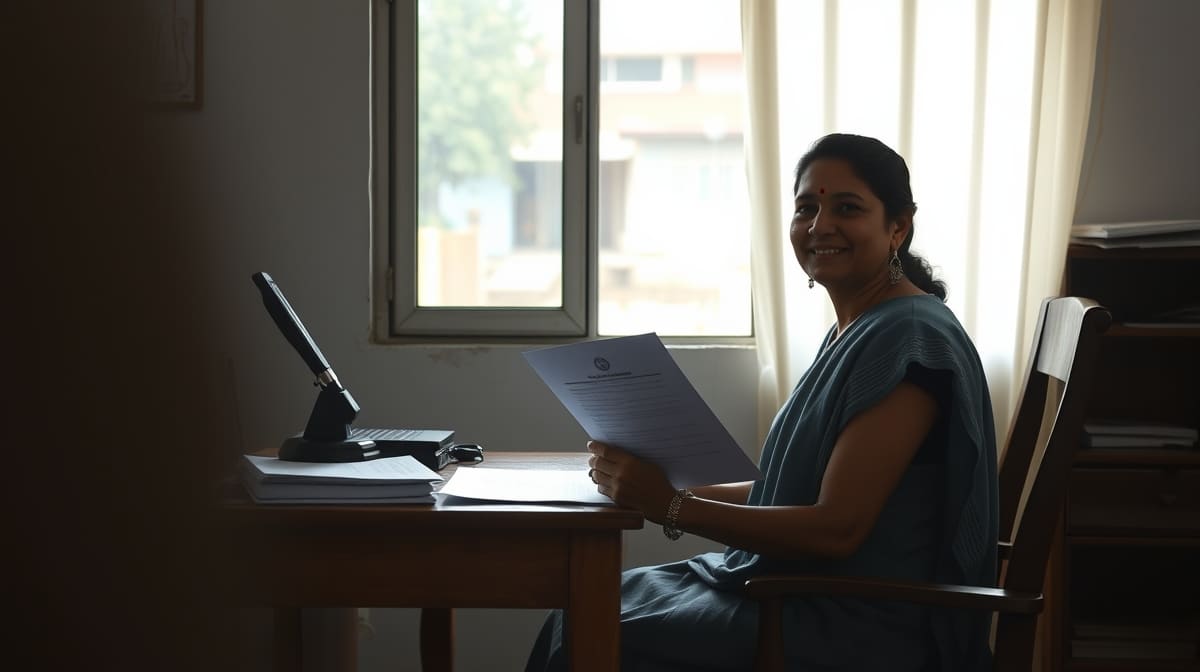
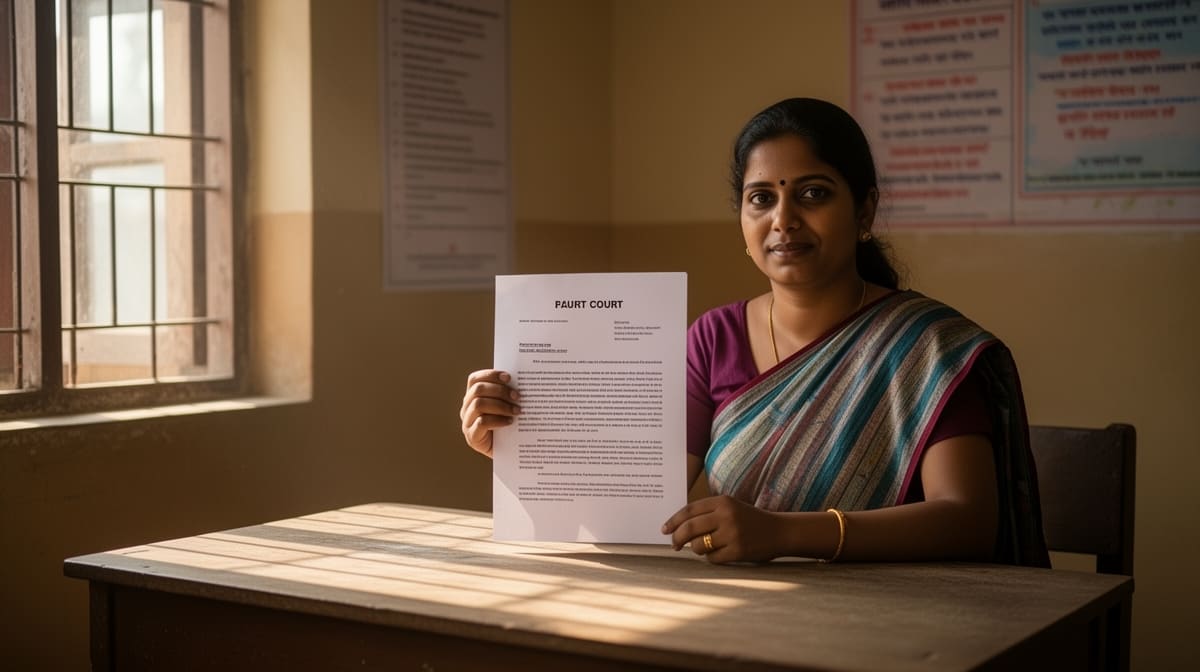
The petitioner, Smt. Ganji Radha, is a 45-year-old woman engaged in tailoring as her sole means of livelihood. She is the respondent in Domestic Violence Case No. 59 of 2025, filed before the II Additional Junior Civil Judge-cum-VI Additional Judicial Magistrate of First Class at Medipally. The case involves allegations under the Protection of Women from Domestic Violence Act, 2005.
Procedural History
- The petitioner was summoned to appear in person on multiple dates in the trial court.
- Due to her occupation as a tailor, frequent court appearances disrupted her ability to earn a daily wage.
- She filed Criminal Petition No. 2435 of 2026 under Section 529 of the Bharatiya Nagarik Suraksha Sanhita (BNSS) seeking to quash proceedings or, alternatively, to dispense with her personal attendance.
- The petition was filed without challenging the merits of the case.
Relief Sought
The petitioner sought only to be excused from personal appearance in court, requesting that her counsel represent her on all hearing dates, unless the trial court specifically ordered her presence.
The Legal Issue
The central question was whether Section 529 of BNSS permits a High Court to dispense with the personal attendance of an accused in a domestic violence case when their livelihood is demonstrably affected by mandatory court appearances, without prejudicing the rights of the complainant or the integrity of the trial.
Arguments Presented
For the Petitioner
Mr. Bathini Upendar, Advocate for the petitioner, argued that the petitioner’s daily wage employment as a tailor makes it economically unsustainable to attend every court date. He cited judicial precedents recognizing the hardship faced by economically disadvantaged accused persons and emphasized that personal attendance is not a statutory mandate under the Protection of Women from Domestic Violence Act, 2005, but a discretionary practice. He relied on the principle of proportionality and the right to livelihood under Article 21 of the Constitution.
For the Respondent
The Additional Public Prosecutor did not oppose the prayer. He acknowledged the petitioner’s financial vulnerability and conceded that there was no prejudice to the complainant’s case if representation by counsel were permitted. He noted that the trial court had not yet recorded any evidence and that the petitioner had not evaded summons.
The Court's Analysis
The Court examined the nature of proceedings under the Protection of Women from Domestic Violence Act, 2005, and the procedural flexibility afforded under Section 529 of BNSS, which empowers High Courts to call for records and pass orders as justice requires. The Court observed that while personal appearance is generally preferred to ensure accountability, it is not an inflexible rule.
"The object of the Act is to provide immediate relief and protection to women, not to impose undue hardship on the accused who are economically vulnerable. The presence of counsel can adequately safeguard the interests of both parties."
The Court distinguished this from cases involving serious offences where personal attendance is critical for cross-examination or deterrence. Here, the petitioner was not accused of physical violence but of alleged harassment, and no evidence had been recorded. The Court emphasized that representation by counsel ensures due process and that the trial court retains the power to summon the petitioner if her presence becomes necessary.
The Court also noted that the State did not oppose the request, reinforcing the reasonableness of the petitioner’s plea.
The Verdict
The petitioner succeeded. The High Court held that personal attendance may be dispensed with in domestic violence proceedings when the accused demonstrates compelling livelihood constraints, provided they are represented by counsel on all hearing dates. The trial court retains authority to require personal appearance if circumstances demand it.
What This Means For Similar Cases
Personal Attendance Is Not Mandatory by Default
- Practitioners may now file applications under Section 529 BNSS to seek exemption from personal attendance for accused persons in DV cases who are daily wage earners, small business owners, or caregivers.
- Such applications must be supported by affidavits detailing income loss due to court appearances.
- Courts must weigh the accused’s economic hardship against the complainant’s right to a fair trial.
Counsel Representation Is Sufficient for Procedural Compliance
- The presence of a qualified advocate satisfies the requirements of natural justice in non-violent or preliminary DV matters.
- Trial courts must not automatically insist on personal attendance; they must record reasons if they override a counsel-only appearance.
- This precedent applies equally to other non-bailable, non-serious offences under special statutes where livelihood is at stake.
Judicial Discretion Must Be Exercised Proportionally
- Courts must avoid rigid adherence to procedural formalities where they defeat substantive justice.
- The ruling reinforces that Article 21 protects not only liberty but also the right to earn a livelihood.
- This approach aligns with the spirit of Arnesh Kumar v. State of Bihar, which cautioned against mechanical arrest and appearance mandates.