The Calcutta High Court has quashed criminal proceedings against a father accused of assaulting his minor child during a court-sanctioned visitation, emphasizing that criminal liability requires proof of intentional harm - not mere emotional reactions in high-stakes family disputes. The judgment reinforces the principle that proceedings lacking mens rea and founded on uncorroborated, interested testimony constitute an abuse of process.
Background & Facts
The Dispute
The petitioner, Subhadeep Chakraborty, is the biological father of a six-year-old boy. A matrimonial dispute is ongoing between him and the complainant, his estranged wife. Both parties are engaged in parallel litigation: a proceeding under the Guardians and Wards Act, 1890 for custody and visitation rights, and a proceeding under the Protection of Women from Domestic Violence Act, 2005.
On 18.09.2024, the District Judge, Burdwan, granted the petitioner interim visitation rights, directing that the child be brought to the court premises for supervised interaction with the father. The visitation was scheduled for 01.03.2025.
Key Facts
- The child was brought to the court premises on 01.03.2025 at approximately 2:00 p.m. for the court-ordered visitation.
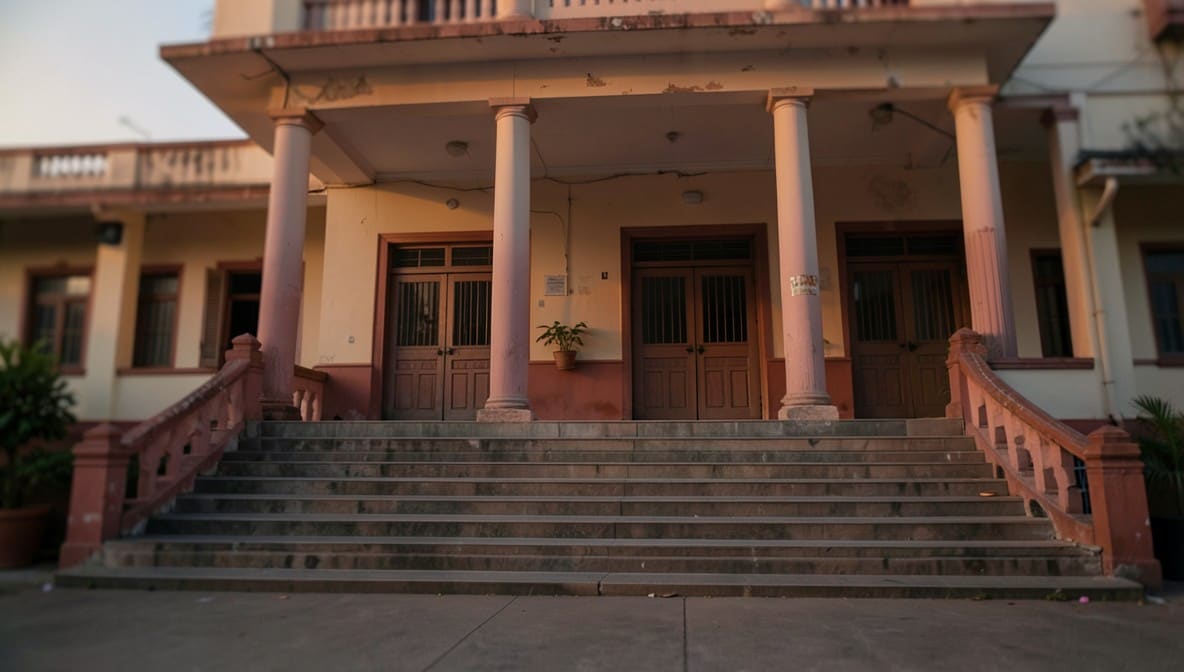
- The meeting occurred on the veranda outside the courtroom.
- The child reportedly expressed that he was feeling sleepy.
- The petitioner allegedly became agitated, grabbed the child, and began dragging him down the stairs toward the Town School gate.
- The complainant (mother) intervened, attempting to stop the petitioner.
- The petitioner allegedly threw a tennis ball at the child, striking him on the lower abdomen.
- The complainant alleged that the petitioner also abused and pushed her, causing her to fall.
- The child was taken to Burdwan Medical College and Hospital, where an injury report was issued.
- The injury report described the injury as "simple" but recorded the history as: "As per statement of mother, physical assault by the petitioner."
- No visible external injuries were observed or documented beyond the report.
- The petitioner has consistently maintained that he is a loving father who cherishes his visitation rights and would never harm his child.
Procedural History
- 01.03.2025: Alleged incident occurred at Burdwan Court premises during supervised visitation.
- 03.03.2025: Complainant filed an application before the District Judge, Burdwan, seeking suspension of visitation rights, citing the incident.
- 24.06.2025: District Judge suspended the petitioner’s visitation rights based on the application.
- 04.03.2025: FIR No. 237/2025 was lodged at Burdwan Police Station under Sections 126(2), 115(2), and 352 of the Bharatiya Nyaya Sanhita (BNS), 2023.
- Investigation completed: Charge sheet filed on 04.03.2025.
- Statements recorded under Section 161 CrPC: Only two witnesses - (i) the complainant’s father, who was not present at the scene, and (ii) the complainant’s advocate, who had filed the application for suspension of visitation the previous day.
- No independent witnesses were produced despite the incident occurring on court premises during working hours.
- The complainant informed the investigating officer that she had no further witnesses to produce.
- 21.04.2026: Hearing before the Calcutta High Court.
- 04.05.2026: Judgment delivered.
The Parties' Positions
For the Petitioner
The petitioner contends that the allegations are fabricated, motivated by revenge and a desire to permanently sever his bond with his child. He argues that:
- The incident, even if true, was a momentary lapse in judgment during an emotionally charged situation, not a criminal act.
- The FIR and the application filed before the District Judge contain material contradictions.
- The only witnesses are the complainant’s father (absent at the scene) and her advocate (a party to the civil proceeding), both inherently interested.
- The delay of three days in filing the FIR suggests fabrication and deliberation.
- The medical report lacks independent corroboration and merely records the mother’s version.
- No physical evidence of injury exists beyond the report.
For the Respondent/State
The State submitted the case diary but did not contest the petitioner’s arguments regarding the absence of independent evidence or the delay in filing the FIR.
For the Complainant (Opposite Party No. 2)
The complainant’s counsel argued that:
- The medical report from a government hospital is a public document under Section 74(1)(iii) of the Indian Evidence Act and attracts presumption of authenticity.
- The quality of evidence, not quantity, matters under Section 134 of the Indian Evidence Act.
- The petitioner can challenge the evidence during trial through cross-examination.
- The petitioner had no custody rights and was only permitted visitation within court premises; taking the child beyond that boundary was unlawful.
- The advocate is not an interested witness because she gains nothing materially from conviction or acquittal.
Relief Sought
The petitioner seeks quashing of FIR No. 237/2025 under Section 482 CrPC, arguing that the proceedings are frivolous, malicious, and lack the essential ingredients of the offences charged.
The Legal Issue
The central question was whether the allegations, even if accepted at face value, disclose the essential ingredients of wrongful restraint, voluntarily causing hurt, and intentional insult under the Bharatiya Nyaya Sanhita, 2023, particularly whether mens rea - the requisite criminal intention - is present, and whether proceedings based solely on the statements of interested witnesses, with no independent corroboration and a significant delay in filing the FIR, constitute an abuse of process warranting quashing under Section 482 CrPC.
Arguments Presented
For the Appellant/Petitioner
The petitioner’s counsel relied on Bhajanlal v. State of Haryana to argue that the allegations, even if taken as true, do not constitute a cognizable offence because:
- There is no evidence of deliberate intention to cause harm to the child.
- The conduct described is more consistent with a momentary lapse during a high-emotion visitation than a criminal act.
- The prosecution relies exclusively on two interested witnesses: the complainant’s father (absent at the scene) and her advocate (who filed the suspension application the day before the FIR).
- The delay of three days in filing the FIR is unexplained and suggests fabrication.
- The medical report is merely a recitation of the complainant’s version and lacks independent clinical findings.
- No other witness came forward despite the incident occurring in a public court setting.
- The prosecution’s failure to secure corroborative evidence despite opportunity indicates a weak, possibly malicious case.
For the Respondent/State
The State did not present substantive counter-arguments beyond submitting the case diary. It did not challenge the petitioner’s assertions regarding the absence of independent witnesses or the delay in filing the FIR.
For the Complainant
The complainant’s counsel argued that:
- The medical report is a public document under Section 74(1)(iii) of the Indian Evidence Act and is presumed authentic.
- The advocate is not an interested witness because she has no personal stake in the outcome.
- The petitioner’s remedy lies in cross-examination during trial, not in seeking quashing.
- The court should not act as a trial court at the quashing stage.
- Reliance was placed on Koppisetti Subbharao v. State of Andhra Pradesh to argue that quashing is not warranted merely because evidence is contested.
The Court's Analysis
The Court undertook a rigorous analysis of the allegations, the evidence, and the legal requirements for the offences charged. It emphasized that criminal liability under Sections 126(2) and 115(2) of the BNS requires proof of intentional obstruction and intentional causing of hurt, both of which demand mens rea.
"In the present case neither in the FIR nor in the charge sheet, I find any material suggesting any deliberate intention on the part of the petitioner to cause injury to his own minor child, for whom he had come to court after getting an order of visitation in his favour from the court."
The Court observed that the petitioner’s actions, even if interpreted as forceful, were not indicative of a criminal design to harm his child. The context - a court-ordered visitation, the child’s expression of fatigue, and the mother’s intervention - pointed to a volatile, emotionally charged moment, not a premeditated assault.
The Court further noted the glaring contradictions between the complainant’s application to suspend visitation and the FIR. The application described the child being pulled by both parents simultaneously, causing pain, while the FIR alleged the father threw a tennis ball and pushed the mother. These discrepancies undermined the credibility of the narrative.
The Court also highlighted the absence of any independent witness despite the incident occurring in a public court setting during working hours. The only two witnesses were the complainant’s father, who was not present, and her advocate, who had a direct interest in the outcome of the civil proceeding. The complainant’s admission to the investigating officer that she had no further witnesses was deemed fatal to the prosecution’s case.
"Such conduct of complainant clearly demonstrates that prosecution has failed to secure any independent or corroborating evidence despite having opportunity to do the same. This also renders the prosecution case doubtful and as of now the entire prosecution case is based solely on two interested witnesses which are not even corroborative."
The Court applied the principles laid down in Bhajanlal v. State of Haryana, particularly clauses (a), (e), and (g) of Paragraph 102, holding that:
- The allegations, even if accepted, do not prima facie constitute an offence.
- The story is inherently improbable - a father seeking court-ordered visitation would not deliberately assault his child.
- The proceedings appear to be maliciously instituted to sabotage the father-child relationship.
The Court also relied on Hazi Iqbal Md. v. State of Uttar Pradesh, noting that when proceedings are instituted with an ulterior motive, courts have a duty to intervene early to prevent abuse of process and irreversible reputational harm.
The Verdict
The petitioner succeeded. The Calcutta High Court quashed FIR No. 237/2025 pending before the Judicial Magistrate, 5th Court, Burdwan (East). The Court held that the proceedings lacked the essential ingredients of the offences charged, were based solely on the statements of interested witnesses, and were manifestly malicious. No further action shall be taken against the petitioner in connection with the impugned FIR. Urgent certified photocopies of this judgment shall be provided upon request.
What This Means For Similar Cases
Criminal Intent Cannot Be Presumed in Family Disputes
- Practitioners must distinguish between emotional outbursts and criminal intent in cases involving parents and children.
- Absence of premeditation, lack of physical injury, and context of court-ordered visitation are critical factors in resisting prosecution under BNS.
- Courts will not criminalize momentary lapses in judgment during high-conflict custody situations without clear evidence of mens rea.
Interested Witnesses Alone Are Insufficient to Sustain Criminal Proceedings
- Prosecutions relying exclusively on statements from parties to civil litigation (e.g., advocates, relatives) are vulnerable to quashing.
- The burden shifts to the prosecution to produce independent corroboration, especially when the incident occurs in a public setting.
- Failure to produce additional witnesses despite opportunity is a fatal flaw under Section 482 CrPC.
Delay in Filing FIR Raises Suspicion of Malice
- Unexplained delays in filing FIRs in domestic disputes invite scrutiny under Bhajanlal.
- Courts will infer fabrication where the delay coincides with strategic litigation moves (e.g., filing for suspension of visitation before lodging FIR).
- Practitioners must advise clients to file FIRs promptly and document reasons for any delay.
Medical Reports Are Not Conclusive Without Independent Corroboration
- While medical reports under Section 74 IEA are presumed authentic, they do not validate the underlying narrative if the history recorded is purely hearsay.
- A report stating "as per mother’s statement" is not proof of injury caused by the accused - it is merely a record of allegation.
- Defence counsel must challenge the evidentiary weight of such reports during trial, not merely accept them as conclusive.
Abuse of Process Doctrine Is a Powerful Tool in Custody-Related Criminal Cases
- This judgment reinforces that courts will intervene early to prevent the weaponization of criminal law in civil custody battles.
- Quashing under Section 482 CrPC is available not only for legal defects but also for procedural and moral abuse.
- Lawyers representing parents in custody disputes must be prepared to file quashing petitions where criminal proceedings appear retaliatory.