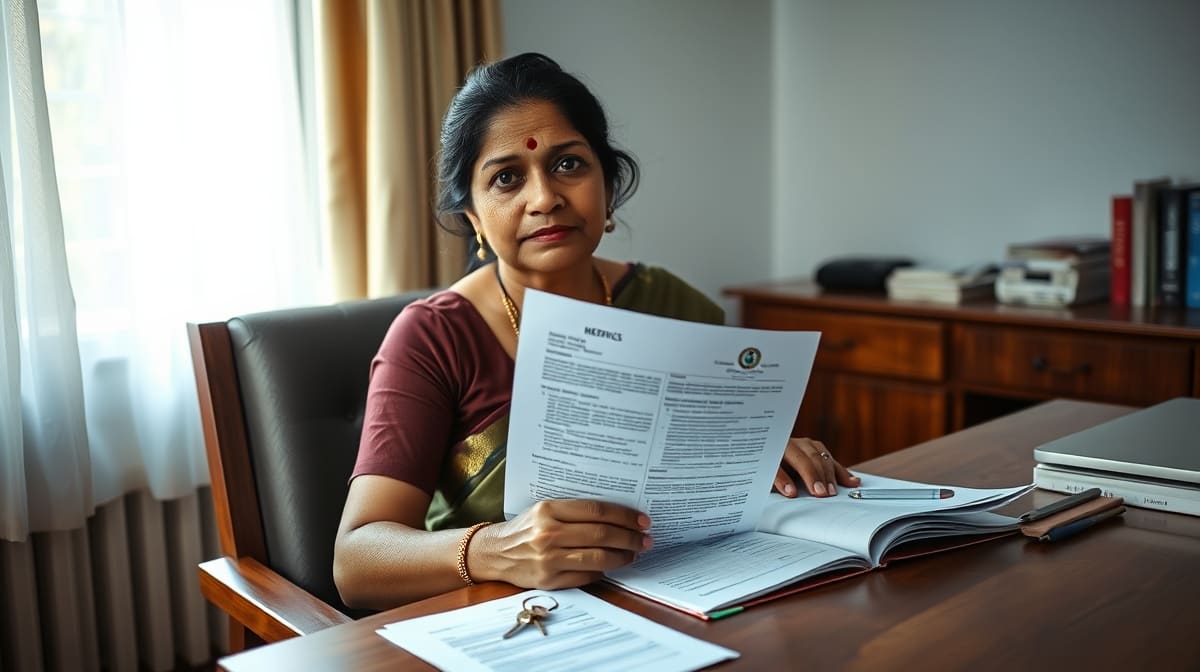
The Punjab & Haryana High Court has recognized the right of a spouse to act as legal guardian of a husband in a permanent vegetative state, but limited the appointment strictly to the management of specified assets. This judgment provides a pragmatic, rights-based approach to guardianship in cases of irreversible medical incapacity, avoiding broad declarations of personal custody while ensuring financial and property protection.
Background & Facts
The Dispute
The petitioner, Neeru Kakkar, seeks to be declared the legal guardian of her husband, Mr. Ashok Kumar, who has been in a vegetative state since 07.08.2023 following a vehicular accident. The petitioner, as the surviving spouse, seeks authority to manage her husband’s financial and property interests, including bank accounts, a motorcycle, and gold ornaments pledged as collateral for a loan.
Key Facts
- Mr. Ashok Kumar met with a road accident on 07.08.2023 and has remained in a vegetative state since then.
- A medical certificate (Annexure P2) issued by Dr. Deepender Singh, Director of Neurology, SPS Hospitals, Ludhiana, confirms his condition.
- The petitioner is the sole spouse and primary caregiver.
- Respondents No. 4 and 5 are the petitioner’s sons and legal heirs of Mr. Ashok Kumar; they have no objection to her appointment as guardian.
- The Union of India and other state respondents do not oppose the petition.
- The petitioner’s prayer is confined to managing specific assets, not general personal care or decision-making.
Procedural History
- 07.08.2023: Mr. Ashok Kumar involved in accident and rendered vegetative.
- 22.12.2025: Court issued interim directions requiring:
- Filing of a legible copy of the medical certificate (Annexure P2)
- Disclosure of assets and liabilities of Mr. Ashok Kumar
- Constitution of a medical board including a neurologist to verify condition
- 24.02.2026: Medical board constituted by competent authority submitted report confirming vegetative state.
- 24.03.2026: Petition heard and decided on merits.
Relief Sought
The petitioner sought appointment as legal guardian of her husband for the purpose of managing the following specific assets:
- HDFC Bank Account No. 50100565278281 (balance ₹0 as of 10.01.2026)
- Punjab National Bank Account No. 05972010029370 (balance ₹0 as of 04.11.2025)
- Motorcycle: Registration PB-10-JC-7484, Hero HF Deluxe, Black, registered 16.06.2023
- Gold Loan Account No. 73926800 at HDFC Bank, Doraha, Ludhiana, with collateral:
- Gold Necklace: 15.100 grams
- 4 Gold Rings: 22.500 grams
- 4 Gold Earrings: 16.300 grams
- 3 Gold Chains: 10.000 grams
- Total: 63.9 grams
The Parties' Positions
- Petitioner: Argued that as spouse and primary caregiver, she is best placed to manage her husband’s assets in his best interest, especially since his sons (respondents 4 & 5) support her.
- Respondent U.O.I.: Did not oppose the petition and acknowledged compliance with Surekha v. Axis Bank guidelines.
- Respondents 4 & 5: Unanimously consented to the petitioner’s appointment as guardian.
The Legal Issue
The central question was whether a spouse may be appointed as legal guardian of a husband in a permanent vegetative state, and if so, whether such guardianship may be limited to the management of specific assets without a sweeping declaration of personal or financial authority.
Arguments Presented
For the Petitioner
The petitioner relied on the precedent set in Surekha v. Axis Bank & Ors., 2025 SCC OnLine P&H 3402, which permits appointment of a spouse as guardian for asset management in cases of permanent incapacity. She emphasized that her role is purely fiduciary, confined to preventing dissipation of assets and ensuring their preservation for family welfare. She highlighted that the gold ornaments are stridhan and were pledged in good faith for family benefit.
For the Respondent
The Union of India and other respondents did not contest the petition. The Senior Advocate for U.O.I. acknowledged that the petitioner had fully complied with the procedural safeguards laid down in Surekha and the Court’s interim directions, including medical verification and asset disclosure.
The Court's Analysis
The Court observed that the petitioner had fulfilled all procedural requirements mandated under Surekha v. Axis Bank. The medical board’s report confirmed the husband’s vegetative state, and all stakeholders - including the children - consented to the petitioner’s appointment. The Court emphasized that guardianship in such cases must be narrowly tailored to prevent abuse of power.
"The petitioner is hereby appointed guardian of her husband qua following assets/properties/Bank Accounts..."
The Court declined to grant general guardianship over the person of the husband, recognizing that such authority requires a separate proceeding under the Guardians and Wards Act, 1890. Instead, it confined the appointment to the management of identified assets, aligning with the principle of minimal state intervention in private family matters.
The Court further noted that the gold ornaments, though pledged as collateral, are stridhan - property given to the wife in good faith - and their preservation is essential to the family’s economic stability. The appointment of the petitioner as guardian over these assets ensures their protection pending future legal or medical developments.
The Verdict
The petitioner succeeded. The Court appointed her as legal guardian of her husband, Mr. Ashok Kumar, exclusively for the management of the following assets:
- HDFC Bank Account No. 50100565278281 (balance ₹0 as of 10.01.2026)
- Punjab National Bank Account No. 05972010029370 (balance ₹0 as of 04.11.2025)
- Motorcycle: PB-10-JC-7484, Hero HF Deluxe, Black, registered 16.06.2023
- Gold Loan Account No. 73926800 with collateral of 63.9 grams of gold (15.1g necklace, 22.5g rings, 16.3g earrings, 10g chains)
The petitioner is directed to comply with all procedural obligations under Surekha v. Axis Bank, including periodic reporting and fiduciary accountability. No general guardianship over the person is granted.
What This Means For Similar Cases
Guardianship Must Be Asset-Specific
- Practitioners must draft petitions narrowly, identifying exact assets to be managed - avoiding broad claims of "guardianship of the person."
- Courts will not grant personal guardianship without a separate proceeding under the Guardians and Wards Act, 1890.
- Medical certification and stakeholder consent are non-negotiable prerequisites.
Stridhan and Collateral Assets Require Special Protection
- Gold ornaments pledged as collateral for loans, if established as stridhan, may be preserved under guardianship orders.
- Courts will recognize the wife’s equitable interest in such assets even when held as security.
- Documentation of origin and purpose of collateral is critical for judicial recognition.
Surekha Guidelines Are Now Binding Precedent
- Surekha v. Axis Bank establishes the procedural framework for such applications: medical board, asset disclosure, stakeholder consent.
- Non-compliance with these steps will result in dismissal.
- Practitioners must file medical reports from recognized neurologists and submit complete asset-liability statements.