The Bombay High Court has affirmed that a plaintiff may withdraw a commercial suit without prejudice to pursue arbitration, provided all contentions are expressly preserved. In a significant procedural ruling, the Court also imposed binding timelines on government authorities to expedite court fee refunds, addressing systemic delays that undermine litigant rights.
Background & Facts
The Dispute
IIFL Facilities Services Limited filed a commercial suit against JMMS Megal Projects Private Limited over alleged breaches in a service agreement. The dispute centered on non-performance and financial liabilities under a contract that contained an arbitration clause.
Procedural History
- The suit was filed in February 2026 under the Bombay High Court’s original commercial jurisdiction.
- An interim application for injunction was pending since December 2025.
- On February 23, 2026, the Plaintiff sought to withdraw the suit to pursue remedies under the Arbitration and Conciliation Act, 1996.
- The Defendant did not oppose the withdrawal but sought clarity on the legal effect of such a move.
Relief Sought
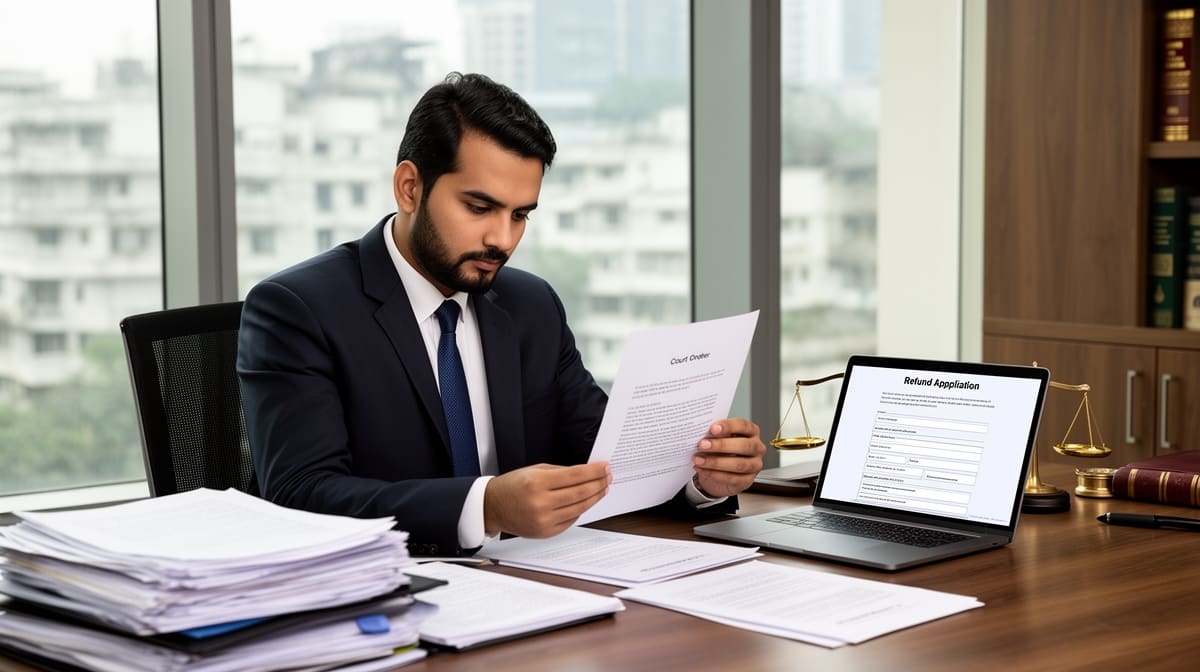
The Plaintiff sought leave to withdraw the suit with liberty to initiate arbitration proceedings, preserving all legal contentions and claims. The Plaintiff also requested a refund of court fees paid, citing prolonged delays in reimbursement by state authorities.
The Legal Issue
The central question was whether a plaintiff may withdraw a commercial suit to pursue arbitration without forfeiting its substantive claims, and whether the Court has the authority to enforce timelines for refund of court fees by state revenue departments.
Arguments Presented
For the Petitioner
Counsel for IIFL relied on Section 30 of the Arbitration and Conciliation Act, 1996, which permits parties to refer disputes to arbitration even after litigation has commenced. They cited S.B.P. & Co. v. Patel Engineering to argue that withdrawal of suit does not extinguish the underlying cause of action when arbitration is the agreed forum. They emphasized that preserving contentions is essential to avoid estoppel and ensure fair access to justice.
For the Respondent
The Defendant did not contest the withdrawal but sought assurance that the Plaintiff would not refile the same suit in court. Counsel argued that withdrawal without explicit bar on re-filing could lead to forum shopping. However, they did not oppose the Court’s direction on court fee refunds.
The Court's Analysis
The Court held that withdrawal of a suit with liberty to pursue arbitration is a recognized procedural mechanism under Indian law, provided it is done with full disclosure and without prejudice. The Court emphasized that Section 30 of the Arbitration and Conciliation Act contemplates coexistence of litigation and arbitration, and withdrawal does not constitute abandonment of rights.
"The Plaintiff is entitled to withdraw the suit and pursue its contentions in arbitration, without this Court expressing any opinion on the merits of the claims. The right to arbitrate is not forfeited merely because litigation was initiated."
Regarding court fee refunds, the Court noted systemic delays - sometimes exceeding a year - despite judicial orders. It held that such delays violate the right to effective remedy under Article 14 and Article 21 of the Constitution. The Court exercised its inherent powers under Section 151 of the Code of Civil Procedure to issue binding directions to the Collector of Stamps and the Pay and Accounts Department.
The Court mandated that:
- The refund certificate must be issued within four weeks of application.
- The Pay and Accounts Department must process refunds within four weeks of receiving the Collector’s letter.
- The Registrar General must ensure compliance across all benches.
The Verdict
The Plaintiff succeeded. The Court permitted withdrawal of the suit with all contentions preserved for arbitration. It directed state authorities to process court fee refunds within four weeks of application, establishing a binding procedural standard for future cases.
What This Means For Similar Cases
Withdrawal for Arbitration Is Permissible Without Prejudice
- Practitioners may now confidently seek withdrawal of commercial suits to pursue arbitration, knowing contentions remain intact.
- Courts will not treat withdrawal as acquiescence or waiver of claims under Section 30 of the Arbitration and Conciliation Act.
- A written application specifying preservation of contentions is sufficient; no additional undertaking is required.
Court Fee Refund Timelines Are Now Enforceable
- Litigants can cite this order to demand compliance from Collector of Stamps and Pay and Accounts offices.
- Delays beyond four weeks constitute actionable non-compliance with judicial directions.
- Advocates should file compliance applications if refunds are not processed within the stipulated period.
Judicial Oversight Extends to Administrative Functionaries
- This judgment establishes that courts may issue binding directions to executive officers for procedural compliance.
- The use of Section 151 CPC to enforce administrative efficiency sets a precedent for similar delays in stamp duty, court fee, or registry processes.
- Law firms should maintain records of refund applications and follow up systematically.