The Madhya Pradesh High Court at Gwalior has reaffirmed that criminal proceedings initiated by an unauthorized complainant under the M.P. Vrikshon Ka Parirakshan (Nagariya Kshetra) Adhiniyam, 2011, constitute an abuse of process and must be quashed. This ruling clarifies the non-negotiable requirement of statutory competence in initiating tree-related criminal complaints, reinforcing procedural integrity in environmental enforcement.
Background & Facts
The Dispute
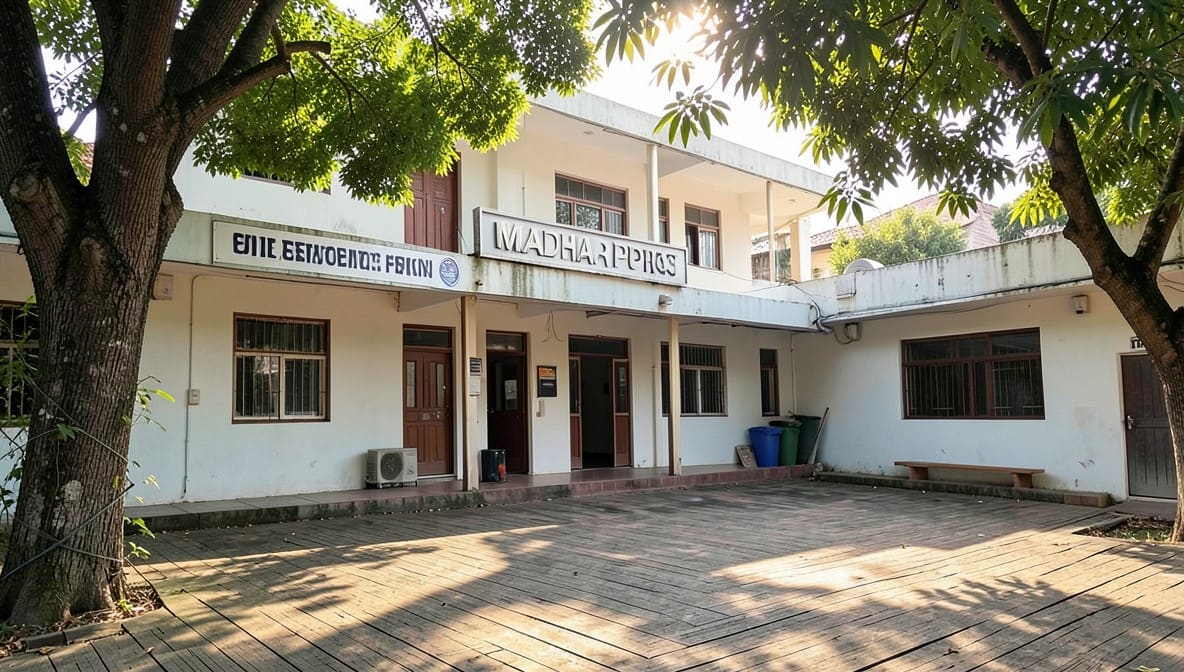
The petitioner, Dr. Ajay Kumar, a medical professional, was named as the accused in Complaint Case No. RCT/5692/2021 filed before the Special Nagar Nigam Magistrate, Gwalior. The complaint alleged violation of Section 3 read with Section 18 of the M.P. Vrikshon Ka Parirakshan (Nagariya Kshetra) Adhiniyam, 2011, which criminalizes the felling of trees in urban areas without prior permission. The complaint accused the petitioner of cutting down trees on the premises of a private medical college he operated.
Key Facts
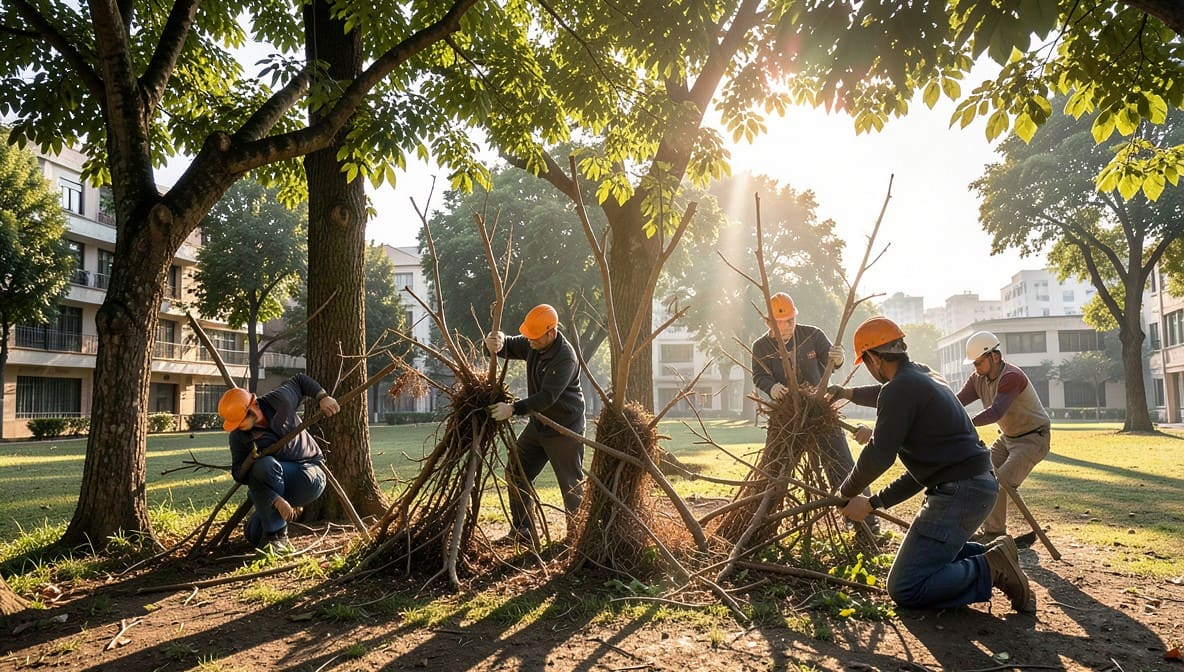
- The alleged act occurred on or about 10.07.2021, when trees on the petitioner’s campus were pruned or pollarded for safety and maintenance purposes
- The petitioner had notified the Municipal Corporation’s Tree Officer in writing on 05.07.2021 regarding the planned pruning
- The complaint was filed by an official of the Municipal Corporation Gwalior who was not designated as a Tree Officer under the Act
- No evidence was produced to show that the complainant was authorized under Rule 7 of the Rules framed under the Adhiniyam to file such complaints
- The petitioner had not felled any tree; the action taken was limited to pruning and pollarding, which the Act distinguishes from felling
- The petitioner submitted photographs and expert reports demonstrating that the pruning was necessary to prevent branch fall and ensure public safety
Procedural History
- 10.07.2021: Alleged pruning/pollarding of trees on petitioner’s campus
- 12.07.2021: Written notice sent by petitioner to Municipal Corporation’s Tree Officer regarding safety measures
- 14.09.2021: Special Nagar Nigam Magistrate took cognizance of Complaint Case No. RCT/5692/2021 without examining the complainant’s competence
- 15.10.2021: Petitioner filed application under Section 482 CrPC seeking quashing; dismissed on 20.11.2021
- 17.01.2022: Petitioner filed revision before the Sessions Court; dismissed on 03.03.2022
- 15.06.2022: Petitioner filed present Misc. Criminal Case No. 2042 of 2026 under Section 528 of the Bharatiya Nagarik Suraksha Sanhita, 2023
Relief Sought
The petitioner sought quashing of Complaint Case No. RCT/5692/2021 and the cognizance order dated 14.09.2021, on grounds that the complaint was filed by an incompetent authority and did not disclose a cognizable offence under the Act.
The Legal Issue
The central question was whether a criminal complaint under the M.P. Vrikshon Ka Parirakshan (Nagariya Kshetra) Adhiniyam, 2011, initiated by a person not designated as a Tree Officer or authorized under the Act, can sustain cognizance and prosecution, and whether pruning or pollarding of trees constitutes "felling" under the statute.
Arguments Presented
For the Petitioner
The petitioner’s counsel relied on State of Haryana v. Chaudhari Bhajanlal to argue that the complaint failed to disclose a cognizable offence under Sections 2(c), 3, and 18 of the Adhiniyam. It was contended that only a designated Tree Officer has statutory authority to file such complaints under Rule 7 of the Rules. The act of pruning, done with prior notice and for safety, does not equate to "felling" as defined in the Act. The proceedings were therefore an abuse of process under the principles laid down in Bhajanlal.
For the Respondent
The respondent, Municipal Corporation Gwalior, did not appear or file any counter-affidavit despite service of notice. The Court treated the absence as non-opposition to the petitioner’s contentions.
The Court's Analysis
The Court examined the statutory framework of the M.P. Vrikshon Ka Parirakshan (Nagariya Kshetra) Adhiniyam, 2011, and its Rules. It held that Section 18 of the Act permits prosecution only if initiated by a "designated Tree Officer" or a person duly authorized in writing by the Commissioner. The complaint in question was filed by an official whose designation or authorization was not established on record.
"In the present case, the complaint was admittedly not filed by the competent authority as mandated under the Act. Such a complaint, having been instituted without jurisdiction, cannot form the basis of valid criminal proceedings."
The Court further held that the allegations of "pruning" or "pollarding" do not satisfy the statutory definition of "felling" under Section 2(c) of the Act. The petitioner had acted in the public interest to prevent potential hazards, and there was no evidence of malicious intent or destruction. The Magistrate’s mechanical taking of cognizance without verifying jurisdiction or the nature of the act was legally unsustainable.
The Court also relied on its own earlier decision in Rajendra Sahu v. Commissioner, Municipal Corporation, Gwalior, which had squarely addressed the same issue and held that complaints filed by unauthorized persons are void ab initio. The Court concluded that allowing such proceedings would amount to abuse of process under Bhajanlal’s category (f) and (g), as there was a specific statutory remedy available and the proceedings were initiated without legal authority.
The Verdict
The petition was allowed. Complaint Case No. RCT/5692/2021 and the cognizance order dated 14.09.2021 passed by the Special Nagar Nigam Magistrate, Gwalior, under Section 3 read with Section 18 of the M.P. Vrikshon Ka Parirakshan (Nagariya Kshetra) Adhiniyam, 2011, are hereby quashed. The criminal proceedings against the petitioner are terminated.
What This Means For Similar Cases
Statutory Competence Is Non-Negotiable
- Practitioners must verify the identity and statutory authority of the complainant before defending any complaint under specialized environmental or municipal statutes
- A complaint filed by an unauthorized officer is void from inception and cannot be cured by subsequent evidence or procedural regularity
- Courts must examine jurisdictional competence at the cognizance stage, not merely at trial
Pruning vs. Felling: A Critical Legal Distinction
- Actions taken for tree maintenance, safety, or urban beautification do not automatically attract criminal liability under tree protection laws
- Prosecutors must prove actual felling - defined as complete removal of the tree from its root - not trimming, pruning, or pollarding
- Expert testimony and photographic evidence of the nature of work performed are critical to rebut allegations of felling
Abuse of Process Doctrine Applies Broadly
- Courts will intervene at the earliest stage when proceedings are initiated without legal basis, even if the underlying conduct appears questionable
- Non-appearance by the prosecution does not waive the court’s duty to examine jurisdictional defects
- This judgment reinforces that procedural irregularities in initiating criminal proceedings are not mere technicalities but jurisdictional fatalities