The Allahabad High Court has clarified that the right of private defence under the Indian Penal Code cannot be invoked to justify lethal violence over a trivial property dispute, especially when the accused initiate aggression with deadly weapons against unarmed individuals. This judgment reasserts the limits of self-defence and the necessity of proportionality in response.
Background & Facts
The Dispute
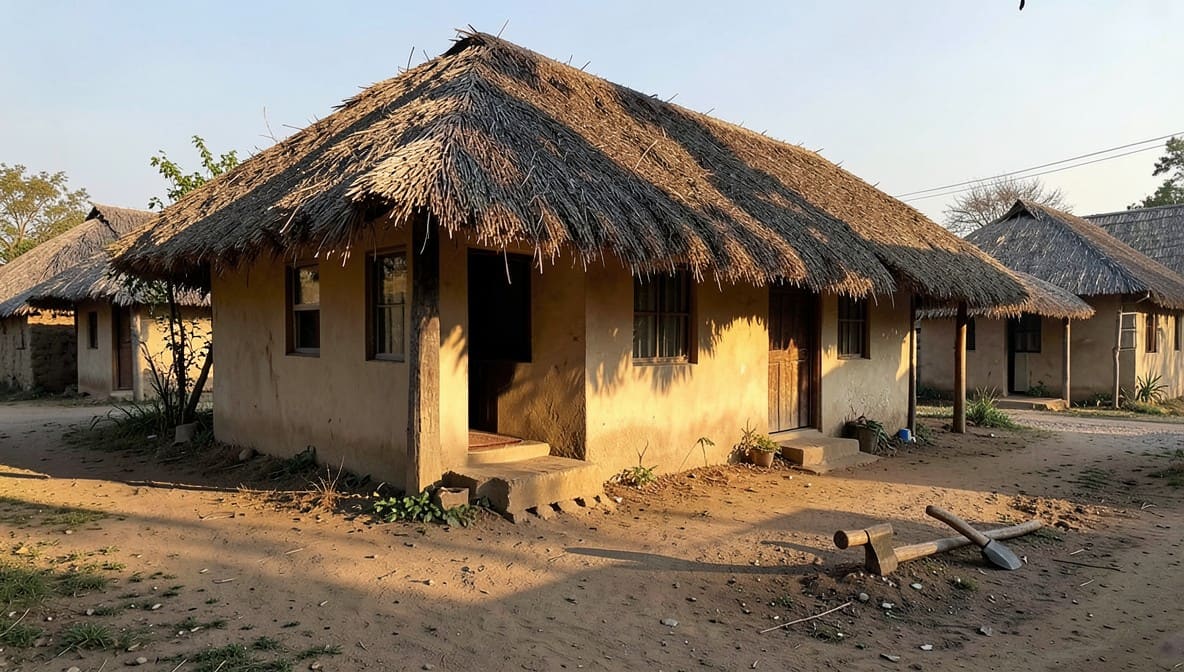
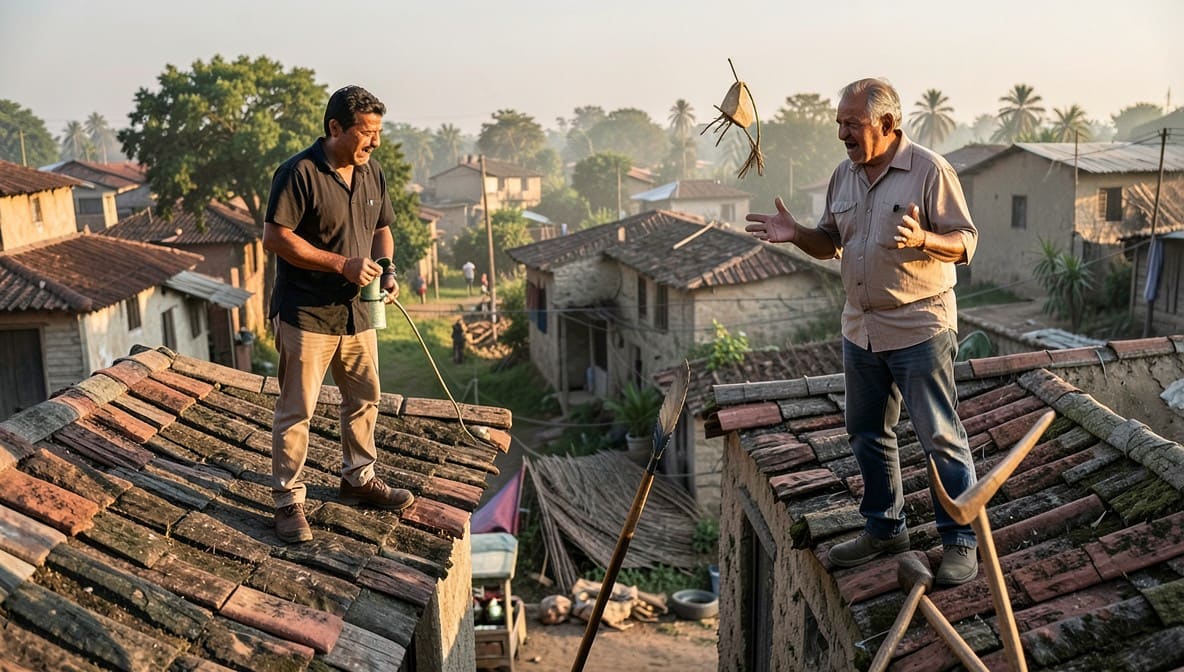
On 15.06.1984, at approximately 10:00 AM, Jamuna Prasad (deceased) and his brother Amrit Lal (PW1) were repairing a parnala (rainwater gutter) on the rooftop of their house in District Unnao. The rooftop was higher than that of their neighbours, including accused Tulsi Ram, Harnaam, Lakshmi Narayan, and Jagat Pal. The accused objected to the installation, arguing that rainwater would flow onto their roof. Jamuna Prasad insisted the parnala had been in place for years and refused to alter it. A verbal altercation ensued, during which Tulsi Ram allegedly instigated the others to use force.
Key Facts
- The deceased and PW1 were working bare-handed on the roof; no weapons were found on them.
- Accused Harnaam carried a bhala (spear), Lakshmi Narayan carried a lathi (wooden club), and Jagat Pal carried a lathi with iron rings.
- The accused ascended to the deceased’s rooftop and assaulted him with these weapons.
- PW1 attempted to intervene and was also beaten.
- Jamuna Prasad sustained a lacerated scalp wound and a stab wound to the left lung, which proved fatal.
- He died while being transported to the hospital by bullock cart.
- PW1 filed a written complaint (Ex. Ka.1) on the same day.
- The first information report (FIR) was registered on 15.06.1984 under Sections 302/323 IPC.
- On 17.06.1984, Harnaam and Lakshmi Narayan were arrested.
- Harnaam made a disclosure statement leading to recovery of the bhala and lathi from his dung store (Ex. Ka.2, Ka.14, Ka.15).
- A separate FIR was registered under Section 25 of the Arms Act against Harnaam on 17.06.1984.
- Post-mortem (Ex. Ka.8) conducted by Dr. S.P. Rastogi (PW5) on 16.06.1984 confirmed the stab wound to the lung as the cause of death, likely caused by the bhala.
- PW6 (Dr. G.P. Awasthi) examined PW1 on 16.06.1984 and found three simple injuries (laceration, contusion, swelling).
- DW1, Dr. L.D. Shukla, examined Harnaam on 19.06.1984 and found three simple injuries: a facial contusion, a 10 cm x 8 cm swelling on the right hand, and circumferential wrist swelling - all reported as 5 days old and caused by blunt objects.
- No medical examination of Harnaam was conducted immediately after arrest on 17.06.1984.
- The trial court acquitted all accused on grounds of self-defence, citing unexplained injuries on Harnaam.
Procedural History
- 15.06.1984: Incident occurred; FIR registered same day.
- 16.06.1984: Post-mortem conducted; PW1 medically examined.
- 17.06.1984: Arrest of Harnaam and Lakshmi Narayan; recovery of weapons; FIR under Arms Act registered.
- 19.06.1984: Medical examination of Harnaam by jail doctor (DW1).
- 1984: Charge-sheet filed against all accused under Sections 302/323 IPC and Section 25 Arms Act.
- 1985: Trial commenced before Special Sessions Judge, Unnao.
- 31.03.1986: Trial Court acquitted all accused on grounds of self-defence.
- 28.11.2022: Appeal abated against accused Tulsi Ram and Lakshmi Narayan, who had died during pendency.
- 23.03.2026: Appeal heard by Division Bench of Allahabad High Court.
- 30.04.2026: Judgment delivered.
The Parties' Positions
For the State (Appellant): The prosecution established a clear case of aggression by the accused. The deceased and PW1 were unarmed. The injuries on Harnaam were minor, superficial, and likely sustained during the assault or while fleeing. The trial court erred in granting self-defence, especially given the disproportionate use of lethal weapons. Relied on State of Madhya Pradesh v. Ramesh, Lakshmi Singh v. State of Bihar, and State of Gujarat v. Bai Fatima.
For the Respondents (Accused): The deceased initiated violence by refusing to stop the parnala installation, constituting mischief. The accused acted in defence of property and person. The unexplained injuries on Harnaam corroborated their version. Relied on Kumar v. State, Mohan Alias Srinivas v. State of Karnataka, and Jairam & Others v. State of U.P..
Relief Sought
The State sought reversal of the acquittal and conviction of Jagat Pal and Harnaam for murder under Section 302 IPC. The accused sought dismissal of the appeal and confirmation of acquittal.
The Legal Issue
Can the right of private defence under Sections 96 to 105 of the Indian Penal Code be invoked to justify the use of lethal weapons against unarmed individuals in a trivial property dispute, where the accused initiated the violence and inflicted disproportionate force?
Arguments Presented
For the Appellant
The State argued that the accused were the aggressors. The deceased was engaged in a lawful activity - repairing a longstanding parnala - and was unarmed. The accused brought lethal weapons (bhala, lathi with iron rings) to the scene, indicating premeditation. The injuries on Harnaam were minor, superficial, and inconsistent with a violent assault by two unarmed men. The trial court’s reliance on unexplained injuries to grant self-defence was legally unsustainable. The Supreme Court in Bai Fatima held that non-explanation of minor injuries does not vitiate a prosecution case where the evidence is clear, consistent, and credible. The prosecution’s ocular testimony from PW1 and PW2, corroborated by medical evidence and recovery of weapons, established guilt beyond reasonable doubt.
For the Respondent
The accused contended that the deceased’s refusal to stop the parnala installation amounted to criminal mischief, justifying defence of property. The injuries on Harnaam, as recorded by DW1, proved he was assaulted. The prosecution’s failure to explain these injuries rendered its version unreliable. The trial court correctly applied the principle that the burden of proving self-defence lies on the accused, but only to the standard of preponderance of probability. The accused did not need to prove self-defence beyond doubt, only to raise a reasonable doubt.
The Court's Analysis
The Court began by affirming that the right of private defence is a defensive right, not a licence for retaliation. Section 99 of the IPC explicitly limits the right to force that is reasonably necessary. Section 100 permits causing death only if there is a reasonable apprehension of death or grievous hurt. The Court emphasized that the right cannot be invoked where the accused are the initial aggressors.
"The right of private defence is a defensive right, serving a social purpose, which cannot be given such a wide meaning as to subserve vindictive purposes."
The Court found that the deceased and PW1 were unarmed and engaged in a routine activity. The accused, by contrast, armed themselves with lethal weapons - a bhala (spear) and a lathi with iron rings - and ascended to the deceased’s rooftop to attack. The nature of the weapons alone indicated intent to cause serious harm.
The Court rejected the trial court’s conclusion that the injuries on Harnaam justified self-defence. The injuries were simple, superficial, and of a duration (5 days) inconsistent with the incident (15.06.1984). Crucially, no eyewitness - including PW1 and PW2 - testified that the deceased or PW1 assaulted Harnaam. The injuries could have been sustained during the accused’s own assault or while fleeing.
"The non-explanation of minor injuries is not fatal to the prosecution where the evidence is clear, cogent, independent, and credit-worthy."
The Court relied on State of Gujarat v. Bai Fatima and Thoti Manohar v. State of Andhra Pradesh, holding that the prosecution’s failure to explain minor injuries does not automatically create doubt where the evidence of aggression is overwhelming. Here, the prosecution’s case was not merely credible - it was unchallenged on material points.
The Court further held that the accused exceeded the bounds of self-defence. Even if the deceased had been aggressive, the response - a lethal stab wound to the lung - was grossly disproportionate. The Court noted that the accused had ample opportunity to seek legal redress through municipal or police authorities.
"In our society, such trivial disputes relating to flow of rainwater are not uncommon but these disputes cannot be said to confer a right on either side to take the law in their own hand and resort to any kind of violence..."
The Court also found the acquittal under the Arms Act sustainable due to procedural lapses - no proper disclosure statement, no independent investigation, and no evidence linking the bhala to the definition of an illegal weapon under Section 25. However, this did not affect the conviction under IPC.
Finally, the Court examined whether the act amounted to murder or culpable homicide not amounting to murder. While the accused did not intend to kill, they were aware that a blow from a bhala could cause death. The act was committed in a sudden fit of rage, without premeditation, but with knowledge of likely consequences. Thus, Section 304 Part II IPC applied.
The Verdict
The State’s appeal was allowed. The acquittal of Jagat Pal and Harnaam was set aside. They were convicted under Section 304 Part II/34 IPC for culpable homicide not amounting to murder and under Section 323/34 IPC for causing simple hurt. Their bail bonds were cancelled, sureties discharged, and non-bailable warrants issued. They were directed to appear before the High Court on 11.05.2026 for sentencing. The acquittal of Harnaam under Section 25 of the Arms Act was confirmed.
What This Means For Similar Cases
Self-Defence Cannot Justify Disproportionate Retaliation
- Practitioners must argue that self-defence requires proportionality - lethal force is never justified against unarmed individuals in non-life-threatening disputes.
- Use of weapons like spears, iron-ringed lathis, or knives in property disputes will be viewed as premeditated aggression, not defence.
Minor Injuries Do Not Automatically Vitalize a Defence Version
- The burden on the accused to prove self-defence is on a preponderance of probability, but it must be supported by credible evidence.
- Non-explanation of minor injuries is not fatal if the prosecution’s ocular testimony is consistent, independent, and corroborated by forensic evidence.
- Courts will not accept speculative theories (e.g., "he must have been assaulted") without eyewitness support.
Legal Recourse Must Be Exhausted Before Violence
- Parties in property disputes over water flow, boundary lines, or encroachments must seek municipal, police, or civil remedies.
- Resorting to violence, even if provoked, will not be excused under Section 96 - 105 IPC.
- This judgment reinforces that the law does not permit private vengeance, even under the guise of self-defence.