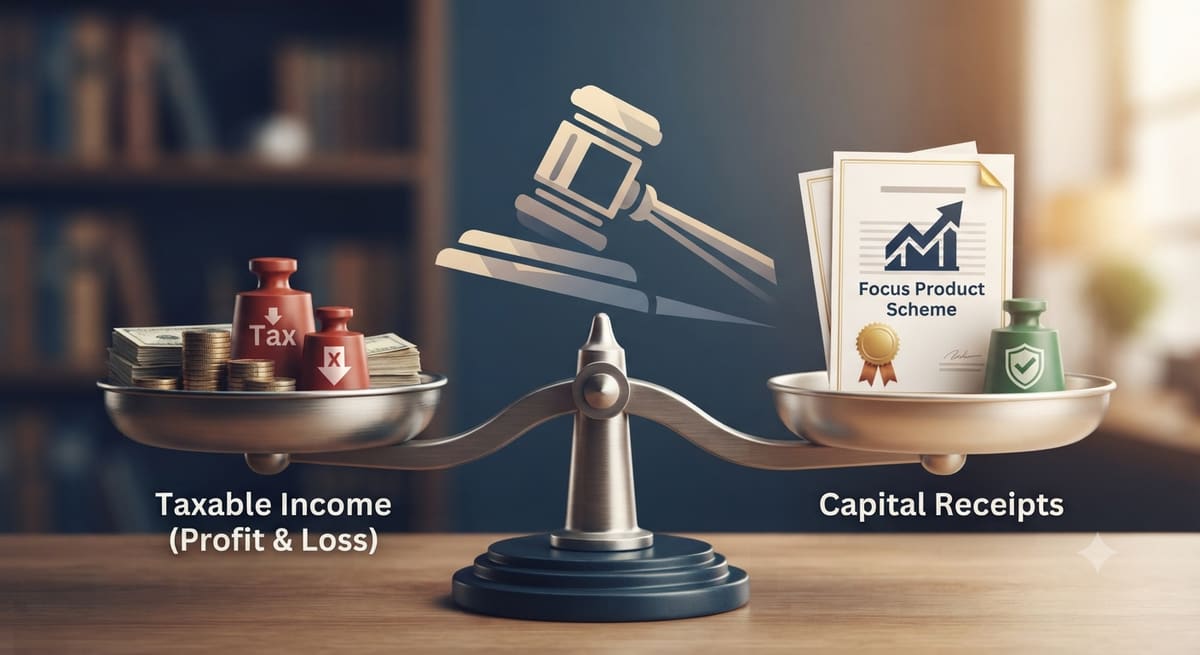
The Income Tax Appellate Tribunal clarified that the rebate under Section 87A of the Income Tax Act is available even when the total income includes short-term capital gains taxed under Section 111A, provided the assessee has opted for the new tax regime under Section 115BAC(1A) for Assessment Year 2024-25. This interpretation resolves a split among tax authorities and aligns rebate entitlement with the plain language of the statute.
Background & Facts
The Dispute
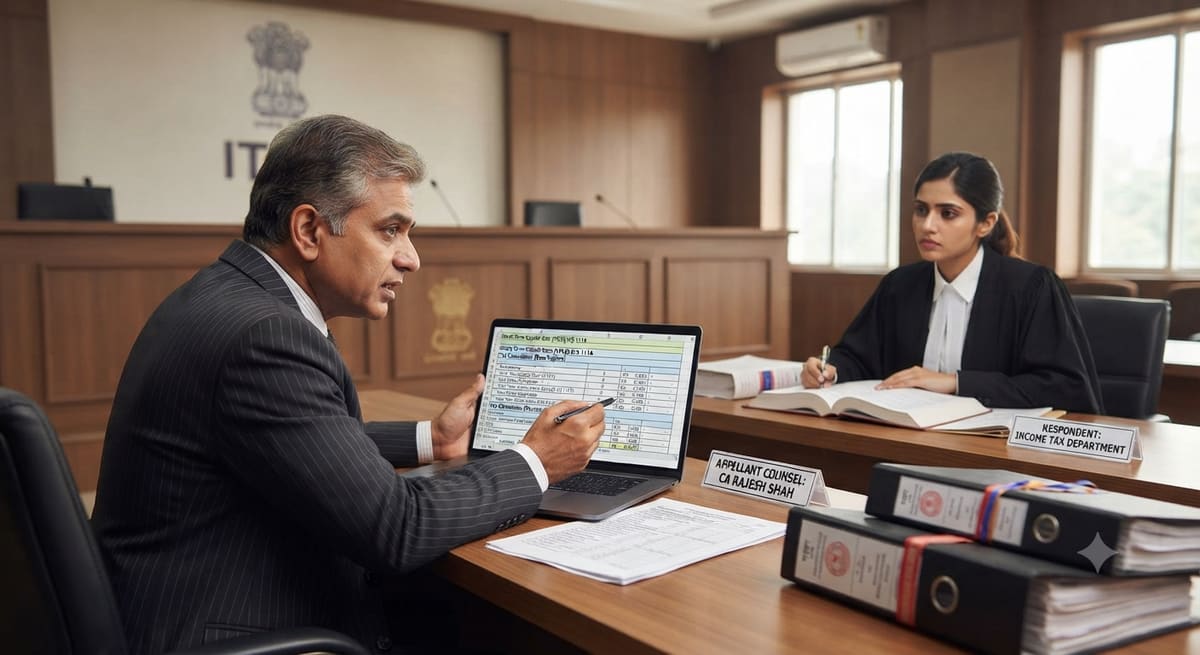
The Revenue (Joint Commissioner of Income Tax, Jaipur) appealed the order of the Commissioner of Income Tax (Appeals) dated 12.01.2026, which had denied the rebate claimed by the assessee, Gaurav Sharma, under Section 87A. The denial was based on the view that income arising from short-term capital gains (STCG) under Section 111A falls within the special-rate regime of Section 115BAC(1A) and therefore is excluded from the rebate.
Key Facts
- Assessment Year: 2024-25.
- The assessee opted for the new tax regime under Section 115BAC(1A) and reported STCG from the sale of listed equity shares.
- The rebate claimed under Section 87A amounted to Rs. 25,000.
- The Revenue relied on CBDT Circular No. 13/2025 dated 19.09.2025 and the Finance Act, 2023 (effective 01-04-2024) to argue that rebate is unavailable on income taxed at special rates.
- The assessee cited multiple ITAT decisions (e.g., Pranay M Kothari v. DCIT ITA No.3469/Chny/2025, Jayshreeben Jayantibhai Palsana v. ITO ITA No.1014/Ahd/2025) supporting the availability of the rebate.
Procedural History
- 12.01.2026: Order of Ld. CIT(A) denying Section 87A rebate.
- 12.08.2026: Hearing before the ITAT, Jaipur Bench.
- 25.08.2026: Judgment pronounced.
- The Revenue filed an appeal; the assessee filed a cross-objection in support of the lower order.
- The Tribunal considered earlier ITAT judgments dated 12.08.2025, 20.08.2025, 23.03.2026, and the Bombay High Court decision of 24.01.2025.
Parties' Positions
- Revenue (Appellant): Argued that the rebate under Section 87A cannot be claimed on income taxed under the special-rate provisions of Section 115BAC(1A) and relied on the CBDT circular and the Finance Act, 2023 amendment.
- Assessee (Respondent): Contended that Section 87A provides a rebate on the entire tax liability computed on "total income" and that there is no express exclusion for STCG. Relied on ITAT precedents and the plain language of the statute.
Relief Sought
- Revenue: Dismissal of the rebate claim and confirmation that the denial was correct.
- Assessee: Direction to the Assessing Officer to allow the rebate of Rs. 25,000 under Section 87A and recompute the tax liability for AY 2024-25.
The Legal Issue
The central question was whether an individual who has opted for the new tax regime under Section 115BAC(1A) and whose total income includes short-term capital gains taxed under Section 111A is entitled to the rebate provided by Section 87A of the Income Tax Act for Assessment Year 2024-25.
Arguments Presented
For the Appellant
The Revenue submitted that:
- The rebate under Section 87A is intended for income taxed at normal slab rates and is excluded for income taxed at special rates, as indicated by the CBDT Circular No. 13/2025.
- The Finance Act, 2023 introduced a proviso to Section 87A that limits the rebate when total income is chargeable under Section 115BAC(1A).
- Allowing the rebate on STCG would contravene the legislative intent to restrict benefits on special-rate income.
For the Respondent
The assessee argued that:
- Section 87A expressly provides a rebate on the tax payable on "total income" without any statutory carve-out for income taxed under special provisions.
- The proviso to Section 87A only restricts rebate when total income exceeds Rs. 7,00,000 or when long-term capital gains under Section 112A are involved; it does not mention STCG under Section 111A.
- Numerous ITAT decisions have consistently held that the rebate applies to the entire tax liability, irrespective of the mix of normal and special-rate income.
- The explanatory memorandum to the Finance Bill, 2025, cannot override the plain language of the statute.
The Court's Analysis
The Tribunal began by examining the textual matrix of Section 87A, the proviso inserted by the Finance Act, 2023, and the definition of "total income" under the Act. It observed that the provision offers a rebate "on the amount of income-tax ... on his total income" and that the only express exclusions are:
- The rebate is not available on long-term capital gains under Section 112A (as per the proviso).
- The rebate is capped at Rs. 25,000 or the tax payable, whichever is lower.
"Thus, the assessee is entitled for rebate u/s.87A of the Act for the impugned assessment year, notwithstanding that the total income includes taxable long term capital gains chargeable at special rates."
The Tribunal rejected the Revenue's reliance on the CBDT circular, stating that a circular is an interpretative aid and cannot amend the statutory language. It further noted that the Finance Act, 2023 amendment was prospective (effective 01-04-2024) and did not contain any provision barring the rebate on STCG. The absence of a specific exclusion for Section 111A income, contrasted with the explicit exclusion for Section 112A, was deemed decisive.
The Tribunal then surveyed the cited ITAT precedents. In Pranay M Kothari v. DCIT (ITA No.3469/Chny/2025) and Jayshreeben Jayantibhai Palsana v. ITO (ITA No.1014/Ahd/2025), the Tribunal had previously held that the rebate applies to the whole tax liability irrespective of the source of income. These decisions were affirmed as consistent with the plain reading of the statute.
The Court also addressed the argument that the explanatory memorandum to the Finance Bill, 2025, limited the rebate. It held that such memoranda are not substantive law and cannot be used to create a restriction not found in the statute itself.
Finally, the Tribunal concluded that the assessee satisfied the income threshold (total income below Rs. 7,00,000) and had validly exercised the option under Section 115BAC(1A). Consequently, the rebate of Rs. 25,000 was permissible.
The Verdict
The Income Tax Appellate Tribunal allowed the assessee's claim. It directed the Assessing Officer to grant a rebate of Rs. 25,000 under Section 87A for Assessment Year 2024-25 and to recompute the tax liability accordingly. The Revenue's appeal was dismissed, and the cross-objection filed by the assessee was allowed.
What This Means For Similar Cases
Rebate Extends to Special-Rate Income
- Practitioners can now rely on Section 87A to claim rebate on STCG taxed under Section 111A when the assessee has opted for the new tax regime.
- The absence of an express exclusion means that any future claim involving special-rate income should first examine the statutory language before invoking circulars.
Statutory Language Trumps Explanatory Memoranda
- Courts will not treat explanatory notes or circulars as substantive amendments.
- Lawyers must focus arguments on the text of the Act and its express provisos.
Anticipate Prospective Amendments
- The Finance Act, 2025 proposes new restrictions effective AY 2026-27; counsel must advise clients that the present holding applies only to AY 2024-25 and AY 2025-26.
- Monitoring upcoming amendments is essential to avoid reliance on now-obsolete interpretations.
Practical Takeaways
- Verify the total income threshold (≤ Rs. 7,00,000) before claiming the rebate.
- Ensure the assessee has validly opted for Section 115BAC(1A).
- Cite ITAT precedents such as Pranay M Kothari and Jayshreeben Jayantibhai Palsana when arguing rebate entitlement.
- Prepare for possible system-driven denials by the CPC; be ready to demonstrate statutory compliance.