The Bombay High Court's judgment in Chennai Container Terminal Pvt. Ltd. v. Assistant Commissioner of Income-tax clarifies the interpretation of Section 80-IA of the Income Tax Act, 1961, particularly the requirement that an 'enterprise' carrying on eligible business must be owned by a company registered in India. The Court held that reassessment proceedings initiated beyond the four-year limitation period were invalid, as the Revenue failed to establish any failure on the assessee's part to disclose material facts. This ruling reinforces the principle that reassessment cannot be based on mere change of opinion or misinterpretation of statutory provisions.
Background & Facts
The Dispute
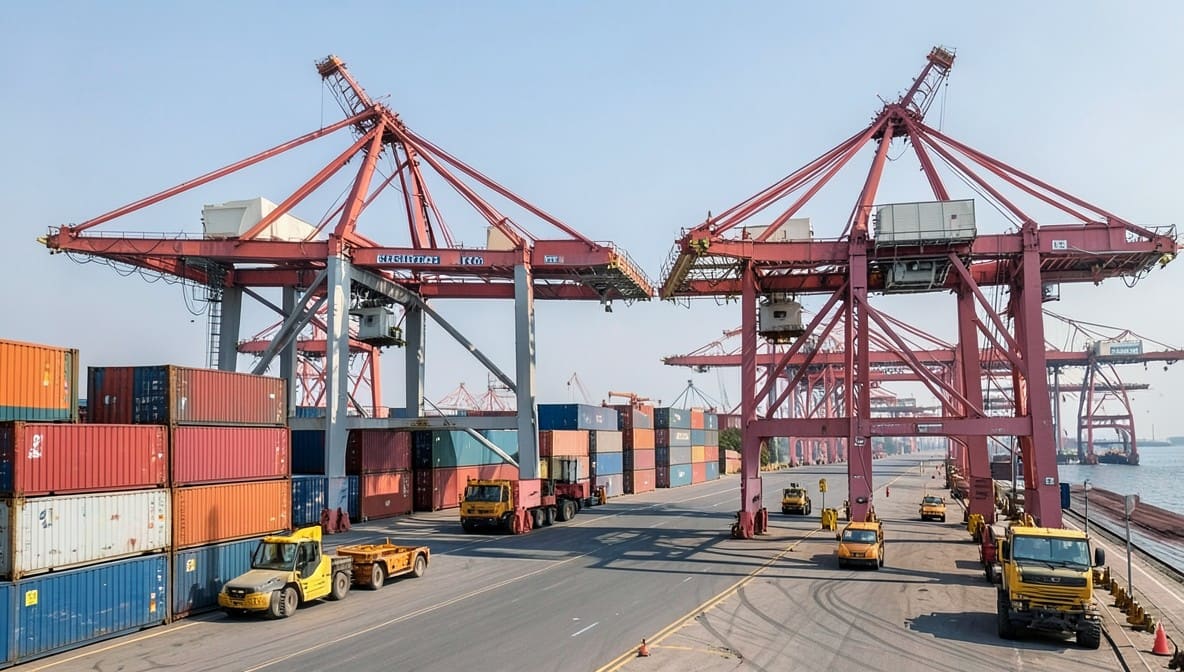
The petitioner, Chennai Container Terminal Pvt. Ltd., is a company incorporated on 12th September 2000 as a consortium of four shareholders, including P & O Ports (Chennai) Limited, Mauritius. The petitioner entered into a License Agreement with the Board of Trustees of Chennai Port on 9th August 2001 for the development and management of the Chennai Container Terminal at Bharathi Dock. The petitioner invested Rs. 911 lakhs in wharf and draft upgradation and an additional Rs. 35,210 lakhs in deploying 7 Quay gantry cranes (QCs) and 22 Rubber tyred gantry cranes (RTGs).
Key Facts
The petitioner was incorporated under the Companies Act, 1956 and received a Certificate for Commencement of Business on 13th November 2000.
From the financial year 2008-09, the petitioner became a 100% subsidiary of P & O Ports (Chennai) Ltd., Mauritius, which is entirely held by D.P. World Ltd., Dubai.
The petitioner claimed deduction under Section 80-IA of the Income Tax Act for the Assessment Year (A.Y.) 2014-15, reflecting a profit before tax of Rs. 22,88,77,835.
The petitioner's eligibility for deduction under Section 80-IA was accepted in earlier assessment orders for A.Y. 2008-09 to A.Y. 2013-14.
The petitioner filed its return of income for A.Y. 2014-15 on 28th November 2014, claiming deduction of its entire business income of Rs. 25,40,88,755.
Procedural History
01.09.2015: Notice under Section 143(2) issued for scrutiny assessment.
08.07.2016: Further notices issued by the Assessing Officer (Respondent No. 1).
30.08.2016: Petitioner filed submissions in response to the notices.
09.11.2016: Hearing held; petitioner requested to provide details on royalty payments.
02.12.2016: Petitioner submitted necessary information along with the License Agreement.
27.12.2016: Assessment Order passed, accepting the petitioner's claim for deduction under Section 80-IA.
26.03.2021: Notice under Section 148 issued, alleging escapement of income chargeable to tax for A.Y. 2014-15.
07.04.2021: Petitioner requested reasons for reopening the assessment.
13.05.2021: Reasons recorded provided, alleging violation of Section 80-IA(4)(a) due to ownership by a non-Indian company and lack of new infrastructure development.
01.07.2021: Petitioner filed objections, challenging the validity of reassessment proceedings.
14.02.2022: Objections rejected by Respondent No. 1.
18.02.2022 & 08.03.2022: Notices under Sections 143(2) and 142(1) issued, requiring submissions on deduction under Section 80-IA.
14.03.2022: Petitioner requested time to respond.
15.03.2022: Show Cause Notice with Draft Assessment Order issued, denying the petitioner's claim for deduction under Section 80-IA.
Present Petition: Writ Petition filed challenging the Notice dated 26.03.2021, Order dated 14.02.2022, and Show Cause Notice dated 15.03.2022.
Relief Sought
The petitioner sought:
Quashing of the impugned Notice dated 26.03.2021 under Section 148, Order dated 14.02.2022, and Show Cause Notice dated 15.03.2022.
A declaration that the reassessment proceedings were invalid and barred by limitation.
The Legal Issue
The central questions before the Court were:
Whether the reassessment proceedings under Section 148 of the Income Tax Act could be initiated beyond the four-year limitation period without establishing a failure on the part of the assessee to disclose fully and truly all material facts necessary for assessment?
Whether the petitioner's enterprise, being owned by an Indian company, satisfied the ownership requirement under Section 80-IA(4)(a) of the Act?
Whether the petitioner's activity of managing, developing, and maintaining the container terminal qualified as 'development, operation, and maintenance of a new infrastructure facility' under Section 80-IA(4)?
Arguments Presented
For the Petitioner
Limitation Period: The Notice under Section 148 was issued beyond the four-year limitation period (expiring on 31.03.2019), and there was no failure on the petitioner's part to disclose material facts. The reassessment was based on a mere change of opinion.
Enterprise Ownership: The petitioner, an Indian company, owned the enterprise (Chennai Port Bharathi Dock undertaking). The Revenue erred in equating the petitioner with the enterprise and holding that it was owned by a non-Indian company.
Disclosure of Material Facts: The petitioner had disclosed all relevant facts in its Annual Report, Tax Audit Report (Form 3CEB), and Income Tax Return, including its ownership structure and transactions with associate enterprises.
Infrastructure Development: The Revenue overlooked the petitioner's substantial investment of Rs. 35,210 lakhs in deploying cranes and consistently recognized the petitioner's business as including development of the container terminal in earlier assessment orders.
For the Respondents
Ownership Requirement: The petitioner's enterprise was owned by P & O Ports (Chennai) Ltd., Mauritius, which is not a company registered in India, violating Section 80-IA(4)(a).
New Infrastructure Facility: The petitioner was merely managing, operating, and maintaining an existing container terminal handed over by Chennai Port Trust, without developing any new infrastructure facility, as required under Section 80-IA(4).
Audit Revelation: The incorrect claim of deduction under Section 80-IA was identified during Revenue Audit, justifying the reopening of assessment proceedings.
The Court's Analysis
The Court undertook a detailed examination of Section 80-IA and the conditions for reassessment under Section 148 of the Income Tax Act.
Definition of 'Enterprise': The Court relied on the Concise Oxford English Dictionary to define 'enterprise' as a project or undertaking, particularly a bold one, or a business/company. It held that the enterprise in question was the Chennai Port Bharathi Dock undertaking, owned by the petitioner, an Indian company. The Revenue erred in equating the petitioner with the enterprise and misinterpreting the ownership requirement under Section 80-IA(4)(a).
Infrastructure Facility Development: The Court noted that the Revenue overlooked the petitioner's substantial investment of Rs. 35,210 lakhs in deploying cranes and consistently recognized the petitioner's business as including development of the container terminal in earlier assessment orders. The petitioner's disclosure in Note 2.6 of its financial statements regarding leased assets did not negate the development of new infrastructure.
Reassessment Beyond Four Years: The Court examined the first proviso to Section 147, which bars reassessment beyond four years unless there is a failure on the assessee's part to disclose fully and truly all material facts. The Court held that the petitioner had disclosed all material facts in its Annual Report, Tax Audit Report, and Income Tax Return, including its ownership structure and transactions with associate enterprises. The Revenue's bald statement in the reasons recorded, without specifying any undisclosed material facts, demonstrated that the reassessment was invalid.
The Verdict
The Court allowed the petition in terms of prayer (A), quashing the impugned Notice dated 26.03.2021 under Section 148, Order dated 14.02.2022, and Show Cause Notice dated 15.03.2022. The Court made the rule absolute in the petitioner's favor and directed no order as to costs.
What This Means For Similar Cases
Misinterpretation of Statutory Provisions Cannot Justify Reassessment
The judgment reinforces that reassessment proceedings cannot be initiated based on a misinterpretation of statutory provisions, particularly when the assessee has disclosed all material facts.
Practitioners must emphasize that the Revenue's reliance on incorrect legal interpretations does not satisfy the requirement of 'reason to believe' under Section 148.
Full Disclosure of Material Facts Bars Reassessment Beyond Four Years
Assessees must ensure comprehensive disclosure of all material facts in their Annual Reports, Tax Audit Reports, and Income Tax Returns to preclude reassessment beyond the four-year limitation period.
The judgment clarifies that the Revenue cannot rely on vague allegations of non-disclosure without specifying the undisclosed facts.
Enterprise vs. Assessee: Clarifying Ownership Requirements Under Section 80-IA
The distinction between the 'enterprise' and the 'assessee' is critical under Section 80-IA(4)(a). The assessee claiming the deduction must be an Indian company, but the enterprise itself need not be directly owned by the assessee.
Practitioners should argue that the Revenue's conflation of the assessee with the enterprise is legally untenable and cannot form the basis for denying deductions.