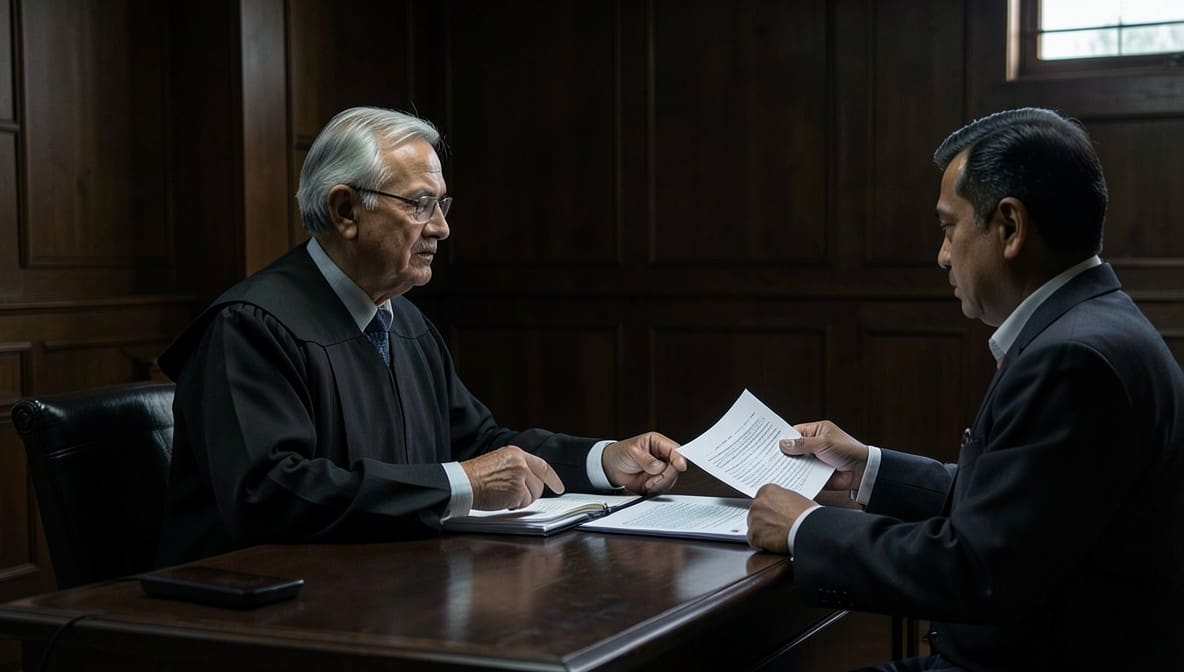
The Karnataka High Court has delivered a critical judgment on the interpretation of Section 69 of the Bharatiya Nyaya Sanhita (BNS), which criminalizes sexual intercourse by employing deceitful means, including false promises of marriage. The Court declined to quash an FIR registered under Sections 69 and 351(2) of the BNS, emphasizing that disputes over the genuineness of a promise to marry must be resolved through investigation, not summary adjudication in quashing proceedings. This ruling underscores the judiciary's cautious approach in cases involving deeply contested narratives, where credibility and intent are central to the legal outcome.
Background & Facts
The Dispute
The petitioner, Chetan M.N., and the second respondent (complainant) were co-employees at Felicia Enterprises. Their professional relationship evolved into a personal one, culminating in a physical relationship. The complainant alleged that the petitioner induced her to join the company on the promise of a higher salary, professed love, and repeatedly assured her of marriage. After the petitioner got engaged to another woman on 14-12-2025, he terminated the complainant's employment and blocked all communication. Aggrieved, the complainant registered a complaint on 10-01-2026 under Sections 69 and 351(2) of the BNS, alleging deception and exploitation.
Key Facts
- 01-04-2025: Complainant joins Felicia Enterprises on the petitioner's assurance of a ₹35,000 monthly salary.
- October 2025: Petitioner introduces the complainant to his family; caste differences emerge as a point of contention.
- 14-12-2025: Petitioner gets engaged to another woman.
- 02-01-2026: Petitioner terminates the complainant's employment and blocks all communication.
- 10-01-2026: Complainant registers FIR (Crime No. 09/2026) under Sections 69 and 351(2) of the BNS.
- 10-01-2026: Petitioner files a counter-complaint alleging harassment and extortion by the complainant, leading to a Non-Cognizable Report (NCR).
- 17-01-2026: Petitioner files Criminal Petition No. 743 of 2026 under Section 528 of the BNSS for quashing the FIR.
- 21-01-2026: High Court grants an interim stay on investigation.
- 30-01-2026: Petitioner appears before ‘Sakhi’, a women's organization, under duress, denying any intention to reconcile.
- 17-05-2026: Complainant alleges the petitioner forced sexual intercourse on her birthday while intoxicated.
- 08-07-2026: Petitioner's alleged wedding date with another woman.
- 18-06-2026 to 23-06-2026: Multiple affidavits filed by both parties, including allegations of continued deception and coercion by the petitioner.
- 23-06-2026: Audio recording of a confrontation between the complainant, petitioner's parents, and police officials reveals admissions about the falsity of the wedding invitation.
Procedural History
- 10-01-2026: FIR registered by Suddaguntepalya Police (Crime No. 09/2026).
- 10-01-2026: Petitioner files a counter-complaint; NCR registered.
- 17-01-2026: Petitioner files Criminal Petition No. 743 of 2026 under Section 528 BNSS for quashing the FIR.
- 21-01-2026: High Court grants interim stay on investigation.
- 30-01-2026: Petitioner appears before ‘Sakhi’ under duress.
- 17-06-2026: Complainant files an affidavit detailing post-stay incidents of coercion and deception.
- 23-06-2026: Petitioner files a counter-affidavit denying allegations and asserting his engagement and impending marriage.
- 23-06-2026: Audio recording submitted as evidence.
- 23-06-2026: Matter heard and reserved for orders.
- 13-07-2026: Judgment pronounced, dismissing the petition.
The Parties' Positions
For the Petitioner:
- Argued that the relationship was consensual and not predicated on a false promise of marriage.
- Contended that the complainant's allegations were motivated by rejection and amounted to harassment.
- Submitted that his engagement to another woman was genuine and that the complainant's affidavit was an attempt to prejudice the proceedings.
- Relied on transcripts and documents to prove his lack of intent to deceive from the inception.
For the Complainant:
- Alleged that the petitioner induced her into the relationship under the false pretext of marriage.
- Submitted that the petitioner continued to coerce her even after the FIR was registered, including forcing sexual intercourse.
- Provided audio evidence of admissions by the petitioner's parents about the falsity of the wedding invitation.
- Sought dismissal of the quashing petition and continuation of the investigation.
Relief Sought
The petitioner sought quashing of the FIR under Section 528 BNSS, arguing that the allegations did not disclose an offence under Section 69 of the BNS. The complainant sought dismissal of the petition and continuation of the investigation.
The Legal Issue
The central question was whether the allegations in the complaint disclosed an offence under Section 69 of the BNS, which criminalizes sexual intercourse by employing deceitful means, including false promises of marriage without any intention of fulfilling the same. Specifically, the Court had to determine whether the petitioner's promise to marry was deceptive from the inception or whether the relationship was consensual and later turned sour due to rejection.
Arguments Presented
For the Petitioner
- Consensual Relationship: The petitioner contended that the relationship was consensual and that the complainant's allegations were an afterthought following his rejection of her marriage proposal.
- Lack of Deceptive Intent: Argued that there was no intent to deceive from the beginning, as evidenced by his engagement to another woman and participation in conciliation proceedings under duress.
- Prejudicial Affidavit: Submitted that the complainant's affidavit was an attempt to create a false narrative and prejudice the Court.
- Audio Evidence: Relied on transcripts of conversations with ‘Sakhi’ officials to demonstrate that his appearance was coerced and not voluntary.
For the Respondent/Complainant
- False Promise of Marriage: Argued that the petitioner induced her into the relationship under the false promise of marriage, which he never intended to fulfill.
- Continued Coercion: Alleged that the petitioner continued to coerce her even after the FIR was registered, including forcing sexual intercourse.
- Audio Evidence: Submitted an audio recording of a confrontation with the petitioner's parents, who admitted the falsity of the wedding invitation.
- Investigation Necessary: Contended that the disputed facts required a thorough investigation, not summary adjudication.
The Court's Analysis
The Court conducted a detailed examination of the factual matrix and legal principles governing Section 69 of the BNS. Key aspects of the analysis included:
-
Statutory Interpretation of Section 69 BNS:
- Section 69 criminalizes sexual intercourse by employing deceitful means, including false promises of marriage without any intention of fulfilling the same.
- The Explanation to Section 69 clarifies that ‘deceitful means’ includes inducement for employment, promotion, or marriage by suppressing identity.
- The Court noted that Section 69 is a newly introduced provision under the BNS, replacing the earlier legal ambiguity under the Indian Penal Code (IPC).
-
Distinction Between Consensual Relationship and Deception:
- The Court relied on the Supreme Court's judgment in Pradeep Kumar Kesarwani v. State of Uttar Pradesh (2025 SCC OnLine SC 1947), which held that there is a clear distinction between rape and consensual sex.
- In cases involving a promise of marriage, the Court must examine whether the accused had mala fide motives and made a false promise only to satisfy his lust.
- The Court emphasized that consensual relationships do not attract Section 69 unless there is proof of deceitful intent from the inception.
-
Role of Investigation in Disputed Facts:
- The Court cited Kaptan Singh v. State of Uttar Pradesh ((2021) 9 SCC 35), which held that quashing proceedings under Section 482 CrPC (now Section 528 BNSS) are an exception, not the rule.
- The Court cannot appreciate evidence or draw inferences at the quashing stage, especially when the material is disputed.
- The investigating authority must probe the allegations, and the trial court must examine the evidence to determine credibility and intent.
-
Application to the Present Case:
- The Court observed that the complaint and counter-complaint presented sharply contested narratives.
- The affidavits, audio recordings, and post-FIR conduct of the parties raised serious questions about consent, deception, and the genuineness of the promise to marry.
- The audio recording of the confrontation between the complainant and the petitioner's parents revealed admissions about the falsity of the wedding invitation, further complicating the factual matrix.
- Given the disputed facts and credibility issues, the Court held that summary adjudication was inappropriate and that the matter required investigation.
"The central legal issue however remains, whether the allegations disclose false promise of marriage from the inception to obtain consensual consent, thereby attracting Section 69 of the BNS. The resolution of that issue turns on seriously contested facts and credibility of competing narratives which are ordinarily matters of investigation."
The Verdict
The Court dismissed the petition under Section 528 of the BNSS, declining to quash the FIR. The interim stay on investigation was dissolved, and the matter was directed to proceed in accordance with law. The Court clarified that its observations were confined to the quashing proceedings and would not influence the FIR or further proceedings before the trial court.
What This Means For Similar Cases
Investigation Is Mandatory for Disputed Facts
- Quashing proceedings under Section 528 BNSS are not a substitute for investigation when facts are seriously contested.
- Courts must refrain from appreciating evidence or drawing inferences at the quashing stage, especially when material is disputed.
- The burden of proof lies on the investigating authority and trial court to determine credibility and intent.
False Promise Must Be Proven Deceptive From Inception
- Section 69 BNS requires proof of deceitful intent from the inception of the promise.
- Consensual relationships do not attract Section 69 unless there is clear evidence of mala fide motives.
- Post-FIR conduct of the accused (e.g., continued coercion, admissions of deception) can be relevant evidence in establishing intent.
Audio and Documentary Evidence Can Be Decisive
- Audio recordings, transcripts, and affidavits can play a pivotal role in establishing credibility and intent.
- Admissions by third parties (e.g., family members) can corroborate or contradict the allegations.
- Practitioners should preserve and submit all relevant evidence to strengthen their narrative during investigation and trial.