The Bombay High Court has reaffirmed the stringent application of Section 6 of the Immoral Traffic (Prevention) Act, 1956 (PITA), holding that the presumption of guilt applies when minor girls are found in a brothel with the accused. This judgment underscores the irrebuttable nature of the presumption under Section 6(2) PITA and the limited scope of revisional jurisdiction in cases involving heinous offences against minors.
Background & Facts
The Dispute
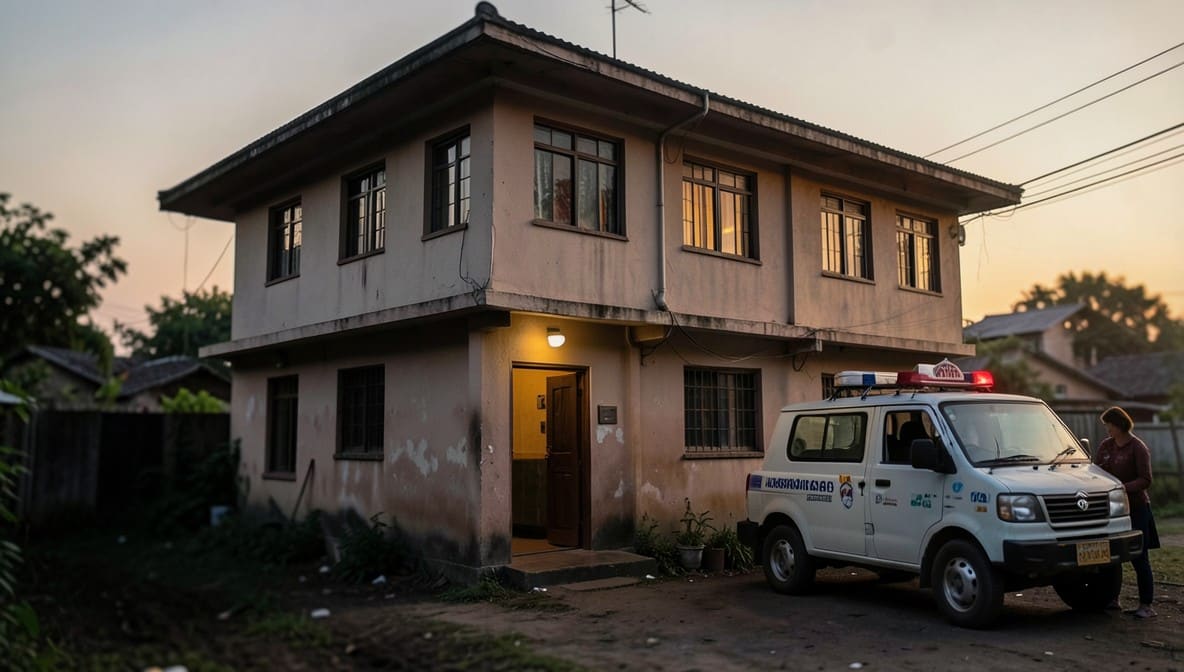
The applicant, Smt. Rita Dilip Ghosh, was convicted under Section 6 of the Immoral Traffic (Prevention) Act, 1956 (PITA) for allegedly running a brothel where two minor girls were found. The prosecution alleged that on 26.08.1996, police received information about a brothel operating in Rele Building, Shamrao Vithal Marg, Mumbai. A raid was conducted, and two minor girls were rescued from the applicant’s custody on the third floor of the building.
Key Facts
- 26.08.1996: Police received information about a brothel operating in Rele Building.
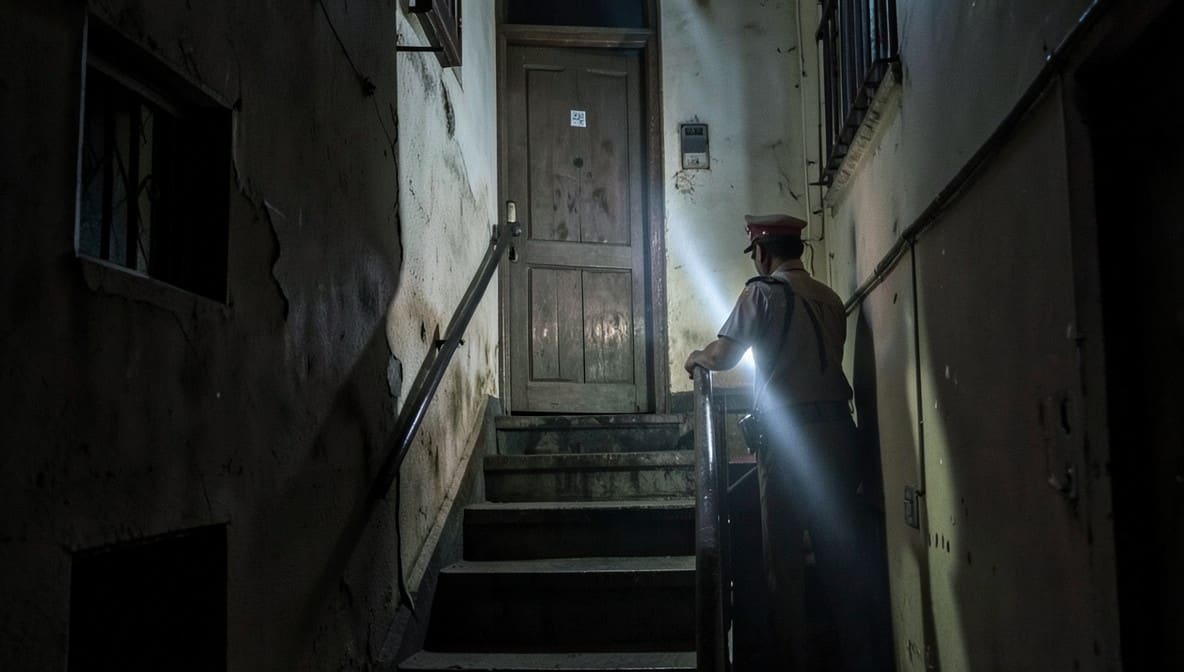
- 26.08.1996 (late night) to 27.08.1996 (early hours): Police, accompanied by panchas, raided the third floor of the building and found two minor girls with the applicant.
- 27.08.1996: Panchnama was recorded between 1:00 AM and 2:00 AM, and the First Information Report (FIR) was registered at 12:30 PM.
- The minor girls were medically examined on 10.09.1996, and their ages were certified as 13-14 years based on physical examination, X-rays, and higher secondary characteristics.
- The applicant was charged under Section 6 PITA and Section 41 of the Juvenile Justice Act, 1986.
Procedural History
- 16.01.2003: Metropolitan Magistrate, 18th Court, Girgaon, Mumbai, convicted the applicant under Section 6 PITA and sentenced her to rigorous imprisonment for 2 years and a fine of Rs. 3,000. The applicant was acquitted of the offence under Section 41 of the Juvenile Justice Act, 1986.
- 07.04.2003: Additional Sessions Judge, Greater Mumbai, dismissed the applicant’s appeal (Criminal Appeal No. 16 of 2003), confirming the conviction and sentence.
- 2003: The applicant filed the present Criminal Revision Application No. 227 of 2003 before the Bombay High Court.
Relief Sought
The applicant sought quashing of the conviction and sentence under Section 6 PITA, arguing that:
- The prosecution failed to prove the allegations beyond reasonable doubt.
- There were material contradictions in the evidence of prosecution witnesses.
- The medical evidence regarding the age of the victims was inconclusive.
- The statements of the victims were not recorded, and adverse inference should be drawn.
- The raid was not conducted by a Special Officer as required under Section 15 PITA.
The Legal Issue
The central legal question was whether the presumption under Section 6(2) PITA applies when minor girls are found in a brothel with the accused, and whether the prosecution had sufficiently rebutted the applicant’s contentions to uphold the conviction.
Arguments Presented
For the Applicant
- Material Contradictions: The applicant argued that PW-1 (panch witness) stated she was called on 27.08.1996, while PW-2 and PW-3 claimed the raid occurred on 26.08.1996. The delay in filing the FIR was not explained.
- Lack of Proof of Brothel: The prosecution failed to prove that the applicant was running a brothel.
- Inconclusive Medical Evidence: PW-4 (medical officer) did not conduct an ossification test to conclusively determine the age of the victims.
- Non-Recording of Victims’ Statements: The prosecution deliberately avoided recording the victims’ statements, which would have revealed the truth.
- Absence of Special Officer: The raid was not conducted by a Special Officer under Section 15 PITA, and the presence of ACP Gawali was not proved.
- Circumstantial Evidence Test: The prosecution’s case did not meet the test laid down in Sharad Birdhichand Sarda v. State of Maharashtra (1984) 4 SCC 116.
The applicant relied on the following judgments:
- Noor Aga v. State of Punjab (2008) 16 SCC 417
- Ganesh Bhavan Patel v. State of Maharashtra (1978) 4 SCC 371
- Mussauddin Ahmed v. State of Assam (2009) 14 SCC 541
- P. Sasikumar v. State (2024) 8 SCC 600
- Chandrappa v. State of Karnataka (2007) 4 SCC 415
- State of Madhya Pradesh v. Anoop Singh (2015) 7 SCC 773
- K. Chinnaswamy Reddy v. State of Andhra Pradesh AIR 1962 SC 1788
For the Respondent/State
- Sufficient Evidence: The prosecution witnesses (PW-1, PW-2, and PW-3) consistently testified that the minor girls were found with the applicant in the brothel.
- Explained Delay in FIR: The delay in filing the FIR was due to the need for medical examination and formalities involving the Juvenile Justice Board.
- Medical Evidence Supports Minor Age: PW-4 (medical officer) certified the victims’ ages as 13-14 years based on physical examination and X-rays.
- Victims’ Trauma: The victims were traumatized and sent to their native places by the Juvenile Board, making their examination impractical.
- Presence of Special Officer: PW-2 testified that ACP Gawali, a Special Officer under Section 15 PITA, was present during the raid.
- Serious Offence: The offence under Section 6 PITA is heinous, and the concurrent findings of the lower courts should not be interfered with in revisional jurisdiction.
The Court's Analysis
The Court conducted a detailed analysis of the evidence and legal principles:
-
Presumption Under Section 6(2) PITA: The Court reiterated that Section 6(2) PITA creates a rebuttable presumption that if a person is found with a child in a brothel, they are presumed to have committed an offence under Section 6(1) PITA. The burden shifts to the accused to rebut this presumption.
-
Corroborating Evidence: The Court relied on the testimonies of PW-1 (panch witness), PW-2 (PSI), and PW-3 (Sr. PI), who consistently stated that the minor girls were found with the applicant in the brothel. The panchnama (Exh. P1) further corroborated these testimonies.
-
Delay in FIR: The Court held that the alleged delay in filing the FIR was sufficiently explained. The raid occurred late at night on 26.08.1996, and the FIR was registered on 27.08.1996 at 12:30 PM. The delay was attributed to the need for medical examination and formalities involving the Juvenile Justice Board.
-
Medical Evidence: The Court noted that PW-4 (medical officer) certified the victims’ ages as 13-14 years based on physical examination, X-rays, and higher secondary characteristics. The Court clarified that ossification is not a separate test but involves X-rays and medical opinion. The applicant’s argument that no ossification test was conducted was dismissed as contrary to facts.
-
Victims’ Statements: The Court acknowledged that the victims’ statements were not recorded in court but noted that their statements were recorded by the police (D-51 and D-52). However, these statements were not considered to ensure fairness.
-
Special Officer Requirement: The Court held that the presence of ACP Gawali, a Special Officer under Section 15 PITA, was sufficiently proved by PW-2’s testimony. The Court declined to re-appreciate this evidence in revisional jurisdiction.
-
Judicial Precedents: The Court distinguished the judgments relied upon by the applicant:
- Noor Aga and Ganesh Bhavan Patel were distinguished on factual grounds.
- Mussauddin Ahmed was distinguished as the victims’ non-examination was justified due to their trauma.
- P. Sasikumar was distinguished as the applicant was not a stranger to the witnesses.
- Chandrappa was distinguished as there were no material contradictions in the evidence.
- State of Madhya Pradesh v. Anoop Singh was distinguished as the medical evidence in this case was conclusive.
- K. Chinnaswamy Reddy supported the prosecution, as the revisional court’s jurisdiction is limited to cases of glaring defects or manifest errors.
-
Circumstantial Evidence: The Court held that the chain of evidence was complete, and the circumstances strongly pointed to the applicant’s guilt. The presumption under Section 6(2) PITA was not rebutted, as the applicant failed to lead any evidence or enter the witness box.
"The offence under PITA is a very serious offence which is against humanity and the society at large. Human trafficking involves brutal methods adopted by the traffickers including kidnapping, abduction, torture, threat to life, confinement and many other inhuman treatment of the victims involved. The offence of trafficking when perpetrated against minors makes it even worse and heinous."
The Verdict
The Bombay High Court dismissed the Criminal Revision Application No. 227 of 2003, upholding the applicant’s conviction under Section 6 PITA and the sentence of rigorous imprisonment for 2 years and a fine of Rs. 3,000. The Court directed the trial court to secure the applicant’s presence in accordance with the law. The bail bonds and sureties, if any, were cancelled.
What This Means For Similar Cases
Presumption Under Section 6(2) PITA Is Irrebuttable Without Evidence
- The judgment reinforces that Section 6(2) PITA creates a strong presumption of guilt when minor girls are found in a brothel with the accused.
- The accused must lead substantial evidence to rebut this presumption. Mere denial or failure to enter the witness box is insufficient.
- Practitioners defending similar cases must focus on disproving the foundational facts (e.g., absence of a brothel, lack of custody of minors) rather than relying on procedural lapses.
Minor Contradictions in Evidence Are Not Fatal
- Courts are reluctant to overturn convictions in human trafficking cases based on minor contradictions in evidence, especially when the victims are minors.
- Delays in filing FIRs or procedural lapses are excusable if explained by necessary formalities (e.g., medical examination, Juvenile Justice Board procedures).
- Prosecution witnesses’ testimonies are given significant weight if they are consistent and corroborated by documentary evidence (e.g., panchnama).
Medical Evidence Need Not Be Conclusive to Prove Minor Age
- The judgment clarifies that ossification tests are not mandatory. Medical opinion based on X-rays, physical examination, and higher secondary characteristics is sufficient to establish age.
- Courts will not entertain hyper-technical arguments about the method of age determination if the medical evidence is otherwise reliable.
- Practitioners should focus on challenging the reliability of medical evidence rather than its methodology.
Limited Scope of Revisional Jurisdiction in Heinous Offences
- The High Court’s revisional jurisdiction is narrowly confined to cases involving glaring defects, manifest errors, or miscarriage of justice.
- Concurrent findings of lower courts are rarely interfered with, especially in cases involving offences against minors or society.
- Practitioners must strongly demonstrate legal errors rather than re-arguing factual appreciation to succeed in revisional petitions.