The Bombay High Court has clarified a critical limitation on the doctrine of part-performance under Section 53A of the Transfer of Property Act, holding that protection of possession cannot extend to structures built on land when the underlying agreement pertains only to the open plot itself. This judgment reinforces the principle that contractual rights in immovable property are strictly confined to the subject matter of the agreement and cannot be expanded by judicial inference.
Background & Facts
The Dispute
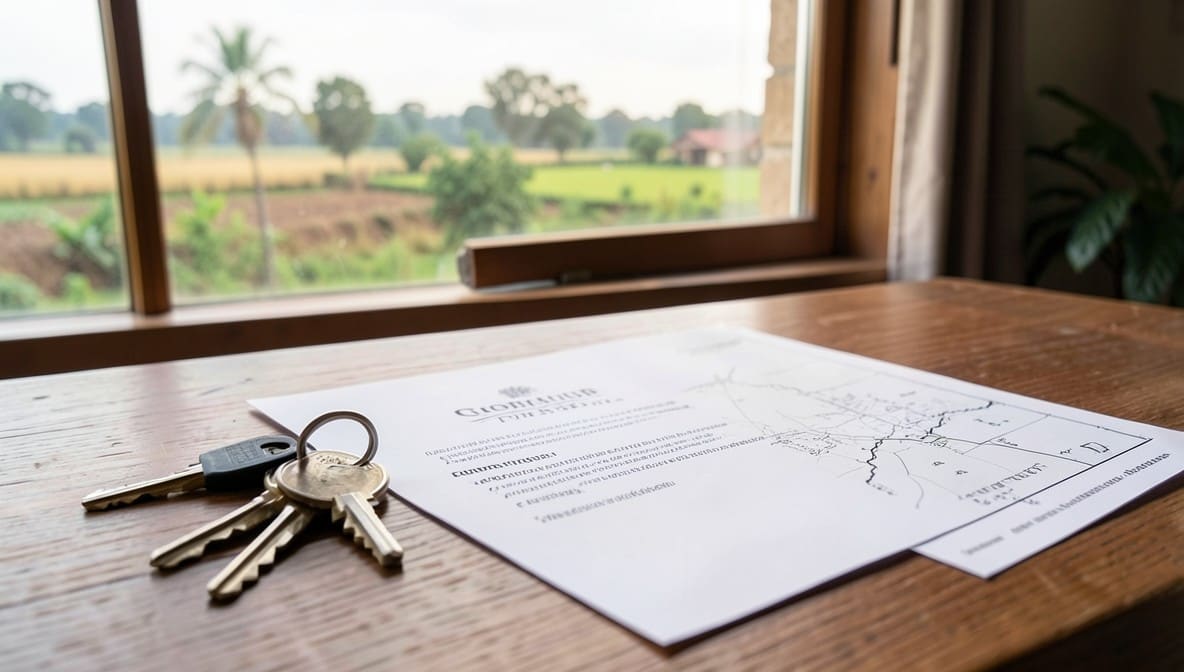
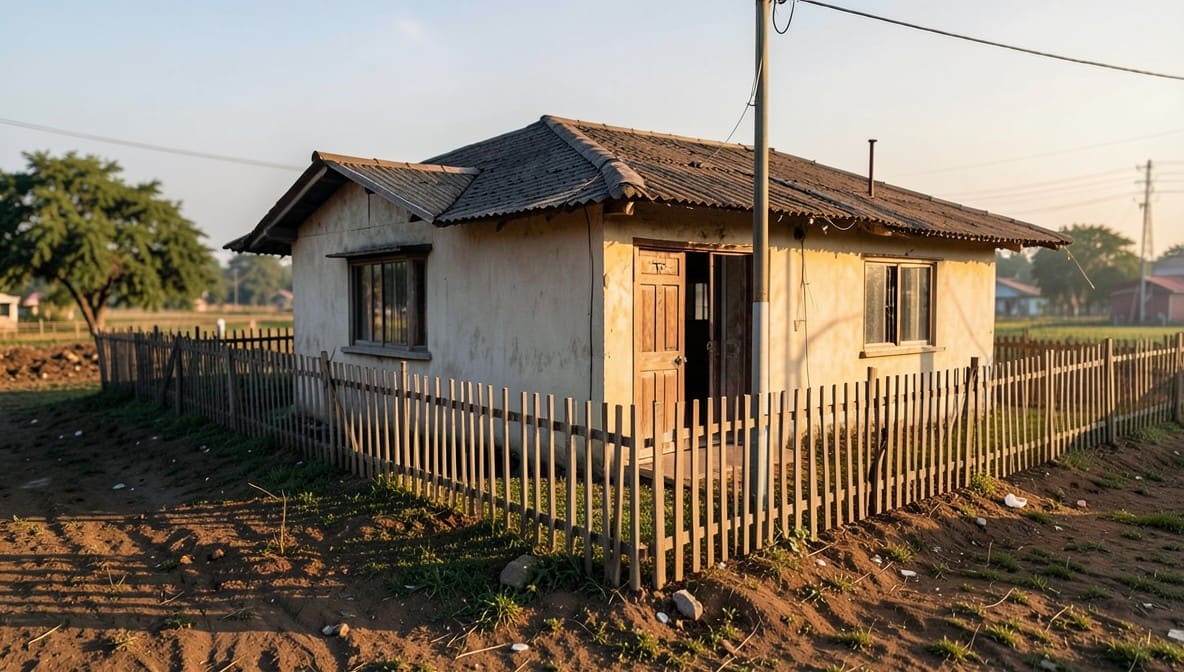
The appellants, legal heirs of Omkar Dusane, filed a suit seeking declaration of ownership and possession of two rooms constructed on a plot of 1500 square feet allotted to Omkar by the Devkinandan Cooperative Housing Society. The respondent, Vijay Vitthal Dusane, a distant relative, claimed ownership of the two rooms on the basis of an unregistered agreement dated 19.11.1992, allegedly executed by Omkar, which purportedly transferred 350 square feet of open land to him. The respondent asserted that he constructed the two rooms at his own cost of Rs. 1,32,000/- on this land and therefore had a right to retain possession.
Key Facts
- The plot of 1500 square feet was allotted to Omkar Dusane as a government employee under the Society’s housing scheme.
- Omkar obtained a loan and constructed four rooms on the plot during his lifetime; the loan was repaid in 1994.
- The agreement dated 19.11.1992 (Exh. 46) purportedly transferred 350 square feet of open land to the respondent, but was not signed by him.
- The respondent claimed he constructed the two rooms on the transferred land, but produced no construction bills, payment receipts, or witness testimony to substantiate this.
- Omkar died on 25.05.1994. The appellants, his legal heirs, requested the respondent to vacate the two rooms in July 1994, but he refused.
- The respondent never filed a suit for specific performance of the agreement.
- The agreement was not stamped or registered.
Procedural History
- 1994: Suit filed by appellants (Original Plaintiffs) in the Court of Joint Civil Judge, Junior Division, Nashik (Suit No. 883 of 1994).
- 25.04.1997: Trial Court decreed the suit, holding the agreement invalid and the respondent in unauthorized possession.
- 1997: Respondent filed Regular Civil Appeal No. 243 of 1997 before the District Judge, Nashik.
- 19.09.2002: First Appellate Court allowed the appeal, reversed the trial court’s decree, and held that the respondent was entitled to protection under Section 53A of the Transfer of Property Act.
- 2004: Second Appeal filed before the Bombay High Court (Second Appeal No. 1391 of 2004).
- 12.12.2008: Second Appeal admitted on two substantial questions of law.
- 29.01.2026: Judgment reserved.
- 08.06.2026: Judgment pronounced.
The Parties' Positions
Appellants (Plaintiffs/Heirs of Omkar):
- Argued that the agreement was unregistered, unstamped, and not signed by the respondent.
- Contended that the agreement, even if valid, related only to open land, not the constructed rooms.
- Asserted that the respondent never took steps to enforce the agreement through specific performance.
- Maintained that the construction was funded and executed by Omkar using his own loan.
Respondent (Defendant):
- Claimed ownership of the two rooms based on construction and possession under the agreement.
- Argued that Section 53A protects possession even without registration, provided part-performance is established.
- Asserted that his signature was not required on the agreement as the vendor (Omkar) had signed it.
- Relied on admissions by appellants during cross-examination to support the agreement’s authenticity.
Relief Sought
The appellants sought:
- Declaration that the agreement dated 19.11.1992 is void and confers no rights.
- Possession of the two rooms.
- Recovery of mesne profits.
- Costs of litigation.
The Legal Issue
The central questions were: (1) Whether an unregistered and unstamped agreement to sell open land, not signed by the purchaser, can confer protection under Section 53A of the Transfer of Property Act for possession of structures built on that land; and (2) Whether the absence of a suit for specific performance defeats the claim of possession under Section 53A.
Arguments Presented
For the Appellant
Counsel for the appellants relied on Ramesh Chand v. Suresh Chand, Suraj Lamp & Industries v. State of Haryana, and Vinod Infra Developers v. Mahaveer Lunia to argue that: (i) Section 53A requires the agreement to relate directly to the property in possession; (ii) an unregistered agreement cannot create title or interest in immovable property; (iii) possession must be in furtherance of the contract, and here, the respondent was in possession of constructed rooms, not the open land; and (iv) failure to institute a suit for specific performance negates the claim of part-performance. Counsel emphasized that the burden lay on the respondent to prove construction and contractual intent, which he failed to do.
For the Respondent
Counsel for the respondent relied on Mahadeo Nathuji Patil v. Surjabai Khushalchand Lakkad and Shamlal Kumar Roy v. Sushil Agarwal to contend that: (i) objections to admissibility of documents cannot be raised for the first time in second appeal; (ii) the absence of the purchaser’s signature does not invalidate an agreement signed by the vendor; and (iii) possession of the constructed area, even if derived from an agreement for open land, qualifies as part-performance under Section 53A. Counsel argued that the first appellate court’s factual findings should be upheld.
The Court's Analysis
The Court undertook a meticulous review of the agreement, pleadings, and evidence. It held that Section 53A of the Transfer of Property Act protects possession only when the transferee is in possession of the very property described in the contract. Here, the agreement was for 350 square feet of open land, not the two rooms constructed on it. The respondent never alleged or proved that he was put in possession of the open land itself.
"The respondent has not pleaded and proved that he was put in possession of the land in furtherance of the contract. He claims possession of the constructed area, which is not the subject matter of the agreement."
The Court further noted that the respondent failed to establish that he constructed the rooms. The trial court had correctly found that the construction was funded by Omkar’s loan, and the first appellate court’s assumption that the respondent built the rooms was unsupported by evidence. The Court emphasized that Section 53A requires all four conditions to be satisfied: (1) a written contract signed by the transferor; (2) possession taken in part performance; (3) acts done in furtherance of the contract; and (4) willingness to perform.
The Court held that the respondent had not performed any act in furtherance of the contract, nor had he sought specific performance. The mere fact that he occupied the rooms did not equate to possession of the land under the agreement. The Court also clarified that while the absence of the purchaser’s signature does not invalidate the agreement per se, it does not confer any right to the purchaser unless the other conditions of Section 53A are met.
The Court distinguished Mahadeo Nathuji Patil, which permits protection even after delay, but only if the essential conditions of Section 53A are satisfied. Here, those conditions were absent. The Court also affirmed that Suraj Lamp and Vinod Infra Developers establish that an unregistered agreement cannot create title or interest in property.
The Verdict
The second appeal was allowed. The judgment and decree of the first appellate court dated 19.09.2002 were set aside. The trial court’s decree dated 25.04.1997 was restored with modifications: (i) the agreement dated 19.11.1992 is declared to confer no right, title or interest on the respondent in respect of the land or the two rooms; (ii) the respondent shall deliver vacant and peaceful possession of the two rooms to the appellants within two months from the date of judgment; (iii) deficit court fee, if any, shall be paid by the appellants; (iv) an enquiry into mesne profits shall be conducted under Order XX Rule 12(1)(c) CPC; and (v) the respondent shall pay costs of the proceedings to the appellants.
What This Means For Similar Cases
Protection Under Section 53A Is Limited to the Contracted Property
- Practitioners must ensure that possession claimed under Section 53A directly corresponds to the property described in the agreement.
- Constructed structures cannot be protected under Section 53A if the agreement only covers the underlying land.
- Mere occupation of a building does not equate to possession of the land unless the agreement explicitly includes the structure.
Specific Performance Is Not Optional for Section 53A Claims
- A transferee cannot rely on Section 53A to retain possession indefinitely without ever seeking specific performance.
- Courts will not infer willingness to perform from passive occupation.
- Delay in filing a suit for specific performance, while not fatal per se, becomes fatal if the transferee never took any steps to enforce the contract.
Unregistered Agreements Cannot Create Title, Even If Admitted
- Admitting an unregistered agreement in evidence for cross-examination does not validate it for the purpose of transferring title.
- Such documents may be used for collateral purposes, but not to establish ownership or right to possession of immovable property.
- Practitioners must challenge admissibility at trial stage; however, even if admitted, the document cannot confer rights beyond its terms.