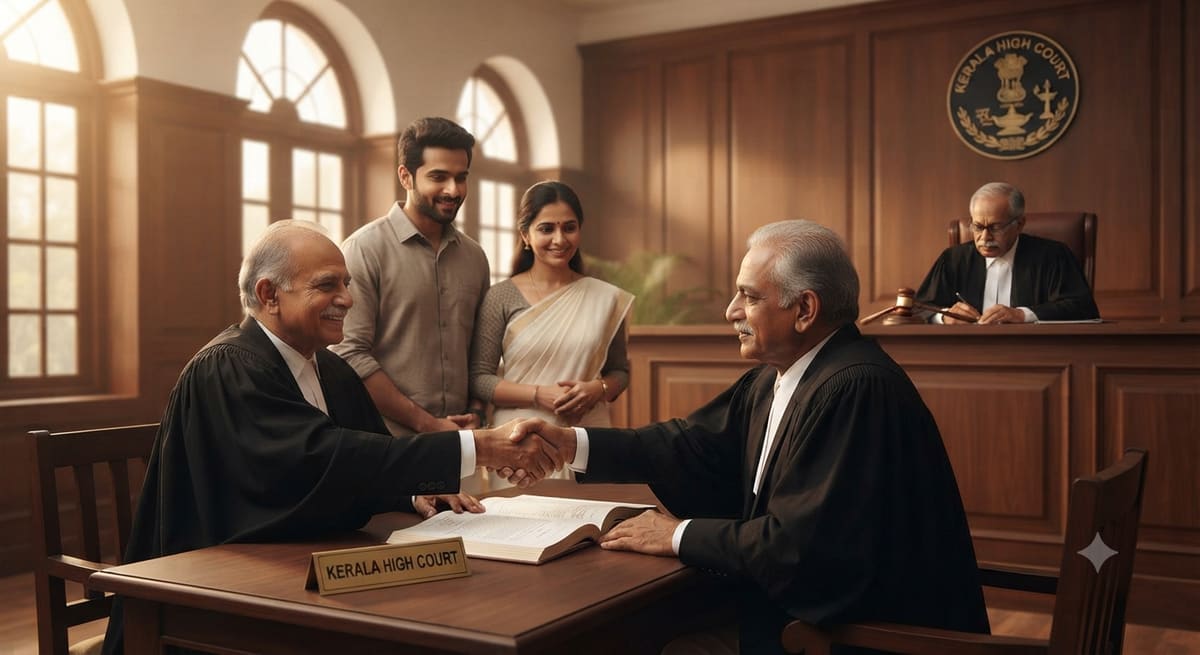
A significant precedent has been set by the Madras High Court in quashing criminal proceedings arising from a minor altercation over parking, where the parties reached a voluntary compromise after the filing of a charge sheet. The judgment underscores the court’s power to terminate proceedings in the interest of justice, even at advanced stages of litigation, when the underlying dispute is non-serious and resolved amicably.
Background & Facts
The Dispute
The dispute originated on 25.04.2023 at approximately 7:45 p.m. in Chennai, when the second respondent (de facto complainant) parked his car in front of his gate while waiting for his children to enter the vehicle for a birthday outing. The petitioners, traveling in a white Swift car, alleged that the complainant’s vehicle obstructed their passage. A verbal exchange ensued, escalating into physical confrontation.
Key Facts
- The first petitioner, an advocate, allegedly banged the bonnet of the complainant’s car and shouted demands to move the vehicle
- The second petitioner pulled the complainant by his shirt, punched him on the nose, and abused his wife
- The third petitioner pushed the complainant down and kicked him
- The complainant sustained contusions on both sides of the nose, a contusion on the right knee, and bleeding
- He was treated at SKS Hospital by Dr. Selvakumar, who recorded the injuries in the Accident Register on 25.04.2023
- The complainant lodged a complaint with the V-3 J.J. Nagar Police Station on 25.04.2023
- FIR was registered as Crime No. 116 of 2023 on 08.05.2023
- The charge sheet was filed on 20.09.2024 before the Judicial Magistrate, Ambattur, in C.C. No. 471 of 2024
- Nine witnesses were listed, including the treating doctor and a mechanic who replaced the windshield
- The offences charged were under Sections 341, 427, 294(b), 323, 506(i) IPC and Section 4 of the Tamil Nadu Prohibition of Women Harassment Act
Procedural History
- 25.04.2023: Incident occurred
- 08.05.2023: FIR registered (Crime No. 116 of 2023)
- 20.09.2024: Charge sheet filed in C.C. No. 471 of 2024
- 06.04.2026: Criminal Original Petition filed under Section 528 of Bharatiya Nagarik Suraksha Sanhita, 2023, seeking quashing of charge sheet
The Parties' Positions
For the Petitioners: The altercation was spontaneous, not premeditated. The complainant had parked in a manner obstructing passage. After the incident, the petitioners apologized, and the complainant accepted the apology. A written compromise memo and individual affidavits were filed, confirming mutual settlement. The complainant expressed no desire to pursue the case.
For the Respondent (State): The first petitioner, being an advocate, acted with arrogance. The assault was unprovoked and severe. The complainant’s subsequent willingness to compromise does not negate the seriousness of the offences. The charge sheet was based on medical evidence and witness statements.
Relief Sought
The petitioners sought quashing of C.C. No. 471 of 2024, arguing that the compromise rendered continuation of proceedings unjust and unnecessary.
The Legal Issue
Can a criminal case involving multiple offences under the IPC and a special statute be quashed under Section 528 of the Bharatiya Nagarik Suraksha Sanhita, 2023, after the filing of a charge sheet, where the parties have reached a voluntary compromise and the complainant has expressed no desire to proceed?
Arguments Presented
For the Petitioner
The counsel relied on the principle that courts possess inherent power to quash proceedings to prevent abuse of process and secure justice. The incident was minor, transient, and devoid of malice. The complainant, having accepted the apology and signed a compromise memo, has effectively withdrawn consent to prosecution. The offences, though serious on paper, are compoundable in substance. The continuation of proceedings would serve no public interest.
For the Respondent
The State contended that the first petitioner’s status as an advocate aggravated the conduct. The injuries were documented by a medical professional, and the charge sheet was supported by independent evidence. Compromise cannot override the state’s interest in prosecuting offences against public order and personal safety, particularly where the accused are not minors or first-time offenders.
The Court's Analysis
The Court examined the nature of the incident, the stage of proceedings, and the voluntary nature of the compromise. It noted that the altercation arose from a momentary dispute over parking, with no prior enmity or premeditation. The injuries, while real, were not life-threatening and were treated on an outpatient basis. The complainant, having initially lodged the complaint, later expressed a clear desire to withdraw from the proceedings and formally communicated this through affidavits and a joint compromise memo.
"The issue arose in a spur of moment without any premeditation, a wordy quarrel ensued into push and pull, now the issue has been amicably settled between petitioners and defacto complainant."
The Court emphasized that the Bharatiya Nagarik Suraksha Sanhita, 2023, preserves the inherent jurisdiction of High Courts under Section 528 to quash proceedings where continuation would amount to abuse of process. It distinguished this case from those involving heinous crimes or where public interest demands prosecution. The Court held that in cases of minor, non-heinous offences where the victim consents to compromise and the accused show remorse, judicial economy and restorative justice favor termination.
The Court also noted that the complainant appeared before the Court and confirmed the compromise in person, with police verifying identities. This rendered the settlement credible and beyond dispute.
The Verdict
The petition succeeded. The Madras High Court quashed C.C. No. 471 of 2024 against all three petitioners. The Court directed the Judicial Magistrate, Ambattur, to close the proceedings and the police to close Crime No. 116 of 2023. No costs were awarded. The order was effective immediately.
What This Means For Similar Cases
Compromise Can Quash Even Post-Charge Sheet
- Practitioners may now argue for quashing in minor offences (e.g., hurt, criminal trespass, public nuisance) even after charge sheet filing, provided compromise is genuine and documented
- Courts are likely to consider the nature of injury, presence of malice, and victim’s consent as decisive factors
- A signed compromise memo and affidavit from the complainant are now essential evidentiary tools
Judicial Discretion Trumps Mechanical Prosecution
- The judgment reinforces that courts are not bound to proceed merely because a charge sheet exists
- Public interest must be balanced against the reality of private dispute resolution
- Prosecution of minor, resolved altercations is now seen as disproportionate unless public safety is demonstrably at risk
Non-Heinous Offences Are Compoundable in Practice
- Even non-compoundable offences under IPC may be quashed if the facts are trivial and compromise is voluntary
- This does not override statutory bar on compounding for serious offences (e.g., rape, murder) but creates a clear threshold for minor cases
- Lawyers should advise clients to formalize settlements early and obtain police acknowledgment to strengthen quash petitions