The Calcutta High Court has decisively clarified that administrative disciplinary actions taken by a school headmaster against a teacher, even if perceived as harsh or delayed, cannot form the basis of a criminal defamation complaint under Section 500 IPC. The judgment underscores the legal boundary between professional conduct in public service and actionable defamation, reinforcing that judicial scrutiny of service matters does not equate to personal malice or reputational harm.
Background & Facts
The Dispute
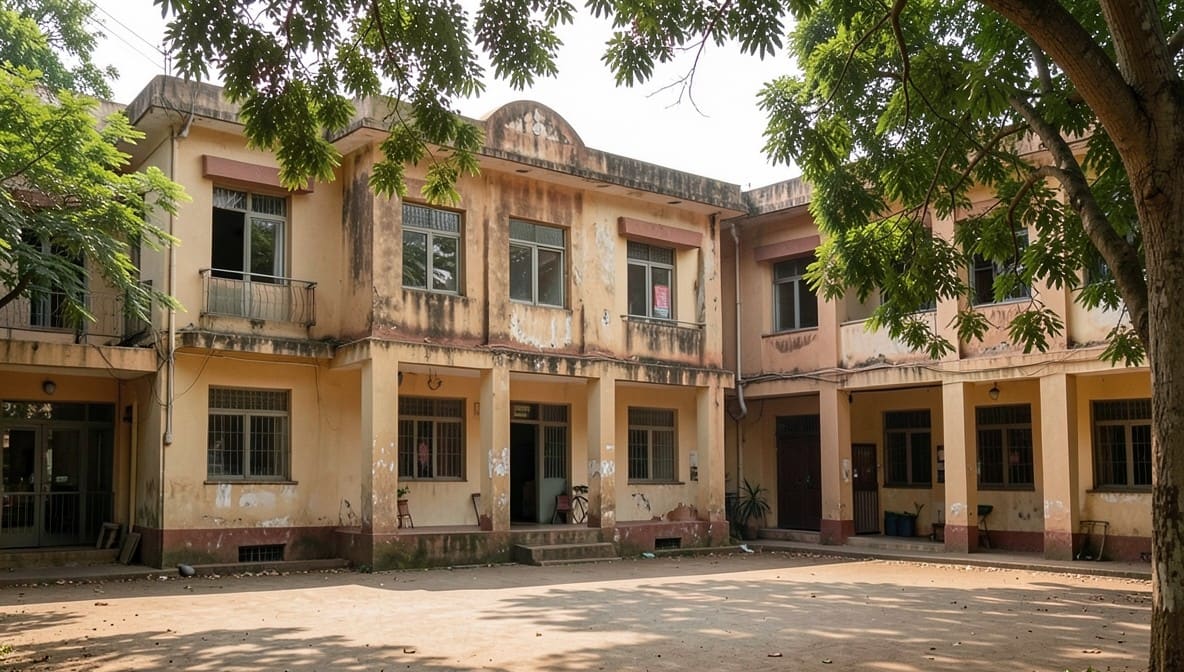
The dispute arose from a long-standing disciplinary proceeding initiated against Kakali Bhattacharya’s husband, a former assistant teacher at a school in Chandannagar, Hooghly, during the tenure of Sukanta Chattopadhyay as Headmaster. The husband was issued a charge sheet on 07.05.2002 for alleged misconduct, failed to respond, and was subsequently suspended on 27.09.2002 following a resolution by the school’s managing committee. The West Bengal Board of Secondary Education directed the school to follow its circular dated 21.06.1982, and approval for suspension was granted on 24.12.2002.
Key Facts
- The husband of the opposite party was appointed as an assistant teacher in March 1988.
- A charge sheet was issued on 07.05.2002; no reply was submitted.
- Suspension order dated 27.09.2002, approved by the Board on 24.12.2002.
- The husband filed WP No. 8238(W) of 2003 challenging suspension; High Court directed initiation of proper inquiry.
- Enquiry was conducted; report submitted on 01.10.2005; proposal for dismissal sent to Director of School Education on 13.01.2006.
- Director disapproved dismissal on 24.12.2008, directing fresh procedure with opportunity of hearing.
- Husband filed WP No. 22562(W) of 2012; High Court ordered his reinstatement on 17.04.2013.
- He resumed duties and retired on 31.01.2019.
- WP No. WPA 1194 of 2018 sought subsistence allowance and arrears; order dated 08.08.2023 directed reasoned decision after hearing.
- MAT No. 1830 of 2023 dismissed without interference.
- The wife filed an application under Section 156(3) CrPC on 29.05.2017, alleging the Headmaster had maliciously withheld salary from March 2017, caused financial hardship, and inflicted mental trauma.
- The complaint alleged the Headmaster acted with dishonest intent to "financially cripple" the family, prevent admission of the son to a reputed school, and damage the husband’s reputation.
- No witness was produced to testify that the husband’s moral or intellectual character was lowered in the estimation of others.
Procedural History
- 07.05.2002: Charge sheet issued against husband.
- 27.09.2002: Suspension ordered.
- 24.12.2002: Board approved suspension.
- 17.04.2013: High Court ordered reinstatement.
- 31.01.2019: Husband retired.
- 29.05.2017: Complaint filed under Section 156(3) CrPC.
- 25.09.2017: Judicial Magistrate took cognizance under Section 500 IPC without speaking order.
- 30.03.2026: Hearing before Calcutta High Court.
- 04.05.2026: Judgment delivered.
The Parties' Positions
The petitioner, Sukanta Chattopadhyay, was Headmaster of the school during the relevant period and acted under the authority of the managing committee and directives of the Board and Director of School Education. He contended that all actions were official, lawful, and protected under exceptions to Section 499 IPC and Section 197 CrPC.
The opposite party, Kakali Bhattacharya, wife of the teacher, alleged that the Headmaster acted with malice, withheld salary, caused financial ruin, and inflicted mental trauma, thereby committing defamation.
Relief Sought
The petitioner sought quashing of the criminal proceeding (CR No. 187 of 2017) under Section 500 IPC, arguing it was legally unsustainable, barred by limitation, lacked sanction under Section 197 CrPC, and was filed by an incompetent complainant under Section 199 CrPC.
The Legal Issue
The central question was whether Section 500 of the Indian Penal Code can be invoked against a public servant for actions taken in the course of official duties during a disciplinary proceeding, where no imputation lowering the moral or intellectual character of the person in the estimation of others is established, and where the complaint is filed by a spouse rather than the defamed individual.
Arguments Presented
For the Appellant/Petitioner
The petitioner argued that all actions were taken in discharge of official duties under the direction of the managing committee and educational authorities. He relied on Section 197 of the CrPC, asserting that no sanction was obtained from the competent authority, rendering the cognizance illegal. He further invoked Section 499 IPC, Exceptions 7, 8, and 9, contending that the allegations were protected as bona fide official communications. He emphasized that the complaint failed to establish any lowering of the husband’s reputation in the eyes of others, a sine qua non for defamation. He also challenged the wife’s locus standi under Section 199 CrPC, arguing that only the defamed person can file such a complaint unless incapacitated. He cited Harbajhan Singh v. State of Punjab and Balraj Khanna v. Moti Ram to argue that the complaint lacked essential ingredients and was barred by limitation under Section 468 CrPC.
For the Respondent/State
The opposite party contended that the wife, as an aggrieved person, had standing under Section 199 CrPC, relying on John Thomas v. Dr. K. Jagadeeshan. She argued that the financial hardship and mental trauma suffered by the family constituted actionable defamation. She claimed the Headmaster acted with dishonest intent, withheld salary despite court orders, and deliberately damaged the husband’s reputation. She contended that the exceptions under Section 499 IPC were matters of defense to be proven at trial, not grounds for quashing at the preliminary stage, and cited Subramanian Swamy v. Union of India to argue against premature adjudication.
The Court's Analysis
The Court undertook a rigorous analysis of the complaint and the initial deposition under Section 200 CrPC. It found that the complainant did not allege that the husband’s moral or intellectual character was lowered in the estimation of any third party, a requirement under Explanation 4 to Section 499 IPC. The Court observed:
"The complainant had also failed to bring a single person as witness on her behalf during initial deposition in support of the imputation that her husband’s moral or intellectual character has been lowered in the eyes of said person, due to continuance of the proceedings conducted by the school authority or for any other reason."
The Court held that mere financial hardship, emotional distress, or delay in salary disbursement, even if caused by official action, do not constitute defamation. The Court further emphasized that the petitioner acted under the authority of the managing committee and in compliance with directives from the Board and Director of School Education. The Court noted:
"The act of initiating disciplinary proceeding or making any recommendation with the same as head of the institution cannot by itself constitute an act of defamation."
The Court applied Exception 8 to Section 499 IPC, which protects accusations made in good faith to persons having lawful authority over the accused. It held that the Headmaster’s recommendations were made within his official capacity and were not personal vendettas. The Court also invoked Exception 9, protecting acts done for the protection of public good.
Crucially, the Court held that Section 197 CrPC barred cognizance without prior sanction, as the petitioner was a public servant acting in discharge of official duties. The Court stated:
"The mandatory character of the protection afforded to a public servant is brought out by the expression ‘no’ and ‘shall’ make it abundantly clear that the bar on exercise of power by the court to take cognizance of any offence is absolute and complete."
Regarding locus standi, the Court rejected the wife’s claim under Section 199 CrPC, holding that where the defamed person is an adult, capable, and alive, a spouse cannot file a defamation complaint merely because of consequential financial hardship. The Court observed:
"When an architect of society whose duty as assistant teacher was to play a fundamental role in shaping minds... has been allegedly defamed and when he is alive, his wife can hardly file the complaint."
Finally, the Court found the summoning order dated 25.09.2017 to be non-speaking and legally defective under Section 204 CrPC, as it failed to record any reasoning or prima facie satisfaction.
The Verdict
The petition was allowed. The Calcutta High Court quashed the criminal proceeding CR No. 187 of 2017 under Section 500 IPC pending before the Judicial Magistrate, 3rd Court, Chandannagar. The Court held that the complaint failed to disclose an offence under Section 500 IPC, was barred by lack of sanction under Section 197 CrPC, was filed by an incompetent complainant under Section 199 CrPC, and was time-barred under Section 468 CrPC. The Court directed that no further proceedings shall be taken in the matter.
What This Means For Similar Cases
Official Actions in Service Cannot Be Criminalized as Defamation
- Practitioners must argue that disciplinary actions by educational or administrative authorities, even if perceived as harsh, are protected under Section 499 IPC, Exceptions 7, 8, and 9.
- Allegations of financial hardship, delayed payments, or emotional distress arising from official conduct do not satisfy the legal test for defamation.
- Complaints must specifically allege that the victim’s moral or intellectual character was lowered in the estimation of others - mere subjective distress is insufficient.
Sanction Under Section 197 CrPC Is Mandatory and Non-Waivable
- Any prosecution against a public servant for acts done in official capacity requires prior sanction under Section 197 CrPC.
- Courts cannot take cognizance without such sanction, even if the accused does not raise the objection at the initial stage.
- The bar is absolute: the use of "no" and "shall" in Section 197 renders it mandatory, not directory.
Spouses Cannot File Defamation Complaints on Behalf of Capable Adults
- Only the person defamed may file a complaint under Section 199 CrPC, unless incapacitated.
- Financial or emotional consequences suffered by family members do not confer locus standi.
- This principle applies equally to cases involving teachers, police officers, government officials, and other public servants.
Judicial Scrutiny at Preliminary Stage Must Be Restrained
- Courts must not conduct mini-trials at the quashing stage under Section 482 CrPC.
- However, where the complaint is facially defective - lacking essential ingredients, barred by law, or filed by an incompetent person - quashing is not only permissible but mandatory.
- Non-speaking summoning orders are void and must be set aside.