The Calcutta High Court quashed a Section 498A IPC complaint lodged by a daughter-in-law against her parents-in-law, holding the allegations to be general, omnibus, and devoid of specific factual foundations. The Court found the complaint was instituted as a counterblast to an eviction order passed under the Maintenance and Welfare of Parents and Senior Citizens Act, 2007, and constituted an abuse of process of law.
Background & Facts
The Dispute
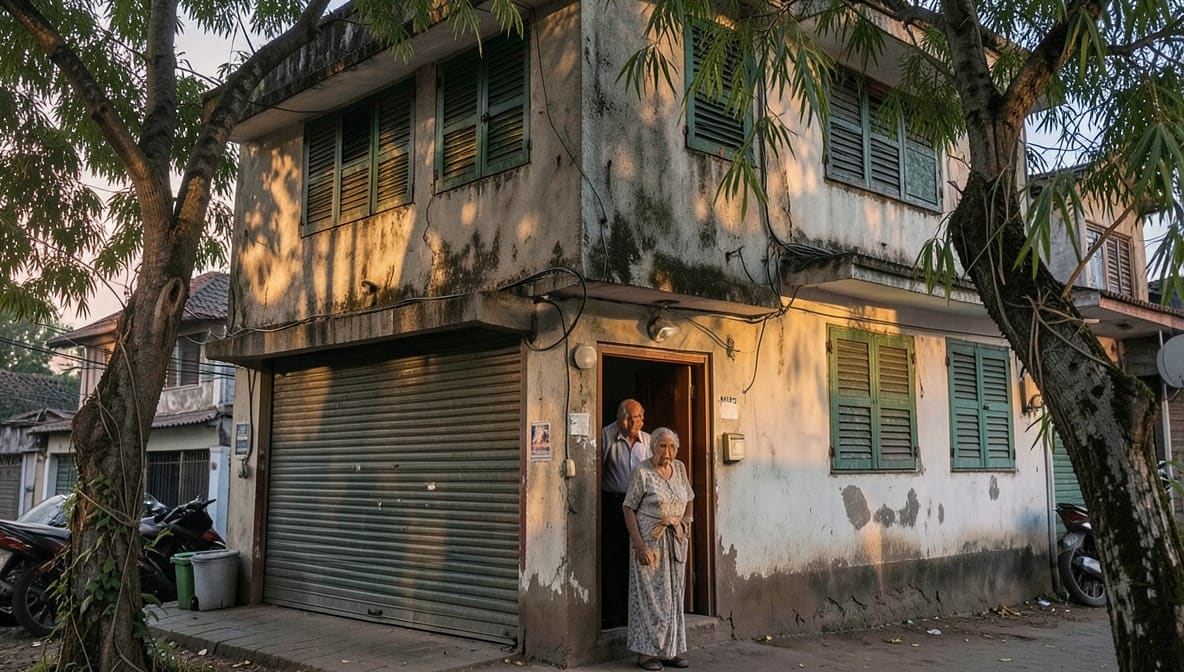
The petitioners, Krishna Kanta Dey and another, are the parents-in-law of Opposite Party No. 2 (the daughter-in-law). Petitioner No. 1 owns a G+1 storey building on three cottahs of land at Kalyani, Nadia. The daughter-in-law married the petitioners' son in December 2008 according to Hindu rites. A long-standing family feud has resulted in multiple rounds of criminal litigation and civil proceedings between the parties.
Key Facts
- December 2008: Marriage of Opposite Party No. 2 with petitioners' son
- 2010: Daughter-in-law and husband moved out of petitioners' premises to separate accommodation
- 2012: Daughter-in-law lodged first criminal complaint under Sections 498A/406 IPC against petitioners
- June 25, 2012: Petitioners granted anticipatory bail under Section 438 CrPC
- October 11, 2018: Section 482 petition for quashing disposed of after compromise between parties
- September 16, 2014, October 13, 2014, December 3, 2014: Petitioners lodged complaints against son and daughter-in-law for threats, assault, and humiliation
- November 9, 2014: Kalyani PS Case No. 570/2014 registered under Sections 341/323/379/504/506 IPC against son and daughter-in-law
- June 20, 2015: Kalyani PS Case No. 394/2015 registered under Sections 341/323/379 IPC against son and daughter-in-law
- Both 2014 and 2015 cases: Dropped on basis of compromise; petitioners prayed not to proceed further
- August 2022: Petitioner No. 1 closed showroom and discontinued business due to continuous disputes
- December 15, 2021 and May 17, 2022: Petitioners filed applications before Chairman, Senior Citizens Maintenance Tribunal under Maintenance and Welfare of Parents and Senior Citizens Act, 2007 for eviction of son and daughter-in-law
- January 31, 2022 and May 17, 2022: Complaints filed before appropriate authority for eviction assistance
- May 25, 2022: Summons issued in eviction proceeding
- June 2, 2022: SDO passed reasoned order directing son and daughter-in-law to vacate premises; allowed stay for few months as daughter-in-law was pregnant
- November 4, 2022: Daughter-in-law gave birth to male child
- July 31, 2023: Application for implementation of eviction order allowed; jurisdictional police directed to take appropriate steps
- September 19, 2023: Court directed jurisdictional police to evict Opposite Party No. 2 and husband
- September 20, 2023: Police called parties for eviction steps
- September 8, 2023: Instant complaint lodged by daughter-in-law against petitioners under Sections 498A/34 IPC (FIR No. 575/2023)
- September 12, 2023: Petitioners surrendered and obtained bail
- September 21, 2023: Charge sheet submitted against petitioners
- September 29, 2023: Trial Court refused interim relief in Title Suit No. 193/2023 filed by son claiming tenancy
Procedural History
- September 8, 2023: FIR No. 575/2023 registered at Kalyani Police Station under Sections 498A/34 IPC
- September 12, 2023: Petitioners surrendered before learned Court and obtained bail
- September 21, 2023: Charge sheet submitted by Investigating Officer
- December 2023: Present Criminal Revisional Application (CRR 4968/2023) affirmed for quashing of complaint and proceedings
- September 7, 2026: Judgment delivered by Hon'ble Justice Chaitali Chatterjee Das
Relief Sought
The petitioners sought quashing of the FIR/complaint dated September 8, 2023, the charge sheet dated September 21, 2023, and all proceedings pending before the Additional Chief Judicial Magistrate, Nadia, qua the petitioners.
The Legal Issue
Whether a complaint under Section 498A IPC containing only general and omnibus allegations without specific dates, times, places, or particular overt acts attributed to each accused, filed immediately after an eviction order under the Senior Citizens Act, discloses a prima facie offence or constitutes an abuse of process of law warranting quashing under Section 482 CrPC.
Arguments Presented
For the Petitioner
Learned Senior Advocate Ayan Bhattacharjee argued the complaint was lodged with mala fide intention to save the daughter-in-law and her husband from the eviction order passed by the SDO under the Senior Citizens Act. The chequered history demonstrated continuous disputes with multiple complaints and compromises. The complaint was false, concocted, and devoid of any specific instances of torture to attract Section 498A. The charge sheet failed to assign reasons establishing the offence, citing only two witnesses besides the complainant, her husband, and police personnel. Reliance was placed on Sharif Ahmed v. State of U.P. (2024) 14 SCC 122 requiring clear charge-sheet entries, and Ria Das v. State of West Bengal (2026 SCC OnLine Cal 6298) on inherent power to quash manifestly frivolous or vexatious proceedings.
For the Respondent/State
Counsel for Opposite Party No. 2 contended the power of quashing should be exercised sparingly, and the court must believe allegations in the complaint to be true. Citing Punit Beriwala v. State of NCT of Delhi (2025 SCC OnLine SC 983) and State of Odisha v. Pratima Mohanty (2022) 16 SCC 703, it was argued that the court cannot conduct a mini-trial or enquire into reliability of allegations at the threshold. The previous complaint ending in compromise did not negate the present one, and quashing after charge sheet submission would prejudice the complainant. The State submitted the case diary and argued prima facie materials established charges, requiring the petitioners to face trial.
The Court's Analysis
The Court examined the entire factual matrix, noting a "continuous and persistent family feud" since the 2008 marriage. The record revealed a cyclical pattern: the daughter-in-law's 2012 complaint ended in compromise (2018); petitioners' complaints against son and daughter-in-law (2014, 2015) also ended in compromise; petitioners then invoked the Senior Citizens Act for maintenance and eviction.
The Court observed the critical sequence: the SDO's eviction order (June 2, 2022), the implementation order (July 31, 2023), the police direction to evict (September 19, 2023), and the instant complaint (September 8, 2023) - all within days of each other. The complaint made no reference to the Senior Citizens Act proceedings or the eviction order, despite the daughter-in-law having prayed for time to stay until childbirth.
"The sequence of events, prima facie gives rise to a reasonable inference that the present complaint was instituted as a counterblast to the order of eviction and with the view to protecting the opposite party no. 2 and her husband from the consequence of such order."
The Court agreed with the settled proposition that Section 482 power must be exercised sparingly (State of Odisha v. Pratima Mohanty), but emphasized the countervailing duty to intervene where there is "gross miscarriage of justice" (Suman Mishra v. State of U.P., 2025 INSC 203). Citing Iqbal alias Bala v. State of U.P. (2023) 8 SCC 734, the Court held that multiple FIRs over time attract the issue of "wreaking vengeance out of private or personal grudge."
On the complaint's contents, the Court found it "devoid of any details of date of torture inflicted on her and the manner in which both the petitioners subjected her to such torture or the nature of torture inflicted on her." No specific overt act was attributed to either petitioner. The allegations were "general and omnibus in nature."
The Court relied on Kahkashan Kausar @ Sonam v. State of Bihar (2022 Live Law (SC) 141) where the Supreme Court warned against misuse of Section 498A as "instruments to settle personal scores," and Ghanshyam Soni v. State (2025 INSC 803) holding that "bald allegations without any species of time, date or place" cannot substantiate "cruelty" under Section 498A IPC.
The Verdict
The Criminal Revisional Application was allowed. The FIR/complaint (FIR No. 575/2023), the charge sheet dated September 21, 2023, and all proceedings pending before the ACJM, Nadia, were quashed qua the petitioners. The petitioners were discharged from their bail bonds forthwith. All connected applications were disposed of.
What This Means For Similar Cases
Counterblast Complaints After Adverse Civil Orders Are Vulnerable
- A criminal complaint filed immediately after an adverse civil or tribunal order (here, eviction under the Senior Citizens Act) will be scrutinised for mala fide intent
- The temporal proximity between the eviction direction (September 19, 2023) and the FIR (September 8, 2023) created a "reasonable inference" of counterblast
- Practitioners should highlight the sequence of events and the complainant's silence on pending civil proceedings in the FIR
Omnibus Allegations Against In-Laws Fail the Prima Facie Test
- Section 498A complaints against in-laws must attribute specific overt acts with dates, times, and places to each accused
- General allegations of "cruelty" and "torture" without particulars are insufficient to sustain proceedings
- Ghanshyam Soni and Kahkashan Kausar establish that courts must not proceed against relatives when no prima facie case is made out
Charge Sheet Deficiencies Strengthen Quashing Arguments
- A charge sheet that fails to assign reasons for each accused's role, cites minimal witnesses, and omits prior complaints by the accused against the complainant is vulnerable
- Sharif Ahmed mandates clear, complete charge-sheet entries with role-specific allegations
- The absence of cognizance by the Magistrate before the revisional hearing does not bar the High Court from examining the complaint's sufficiency
Multiple Prior Complaints and Compromises Indicate Vexatious Litigation
- A history of reciprocal complaints ending in compromises supports the inference of personal vendetta
- Iqbal alias Bala recognises that "multiple FIRs registered over a period of time" attract the issue of vengeance
- The Court may look beyond the complaint to "overall circumstances leading to initiation" and "materials collected in course of investigation" (Suman Mishra)