The Chhattisgarh High Court has affirmed that a settled matrimonial dispute, resolved through court-supervised mediation, constitutes a compelling ground for granting anticipatory bail - even in cases involving serious allegations under the Bhartiya Nagarik Suraksha Sanhita, 2023 and the Dowry Prohibition Act. The judgment underscores the judiciary’s recognition of amicable resolution as a legitimate factor in bail decisions, distinct from the merits of the underlying allegations.
Background & Facts
The Dispute
The applicant, Rituraj Singh, a software professional, is accused in Crime No. 05/2026 registered at Mahila Thana/Smriti Nagar Police Station, Bhilai, Chhattisgarh. The allegations stem from his marriage to Smt. Moni Singh, solemnized on 02.12.2022. The prosecution alleges that from the third day of marriage, the applicant, along with his parents and sister, subjected the complainant to continuous physical and mental harassment due to dowry demands, specifically for a Fortuner car and cash. It is further alleged that the applicant assaulted the complainant in July 2023 and March 2024 in Bengaluru, with a medical report dated 01.03.2024 documenting head injuries. The complainant also claims she was pressured to contribute Rs. 12,50,000 towards purchasing a house, which she paid to the applicant. On 03.06.2025, the applicant allegedly quarreled with her, assaulted her, and drove her out of the matrimonial home, demanding the Fortuner car and cash as a condition for her return.
Key Facts
- Marriage solemnized on 02.12.2022
- Alleged harassment began within days of marriage
- Medical report dated 01.03.2024 confirms head injury
- Complainant paid Rs. 12,50,000/- towards house purchase
- Alleged assault incidents occurred in July 2023 and March 2024
- FIR registered on the basis of the above allegations
- Offences invoked: Section 85, Section 3(5) of the Bhartiya Nagarik Suraksha Sanhita, 2023 and Section 4 of the Dowry Prohibition Act, 1961
Procedural History
- 02.12.2022: Marriage solemnized
- July 2023: First alleged assault
- March 2024: Second alleged assault; medical report generated
- 03.06.2025: Alleged eviction and final demand for dowry
- 2026: FIR registered as Crime No. 05/2026
- 20.02.2026: High Court referred matter for mediation
- 23.02.2026: Mediation concluded successfully before Mediation Judge, District Durg
- 23.02.2026: Compromise recorded: applicant agrees to pay Rs. 15,00,000/- in three installments
- 18.03.2026: Anticipatory bail application heard and decided
Relief Sought
The applicant seeks anticipatory bail under Section 482 of the Bhartiya Nagarik Suraksha Sanhita, 2023, to prevent arrest in connection with Crime No. 05/2026, citing the mediation settlement and absence of criminal intent.
The Legal Issue
The central question was whether the amicable resolution of a matrimonial dispute through court-supervised mediation, including a financial settlement, warrants the grant of anticipatory bail despite serious allegations under the BNS 2023 and the Dowry Prohibition Act.
Arguments Presented
For the Applicant
Learned counsel submitted that the applicant has been falsely implicated and that the dispute is purely matrimonial. He emphasized that the matter was referred by this Court on 20.02.2026 for mediation, and a binding compromise was recorded on 23.02.2026 before the Mediation Judge, District Durg, wherein the applicant agreed to pay Rs. 15,00,000/- in three installments. Counsel argued that the settlement demonstrates the parties’ intent to resolve the matter civilly, negating any public interest in prosecution. Reliance was placed on the principle that courts must consider settlement in matrimonial disputes to avoid prolonged litigation and trauma.
For the Respondent/State
The State counsel opposed the application, arguing that the allegations involve serious offences under Section 85 and Section 3(5) of the BNS 2023, which carry significant penal consequences. The State contended that the gravity of the allegations, including physical assault and dowry demand, cannot be mitigated by a private settlement, and that the public interest in prosecuting dowry-related crimes outweighs the parties’ private compromise.
The Court's Analysis
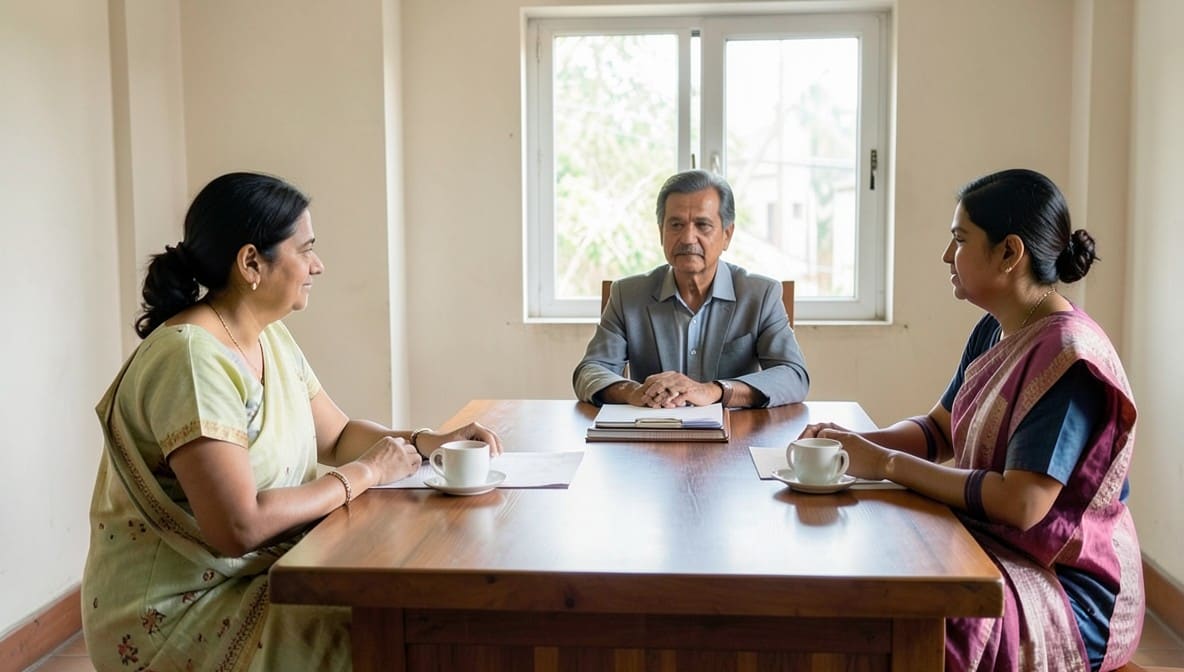
The Court examined the nature of the allegations and the procedural posture of the case. It noted that the dispute originated within a marital relationship and that the complainant, despite alleging serious offences, participated in mediation and accepted a substantial financial settlement. The Court observed that the mediation was conducted under judicial supervision, following a referral by this Court, and that the compromise was recorded in writing.
"The dispute between the parties is predominantly matrimonial in nature and that the parties have amicably resolved their dispute in mediation on 23.02.2026 before the learned Mediation Judge, District Durg, pursuant to proceedings initiated before the Family Court, wherein a compromise has been arrived at subject to payment of a sum of Rs. 15,00,000/- by the applicant to the complainant in three installments."
The Court held that while the allegations are serious, the existence of a genuine, court-supervised settlement alters the calculus of bail. It distinguished this case from those involving premeditated violence or repeat offenders, noting that the applicant had no prior criminal record and that the settlement indicated a desire to end the conflict. The Court emphasized that anticipatory bail is not a denial of justice but a recognition of proportionality, particularly where the public interest in prosecution is diminished by the parties’ resolution.
The Court declined to express any opinion on the truth of the allegations, stating that its decision was based solely on the procedural posture and the settlement’s existence.
The Verdict
The applicant succeeded. The Court granted anticipatory bail to Rituraj Singh. He shall be released on bail upon executing a personal bond of Rs. 15,00,000/- and one local surety in the like sum, subject to the following conditions: (a) no intimidation of witnesses; (b) no conduct prejudicial to trial; (c) appearance before the trial court on all dates; (d) submission of Aadhaar card and coloured photograph with Aadhaar number verified by the court; and (e) no future involvement in similar offences. The settlement of Rs. 15,00,000/- in three installments remains binding.
What This Means For Similar Cases
Settlement in Matrimonial Cases Can Override Gravity of Allegations
- Practitioners may now argue that a court-supervised mediation settlement in dowry or domestic dispute cases is a material factor in anticipatory bail applications, even under serious provisions like Section 85 BNS 2023
- The burden shifts to the prosecution to demonstrate why a settlement should not be given weight - especially where the complainant has accepted compensation
- Courts are likely to scrutinize whether the settlement was voluntary, genuine, and judicially recorded
Mediation as a Judicial Tool Gains Formal Recognition
- Referral to mediation by a High Court, followed by a recorded compromise, now carries procedural weight in bail jurisprudence
- Lawyers should proactively seek mediation referrals in matrimonial criminal cases to create a record for bail applications
- The judgment reinforces that Section 482 BNS 2023 permits courts to act in the interest of justice beyond mere technical compliance
Proportionality Over Punitive Posturing
- The judgment signals a move toward proportionate justice in matrimonial criminal cases
- Courts may now be less inclined to grant arrest as a default remedy where parties have resolved their dispute
- This precedent supports applications for discharge or compounding in similar cases where settlement is documented