The Rajasthan High Court has granted anticipatory bail to a practicing doctor accused in a NEET 2024 examination fraud case, emphasizing that mere association with a dummy candidate is insufficient to establish criminal liability without corroborative evidence of active participation.
Background & Facts
The Dispute
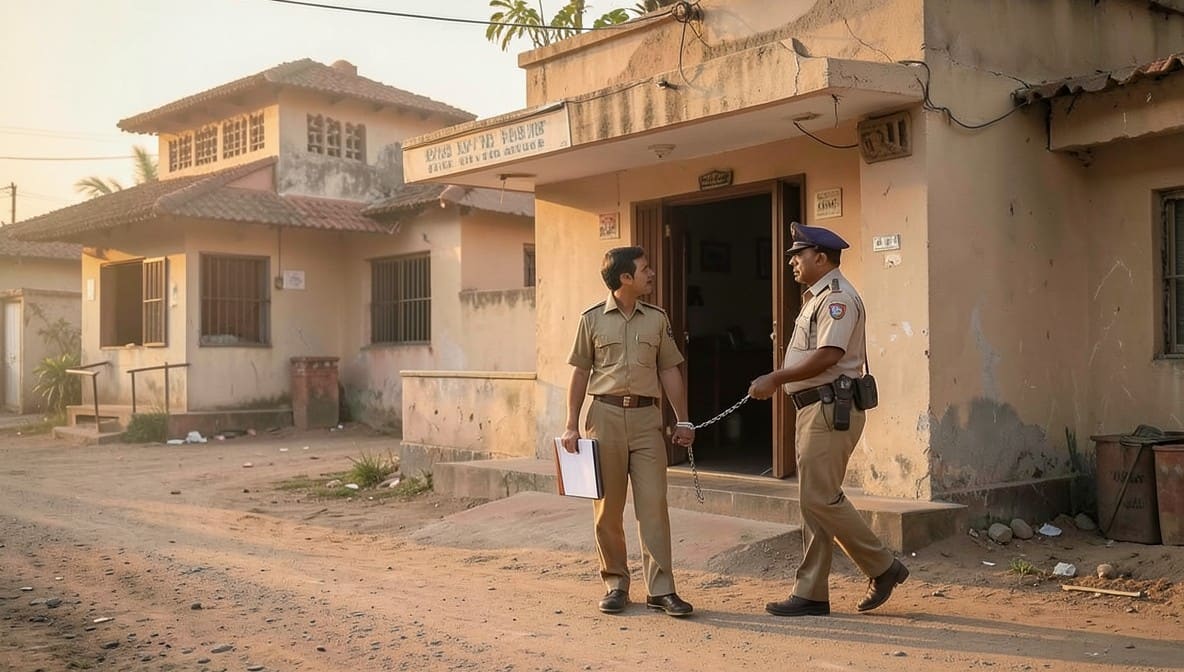
The petitioner, Dr. Kailash Kumar Jha, a medical practitioner based in Ghaziabad, faces arrest in connection with FIR No. 327/2024 registered at Police Station Banar, District Jodhpur. The case pertains to the alleged manipulation of the National Eligibility cum Entrance Test (NEET) 2024, wherein a dummy candidate, Manoj Kumar, appeared in the examination on behalf of the original candidate, Rajesh Baneda. The petitioner is alleged to have been involved in the preparation of forged documents and facilitation of the fraudulent entry, though no direct evidence links him to these acts.
Key Facts
- The original candidate, Rajesh Baneda, was undergoing his postgraduate medical internship under the petitioner at Ghaziabad.
- Manoj Kumar, the dummy candidate, was also undergoing internship under the petitioner.
- The petitioner had recorded adverse remarks against Manoj Kumar, leading to allegations of false implication.
- The actual orchestrators of the fraud - Sumit Baneda, Dheeraj Tiwari, Ravindra Paswan, and Ummaid Paswan - were identified as the primary accused.
- The petitioner was not named in the initial complaint or in the statements of the primary accused.
- The investigation report and case diary do not contain any documentary, electronic, or testimonial evidence connecting the petitioner to the creation or use of forged documents.
- The prosecution has not alleged that the petitioner arranged for Manoj Kumar’s appearance, procured fake identity documents, or communicated with the other accused.
Procedural History
- 15.04.2024: FIR No. 327/2024 registered at Police Station Banar, District Jodhpur.
- 25.07.2025: Petitioner appeared before the High Court pursuant to a court order and submitted to investigation.
- 21.05.2026: Anticipatory bail application filed under Section 482 of the Bharatiya Nagarik Suraksha Sanhita (BNSS).
The Parties' Positions
Petitioner’s Position: The petitioner asserts he had no role in the conspiracy. He argues that his only connection to the case is through his professional relationship with Manoj Kumar, who allegedly fabricated the fraud out of personal grievance due to adverse remarks. He has cooperated fully with the investigation and has no history of flight risk or tampering with evidence.
Respondent’s Position: The Public Prosecutor initially opposed bail but conceded, upon review of the case diary, that no direct evidence tied the petitioner to the fraudulent acts. No witness has named him, and no incriminating documents or digital traces link him to the accused ring.
Relief Sought
The petitioner seeks anticipatory bail under Section 482 of the BNSS, seeking protection from arrest in connection with FIR No. 327/2024, subject to reasonable conditions.
The Legal Issue
The central question was whether anticipatory bail under Section 482 of the BNSS can be denied solely on the basis of association with a co-accused, when no prima facie evidence links the applicant to the commission of the offence.
Arguments Presented
For the Petitioner
Learned counsel relied on Arnesh Kumar v. State of Bihar and Sushil Ansal v. State (NCT of Delhi) to argue that anticipatory bail must be granted where the prosecution fails to establish a prima facie case. He emphasized that the petitioner’s role as a supervising doctor does not equate to criminal intent or participation. He submitted that the petitioner had voluntarily appeared before the court on 25.07.2025 and had no motive to flee or tamper with evidence.
For the Respondent
The Public Prosecutor initially opposed the application but conceded during hearing that the case diary contained no material connecting the petitioner to the preparation of forged documents or communication with the other accused. He acknowledged that the petitioner’s involvement was speculative and not substantiated by any witness statement or documentary proof.
The Court's Analysis
The Court examined the nature of the allegations and the evidentiary record. It noted that while the offences under Sections 319(2), 318(4), 336(2), 338, 336(3), 340(2), 62(2)(A) of the BNS and Section 10(1) of the Public Examination (Prevention of Unfair Means) Act, 2024, are serious, the threshold for granting anticipatory bail is not the probability of conviction but the existence of a prima facie case against the applicant.
"Prima facie, no material has been placed on record to show the petitioner's involvement in preparation of forged documents or in arranging the appearance of the dummy candidate."
The Court observed that the petitioner’s connection to the case was purely incidental - through his professional supervision of Manoj Kumar, who was later identified as the dummy candidate. The prosecution’s case against the petitioner was based on conjecture, not concrete evidence. The Court distinguished this case from those where the accused was a key organizer, document forger, or intermediary between candidates and facilitators.
The Court further noted that the petitioner had already cooperated with the investigation, appearing before the court on 25.07.2025, and had no history of non-cooperation. The absence of any direct link to the other accused, combined with the lack of incriminating material, satisfied the Court that the petitioner did not pose a flight risk or threat to the investigation.
The Verdict
The petitioner succeeded. The Court granted anticipatory bail under Section 482 of the BNSS. In the event of arrest, the petitioner shall be released on bail upon furnishing a personal bond of Rs. 50,000 and two sureties of Rs. 25,000 each, subject to three conditions: (i) availability for police interrogation; (ii) no contact or inducement of witnesses; and (iii) no departure from India without prior court permission.
What This Means For Similar Cases
Association Alone Is Not Sufficient for Arrest
- Practitioners must argue that mere professional or social proximity to an accused does not constitute criminal participation.
- Courts must demand specific, corroborative evidence linking the applicant to the actus reus of the offence.
- In NEET and other entrance exam fraud cases, bail applications should focus on the absence of direct involvement in document fabrication, payment, or coordination.
Cooperation with Investigation Strengthens Bail Claims
- Voluntary appearance before court or police, even before bail application, is a strong mitigating factor.
- Courts are likely to view cooperation as evidence of non-fleeing intent, especially where no prior history of evasion exists.
- Petitioners should document all instances of compliance with investigation orders to support bail pleas.
Burden of Proof Remains on Prosecution
- The prosecution cannot rely on speculative inferences or guilt by association.
- Where the case diary and charge sheet name others as primary actors, and the applicant is mentioned only in passing, bail should be the norm, not the exception.
- This judgment reinforces the principle from Arnesh Kumar that arrest is not automatic, even in serious cases, absent concrete evidence.