The Karnataka High Court has reaffirmed a critical evidentiary principle: once a document is admitted in evidence, its admissibility cannot be challenged at a subsequent stage of the same proceedings, even if it lacks proper stamp duty or registration. This judgment underscores the finality of judicial admissions under Section 35 of the Karnataka Stamp Act, 1957 and Order 13 Rule 3 of the Code of Civil Procedure (CPC), offering clarity for litigants and practitioners on the procedural sanctity of exhibited documents.
Background & Facts
The Dispute
The petitioner, Chandrashekaraih @ Shekaraiah, filed a writ petition under Article 227 of the Constitution of India challenging an order dated 16.07.2025 passed by the Senior Civil Judge and JMFC, Sindhanur. The impugned order dismissed the petitioner’s application (I.A. No. XIII) seeking rejection of Exhibit P-1 - an alleged partition deed dated 21.06.1988 - on the ground that it was inadmissible for want of proper stamp duty and registration.
Key Facts
- The suit (O.S. No. 202/2017) was filed by the respondents (plaintiffs) seeking partition and separate possession of the suit schedule property, along with a permanent injunction against the petitioner and defendant No. 2.
- The plaintiffs marked the alleged partition deed (Exhibit P-1) in the absence of the petitioner and defendant No. 2, who were initially placed ex-parte.
- The petitioner and defendant No. 2 later filed their written statements and raised objections to the admissibility of Exhibit P-1, contending it was written on plain paper without proper stamp duty or registration.
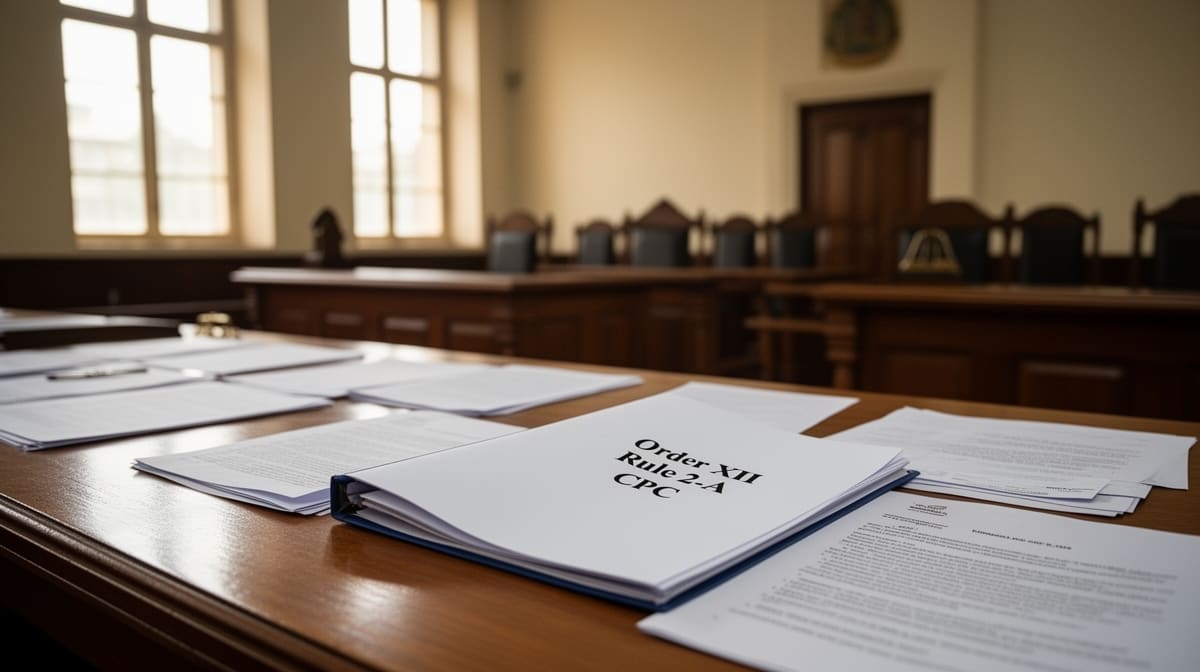
- The petitioner filed I.A. No. XIII under Order 13 Rule 3 CPC read with Section 151 CPC, seeking to de-mark Exhibit P-1 as inadmissible.
- The Trial Court dismissed the application, holding that once a document is admitted in evidence, its admissibility cannot be questioned later under Section 35 of the Karnataka Stamp Act, 1957.
Procedural History
- 15.03.2019: Suit filed by respondents seeking partition and injunction.
- 21.06.1988: Alleged partition deed executed (marked as Exhibit P-1).
- 24.03.2022: Earlier application under Section 151 CPC seeking de-marking of Exhibit P-1 dismissed on technical grounds.
- 04.07.2025: Petitioner filed I.A. No. XIII under Order 13 Rule 3 CPC.
- 16.07.2025: Trial Court dismissed I.A. No. XIII, holding Exhibit P-1’s admissibility could not be challenged post-admission.
- 03.06.2026: Present writ petition filed before the Karnataka High Court.
Relief Sought
The petitioner sought:
- Quashing of the Trial Court’s order dated 16.07.2025.
- An order directing the Trial Court to de-mark Exhibit P-1 as inadmissible.
- Any other relief deemed just and equitable.
The Legal Issue
The central question before the Court was whether a party can challenge the admissibility of a document after it has already been admitted in evidence, particularly when the document lacks proper stamp duty or registration under Section 35 of the Karnataka Stamp Act, 1957.
Arguments Presented
For the Petitioner
- Exhibit P-1 was inadmissible as it lacked proper stamp duty and registration, rendering it invalid under the Karnataka Stamp Act, 1957.
- The document was marked in the petitioner’s absence, and the Trial Court’s oversight in admitting it should not bind the petitioner.
- Allowing Exhibit P-1 to remain on record would cause irreparable hardship and prejudice to the petitioner’s case.
- Reliance was placed on the principle that objections to admissibility must be raised before a document is admitted, but the petitioner was not given an opportunity to object at the time of marking.
For the Respondents
- Section 35 of the Karnataka Stamp Act, 1957 bars any challenge to the admissibility of a document after it has been admitted in evidence.
- The petitioner’s absence at the time of marking Exhibit P-1 did not absolve him of the legal consequences of its admission.
- The petitioner’s earlier application under Section 151 CPC was dismissed on technical grounds, and the present application was an attempt to re-agitate the same issue.
- The Trial Court’s order did not suffer from any illegality or infirmity warranting interference under Article 227.
The Court's Analysis
The High Court undertook a detailed examination of Section 35 of the Karnataka Stamp Act, 1957, which provides:
"Where an instrument has been admitted in evidence, such admission shall not, except as provided in section 58, be called in question at any stage of the same suit or proceeding on the ground that the instrument has not been duly stamped."
The Court emphasized that Section 35 is mandatory and leaves no room for exceptions once a document is admitted in evidence. It cited several binding precedents to support this interpretation:
-
Cave Caterers Pvt. Ltd. v. Sudha Enterprises Bangalore (2011 ILR KAR 2017): The Karnataka High Court held that once a document is received in evidence without objections, its admissibility cannot be questioned at a subsequent stage. The Court loses jurisdiction to impound the document after admission.
-
Smt. Huchamma v. Chandrashekar (2014 AIR Karnataka 133): The Court reiterated that a party who fails to object to the marking of a document before it is admitted forfeits the right to challenge its admissibility later. The Court has a statutory duty to examine the document for proper stamp duty before admitting it, but if it fails to do so and the opposing party does not object, the right to challenge is lost.
-
Javer Chand v. Pukhraj Surana (AIR 1961 SC 1655): A four-judge bench of the Supreme Court held that Section 36 of the Stamp Act (analogous to Section 35 of the Karnataka Stamp Act) is categorical - once a document is admitted in evidence, its admissibility cannot be questioned at any later stage of the same proceedings. The Court observed:
"Where a question as to the admissibility of a document is raised on the ground that it has not been stamped, or has not been properly stamped, it has to be decided then and there when the document is tendered in evidence. Once the Court rightly or wrongly decides to admit the document in evidence, so far as the parties are concerned, the matter is closed."
- Shyamal Kumar Roy v. Sushil Kumar Agarwal (AIR 2007 SC 637): The Supreme Court held that if a party consents to a document being marked as an exhibit, they lose the right to challenge its admissibility later. The Court must judicially determine the admissibility before marking the document, and parties must be circumspect in raising objections at the appropriate stage.
The High Court applied these principles to the present case and held:
- The petitioner’s absence at the time of marking Exhibit P-1 did not alter the legal position under Section 35.
- The Trial Court’s oversight in admitting the document did not empower it - or a higher court - to revisit the admissibility question later.
- The petitioner’s attempt to challenge Exhibit P-1’s admissibility at a subsequent stage was barred by law.
The Verdict
The writ petition was dismissed. The High Court held:
- The Trial Court’s order dated 16.07.2025 did not suffer from any illegality, infirmity, or failure of justice warranting interference under Article 227.
- The petitioner’s contentions regarding the admissibility, proof, relevance, and probative value of Exhibit P-1 were left open to be adjudicated by the Trial Court at the final disposal of the suit.
- No opinion was expressed on the merits or demerits of the rival contentions.
What This Means For Similar Cases
Objections Must Be Raised Before Admission
- Practitioners must object to the admissibility of a document at the time it is tendered in evidence. Failure to do so forfeits the right to challenge its admissibility later, even if the document is unstamped, unregistered, or otherwise defective.
- The Court has a statutory duty to examine documents for proper stamp duty before admitting them, but if it fails to do so and the opposing party does not object, the document’s admission becomes final.
Finality of Judicial Admissions
- Section 35 of the Karnataka Stamp Act, 1957 (and analogous provisions in other state stamp acts) imposes absolute finality on the admission of documents in evidence. Once admitted, their admissibility cannot be questioned in the same proceedings, regardless of technical defects.
- This principle applies even if the document was admitted inadvertently or in the absence of a party. The onus is on the parties to vigilantly raise objections at the appropriate stage.
Limited Scope of Article 227
- High Courts exercising jurisdiction under Article 227 will not interfere with orders that do not suffer from gross illegality, jurisdictional error, or failure of justice. Mere technical defects or oversights by the Trial Court are insufficient grounds for intervention.
- Parties aggrieved by the admission of a defective document must challenge it immediately - either by seeking review before the same court or by raising the issue in an appeal against the final decree.
Practical Takeaways for Litigants
- Always inspect documents tendered by the opposing party for compliance with stamp duty, registration, and other legal requirements.
- Raise objections orally or in writing at the time of marking. A mere protest in the written statement or subsequent applications may not suffice.
- Document the objection clearly in the court record to preserve the right to challenge later, if necessary.
- Be aware of the risks: Once a document is admitted, its admissibility becomes final, and its contents may be used against you in the proceedings.