The Delhi High Court has reaffirmed that the 120-day outer limit for filing an objection petition under Section 34(3) of the Arbitration and Conciliation Act, 1996 is absolute and cannot be extended by invoking Section 5 of the Limitation Act, even when the delay is partly attributable to pursuing proceedings in a court lacking territorial jurisdiction.
Background & Facts
The Dispute
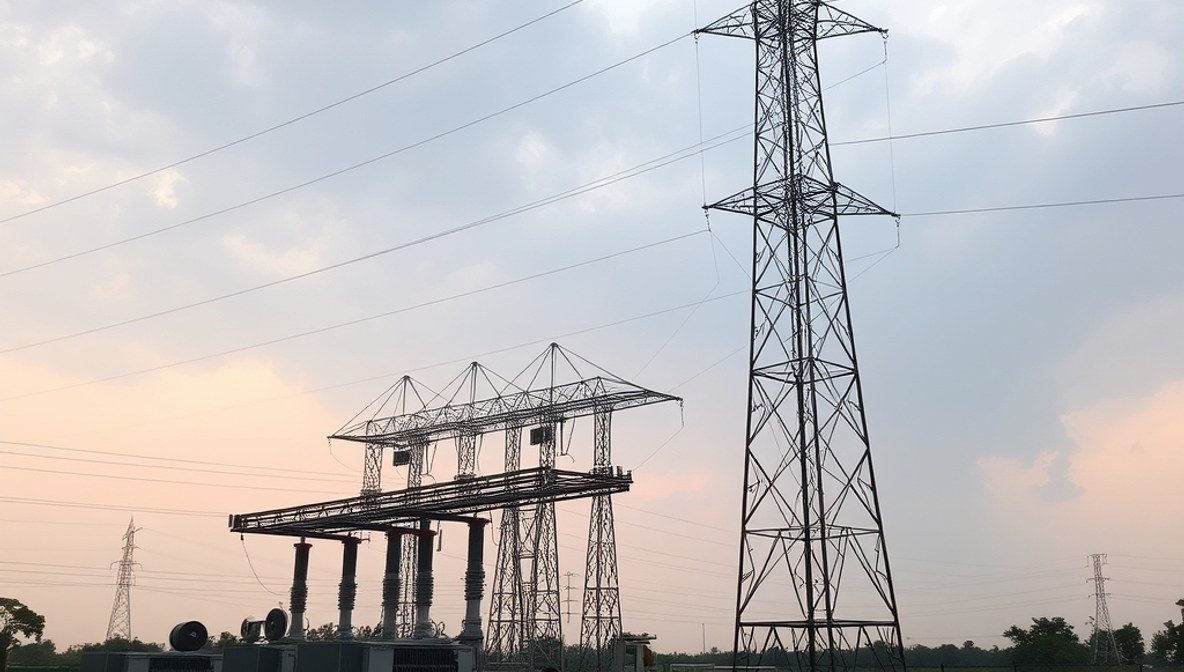
The appellant, Dakshinanchal Vidyut Vitran Nigam Ltd, a power distribution company, floated a tender for construction of a 33/11 KV sub-station and associated 33 KV and 11 KV lines at Ganjdundwara, District Kasganj on a turnkey basis. On 12.05.2015, a Letter of Intent (LOI) was awarded in favour of the respondent, M/s. Creative Entrepreneurs LLP, at a contract value of Rs. 3,47,16,453. The agreement between the parties was executed on 04.02.2016.
Key Facts
- 12.05.2015: Letter of Intent awarded to respondent for Rs. 3,47,16,453
- 04.02.2016: Agreement executed between parties
- Disputes arose regarding execution of work, alleged delay, deficiencies, outstanding payments, and contractual deductions
- 22.12.2021: Respondent filed reference to Micro and Small Enterprises Facilitation Council under Section 18 of the MSMED Act, 2006
- Conciliation proceedings failed; dispute referred to Delhi International Arbitration Centre (DIAC)
- 21.05.2024: Arbitral award passed
- 28.05.2024: Award served on appellant
Procedural History
- August 2024: Appellant filed objection petition under Section 34 before Commercial Court, Agra (within 90 days of receipt)
- 08.01.2026: Commercial Court, Agra dismissed petition for want of territorial jurisdiction
- 10.06.2026: Appellant filed objection petition before Delhi High Court
- Single Judge: Dismissed petition as time-barred under Section 34(3)
- Present appeal: FAO(OS) (COMM) 307/2026 filed against dismissal
Relief Sought
The appellant sought setting aside of the arbitral award dated 21.05.2024 on merits, primarily contending that the respondent was not registered under the MSMED Act when the contract was entered into, rendering the arbitral tribunal without jurisdiction.
The Legal Issue
The central question was whether the 120-day outer limit (three months plus a further thirty days) prescribed under Section 34(3) of the Arbitration Act for filing an objection petition can be extended by invoking Section 14 of the Limitation Act to exclude the period spent pursuing proceedings in a court lacking territorial jurisdiction, thereby allowing filing beyond the statutory cap.
Arguments Presented
For the Appellant
Learned counsel for the appellant contended that the respondent was not a company registered under the MSMED Act when the contract was entered into, and therefore the arbitral award was passed without jurisdiction. On the limitation issue, the appellant argued that the period from August 2024 to January 2026 spent pursuing the objection petition before the Commercial Court, Agra should be excluded under Section 14 of the Limitation Act, making the filing on 10.06.2026 timely.
For the Respondent
The respondent did not appear through counsel. The court proceeded on the basis of the record and settled legal position.
The Court's Analysis
The Division Bench, comprising Justice Avneesh Jhingan and Justice Shail Jain, held that the language of Section 34(3) is unambiguous: the limitation period is three months from receipt of the award, with a proviso allowing condonation of delay for a further period of thirty days on sufficient cause, "but not thereafter." The court emphasized that Section 29(2) of the Limitation Act expressly ousts the applicability of Section 5 (general condonation power) when a special statute prescribes its own limitation and extension framework.
The court surveyed a consistent line of Supreme Court authority:
"When any special statute prescribes certain period of limitation as well as provision for extension upto specified time limit, on sufficient cause being shown, then the period of limitation prescribed under the special law shall prevail and to that extent the provisions of the Limitation Act shall stand excluded."
Citing Consolidated Engineering Enterprises v. Principal Secretary, Irrigation Department (2008) 7 SCC 169, Singh Enterprises v. CCE (2008) 3 SCC 70, Commissioner of Customs v. Hongo India (P) Ltd. (2009) 5 SCC 791, and Chhattisgarh State Electricity Board v. Central Electricity Regulatory Commission (2010) 5 SCC 23, the court held that where a statute provides a specific limitation period and a defined outer limit for condonation, Section 5 of the Limitation Act is completely excluded.
Applying this to the facts, the court noted that even if the period from August 2024 to January 2026 (pursuing proceedings in Agra) is excluded under Section 14 of the Limitation Act, the petition filed on 10.06.2026 was still beyond the prescribed 120-day outer limit under Section 34(3). No sufficient cause was shown for the delay. The Single Judge rightly dismissed the petition as time-barred.
On the scope of appeal under Section 37, the court reiterated the limited supervisory role:
"The appellate jurisdiction under Section 37 is also limited, as it is constrained by the grounds specified in Section 34 and the court cannot undertake an independent assessment of the merits of the award by reappreciating evidence or interfering with a reasonable interpretation of contractual terms by the Arbitral Tribunal."
Citing AC Chokshi Share Broker (P) Ltd. v. Jatin Pratap Desai (2025) 5 SCC 321 and SEPCO Electric Power Construction Corpn. v. GMR Kamalanga Energy Ltd. (2026) 2 SCC 542, the court held that a Section 37 court can only determine whether the Section 34 court exercised its jurisdiction properly within the four corners of the statute, not re-evaluate the merits of the award.
The Verdict
The appeal was dismissed. The court upheld the impugned order dismissing the Section 34 petition as time-barred. The challenge on merits was not entertained. All pending applications (CM APPL. 77457/2026, 77458/2026, 77459/2026) were disposed of. The 120-day outer limit (three months + thirty days) under Section 34(3) was held to be absolute and unextendable, even with Section 14 exclusion.
What This Means For Similar Cases
The 120-Day Cap Is Jurisdictional, Not Procedural
Practitioners must treat the 120-day outer limit under Section 34(3) as a jurisdictional barrier. No amount of sufficient cause, judicial discretion, or Section 14 exclusion can push a filing beyond this cap. The statute's "but not thereafter" language is mandatory.
- Calculate the deadline from date of receipt of award (not date of award)
- Diarize both the 90-day primary period and the 120-day absolute outer limit
- Section 14 exclusion only helps if the refiling occurs within the 120-day window
Section 14 Does Not Create New Limitation Period
Section 14 of the Limitation Act excludes time spent in bona fide proceedings in a wrong forum, but it does not extend the statutory outer limit prescribed by a special law. The excluded period is deducted from the delay calculation, but the resulting filing date must still fall within the special statute's maximum permissible period.
- File in the correct forum first; if jurisdiction is doubtful, file protective petitions
- Do not rely on Section 14 to cure delay beyond a special statute's outer limit
Section 37 Appeals Are Not Merits Reviews
An appeal under Section 37 is confined to reviewing whether the Section 34 court acted within its statutory boundaries. The appellate court cannot re-appreciate evidence, correct errors of fact or law in the award, or substitute its own interpretation of the contract.
- Frame Section 37 grounds strictly around Section 34 parameters
- Do not argue merits of the underlying dispute in a Section 37 appeal
- Focus on jurisdictional errors or patent illegality apparent on the face of the award