The Madhya Pradesh High Court has clarified that the use of a heavy stone to inflict a skull fracture on a six-year-old child constitutes use of a weapon under Section 326 IPC, overturning a trial court’s discharge order. This ruling redefines the scope of what qualifies as a 'weapon' in grievous hurt cases involving vulnerable victims, with significant implications for charge framing in child abuse and assault prosecutions.
Background & Facts
The Dispute
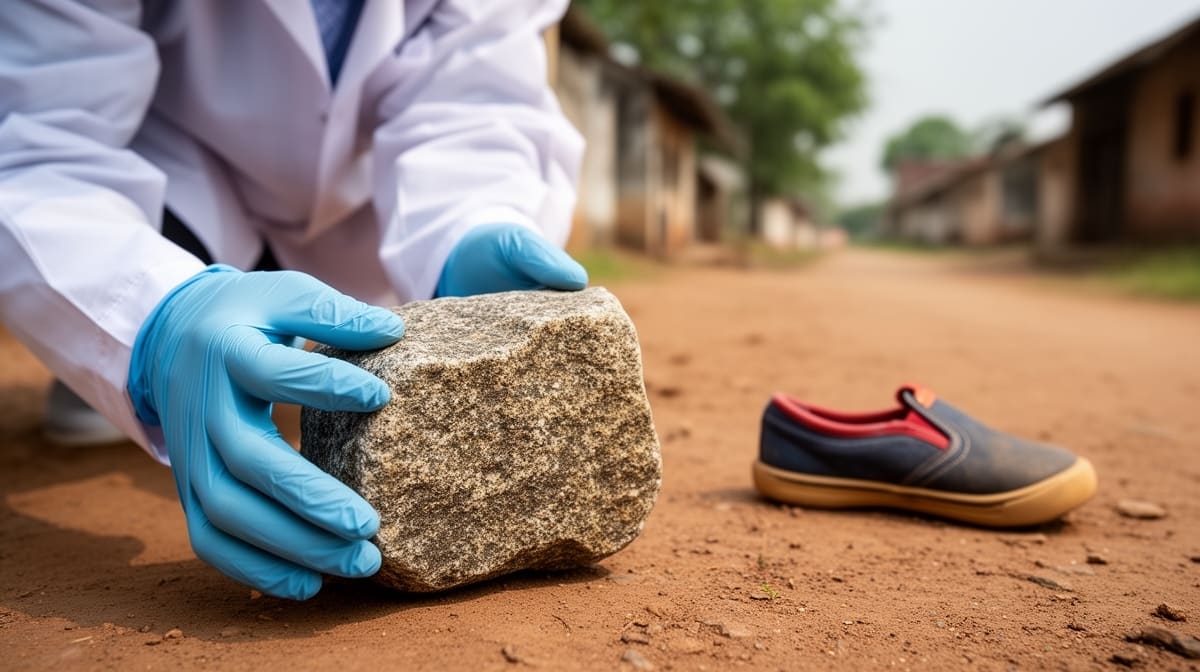
The case arose from an incident in Rajgarh, Dhar, where six-year-old Sania sustained a fracture of the parietal bone after being struck with a 500-gram pointed stone. The police registered Crime No. 343/2021 under Sections 294, 323, 506/34 IPC. After investigation, the final report was submitted under Sections 294, 323, 325/34, and 506 IPC. The case was committed to the Sessions Court.
Procedural History
- 2021: Crime registered at Police Station Rajgarh, Dhar
- 2022: Trial Court discharged respondents from charge under Section 326 IPC
- 2022: Trial Court framed charges under Sections 294, 323/149, 325/149, and 506-II IPC
- 2022: Trial Court held injury not dangerous to life and not covered under Section 320 IPC
- 2022: State filed Criminal Revision No. 3514 of 2022 before the High Court
Relief Sought
The State sought setting aside of the discharge order under Section 326 IPC and directed the trial court to frame charges under that section, arguing that the nature and instrument of injury clearly met the threshold for grievous hurt.
The Legal Issue
The central question was whether a 500-gram pointed stone, used to fracture the parietal bone of a six-year-old child, qualifies as a weapon under Section 326 IPC, thereby warranting a charge of grievous hurt, even if the injury is not explicitly listed in Section 320 IPC.
Arguments Presented
For the Appellant/Petitioner
The State argued that Section 326 IPC applies whenever grievous hurt is caused by any instrument that is inherently dangerous or used as a weapon, regardless of whether the injury falls under the enumerated list in Section 320 IPC. Reliance was placed on State of Madhya Pradesh v. Rameshwar (2018), which held that the nature of the instrument and the vulnerability of the victim are decisive factors. The State contended that a 500-gram stone, especially when pointed and used against a child, is a weapon capable of causing death.
For the Respondent/State
The respondents argued that since the injury did not fall within any of the specific categories under Section 320 IPC, such as fracture of a bone or injury endangering life, the charge under Section 326 IPC could not be sustained. They relied on K. S. R. Murthy v. State of Andhra Pradesh (2015), which emphasized strict adherence to the enumerated injuries in Section 320 for invoking Section 326.
The Court's Analysis
The Court rejected the trial court’s narrow interpretation of Section 320 IPC as a prerequisite for Section 326 IPC. It emphasized that Section 326 criminalizes grievous hurt caused by any instrument used as a weapon, not merely those injuries explicitly listed in Section 320. The Court observed that the phrase "any instrument which is likely to cause death" in Section 326 must be interpreted contextually, considering the nature of the object, the force applied, and the vulnerability of the victim.
"A 500-gram pointed stone, when hurled at the head of a six-year-old child, is not merely a stone - it is a weapon of offence, capable of causing death, and its use must be treated as falling squarely within the ambit of Section 326 IPC."
The Court distinguished K. S. R. Murthy by noting that it involved blunt force trauma without a weapon-like instrument, whereas here, the stone’s weight, shape, and target (the skull of a child) rendered it inherently dangerous. The Court further held that Section 320 serves only as an illustrative list and does not exhaust the definition of grievous hurt under Section 326.
The Verdict
The State won. The Court held that Section 326 IPC applies when a heavy, pointed object is used to inflict a skull fracture on a child, regardless of whether the injury is explicitly listed in Section 320 IPC. The discharge order was set aside, and the trial court was directed to reconsider the charge framing under Section 326 IPC.
What This Means For Similar Cases
Weapon Classification Is Contextual
- Practitioners must argue that the nature, weight, and use of an object - not its traditional classification - determines whether it qualifies as a weapon under Section 326 IPC
- Objects like stones, bottles, or sticks used with lethal intent against children or vulnerable persons should be treated as weapons
- Medical reports must detail not just the injury, but the instrument’s potential to cause death
Charge Framing Cannot Be Restricted by Section 320
- Trial courts cannot discharge accused under Section 326 IPC merely because the injury is not listed in Section 320
- The prima facie likelihood of death from the instrument’s use is sufficient for framing charges
- Prosecutors should routinely invoke Section 326 in cases involving blunt force trauma to the head, neck, or torso with heavy objects
Vulnerability of Victim Is a Critical Factor
- Courts must consider the victim’s age, physical condition, and vulnerability when assessing danger
- Assaults on children, elderly, or disabled persons using heavy objects trigger stricter application of Section 326
- This ruling reinforces the judiciary’s duty to protect vulnerable groups under Article 21