The Allahabad High Court, in a significant ruling, modified the conviction of two appellants from Section 307 read with 34 IPC to Section 324 read with 34 IPC, holding that the evidence did not establish an intent to kill. The Court further granted the appellants probation under Section 4 of the Probation of Offenders Act, 1958, considering the lapse of 42 years since the incident and the absence of criminal antecedents. This judgment underscores the importance of proving intent in offences under Section 307 IPC and the judicial discretion in sentencing for lesser offences where the facts so warrant.
Background & Facts
The Dispute
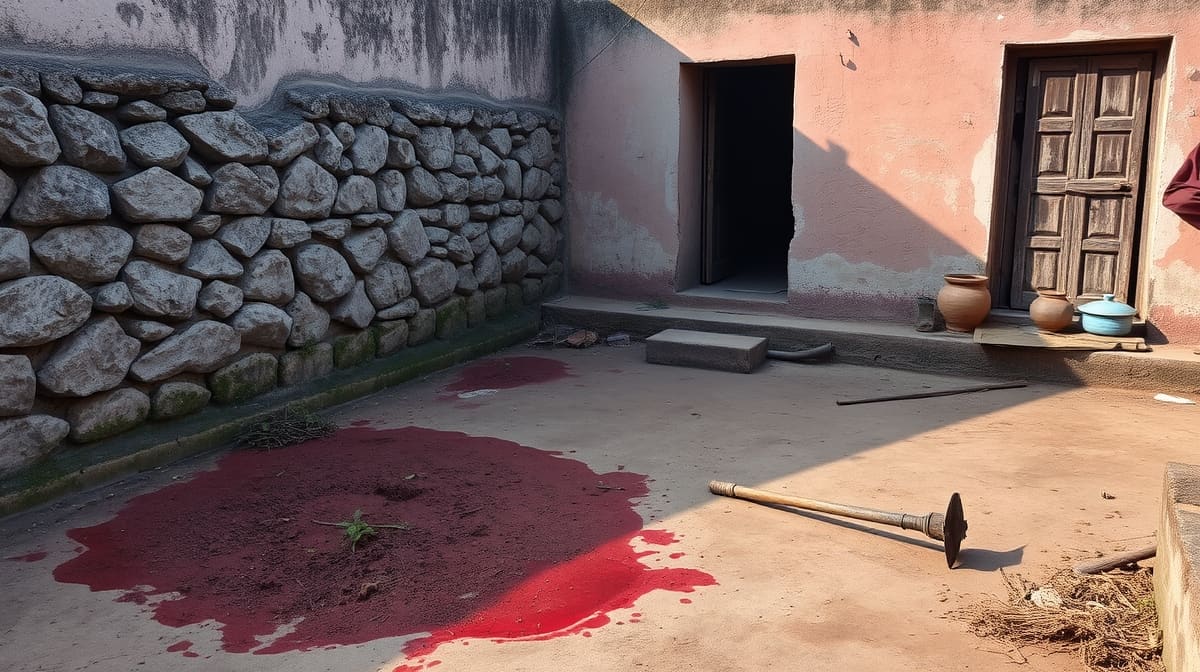
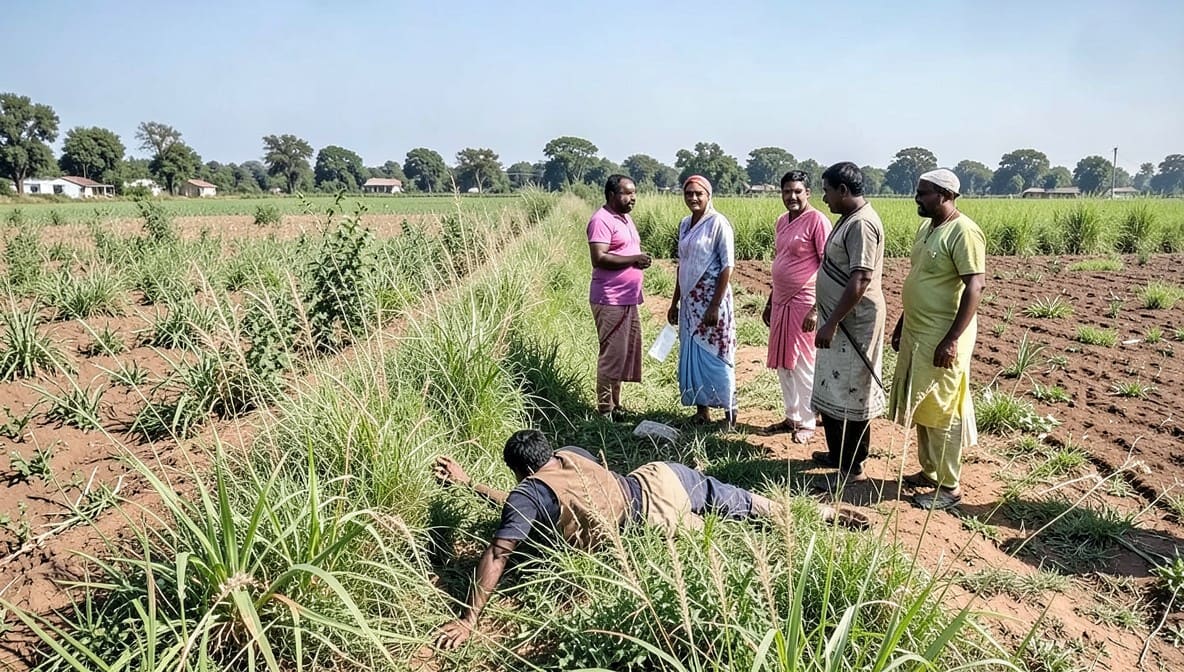
The case arises from an incident dated 25.11.1984, where the appellants, Desh Raj and Bahadur (sons of Kali Charan), along with their father Kali Charan, were accused of attempting to murder Kaushal @ Rajesh, the nephew of the first informant Raghuveer Chandra. The dispute originated over the cutting of moonj (wild grass) growing on the boundary between the fields of the accused and the informant. When Kaushal objected to the cutting, the appellants allegedly attacked him - Desh Raj fired a country-made pistol, while Bahadur struck him with a knife on his back.
Key Facts
- Date of Incident: 25.11.1984 at approximately 01:00 p.m.
- Place of Incident: Village Summerpur, Police Station Allau, District Mainpuri
- Victim: Kaushal @ Rajesh (deceased during trial)
- Injuries: One incised wound on the back of the chest, caused by a sharp cutting weapon (knife)
- Medical Examination: Conducted on 25.11.1984 at 04:50 p.m. at District Hospital, Mainpuri; injury deemed simple in nature
- FIR: Lodged on 25.11.1984 at 10:30 p.m. at Police Station Kotwali, later forwarded to Police Station Allau (Case Crime No. 172 of 1984)
- Investigation: Conducted by S.I. Manik Chand and later by S.I. Vishwanath; site-plan prepared (Ext. Ka-8)
- Evidence Collected: Blood-stained clothes of the injured, but not sent for forensic examination
- Death of Victim: Kaushal @ Rajesh died approximately 13-14 months after the incident, allegedly due to illness, not the injuries sustained
Procedural History
- 25.11.1984: FIR lodged under Section 307 IPC
- Investigation Period: Statements of witnesses recorded; medical examination conducted
- Trial Court: Sessions Trial No. 76 of 1986 before the V Additional Sessions Judge, Mainpuri
- 26.10.1987: Trial court convicted Desh Raj and Bahadur under Section 307 read with 34 IPC and sentenced them to 4 years rigorous imprisonment and a fine of Rs. 500 each; Kali Charan acquitted
- Post-Conviction: Appeal filed under Section 374(2) Cr.P.C. before the Allahabad High Court (Criminal Appeal No. 2541 of 1987)
- 09.04.2026: Appeal reserved
- 03.07.2026: Judgment delivered by Hon’ble Sanjiv Kumar, J.
The Parties' Positions
Appellants (Desh Raj and Bahadur):
- Denied the charges, arguing that the prosecution failed to prove intent to kill
- Highlighted that the public witnesses turned hostile and did not support the prosecution case
- Contended that the absence of forensic examination of blood-stained clothes weakened the prosecution’s case
- Argued that the injured died due to illness, not the injuries, and thus his statement could not be treated as a dying declaration
- Submitted that the incident was spontaneous, without premeditation, and the appellants had no criminal history
Respondent (State of U.P.):
- Argued that the prosecution proved its case beyond reasonable doubt based on direct evidence
- Relied on the testimony of the first informant (P.W. 2 Raghuveer Chandra) and P.W. 5 Lakshmi Chandra, who corroborated the incident
- Contended that the FIR was lodged promptly and the medical evidence supported the oral testimony
- Submitted that defective investigation (non-sending of clothes for forensic examination) was not fatal to the case
Relief Sought
The appellants sought acquittal on the grounds that:
- The prosecution failed to prove intent to kill under Section 307 IPC
- The evidence was unreliable due to hostile witnesses and lack of forensic support
- The incident was spontaneous and lacked motive
The State sought dismissal of the appeal, contending that the conviction under Section 307 read with 34 IPC was justified.
The Legal Issue
The central legal question was whether the prosecution had established beyond reasonable doubt that the appellants had the intention to kill under Section 307 IPC, or whether their actions constituted a lesser offence under Section 324 IPC, which penalizes voluntarily causing hurt by dangerous weapons.
Arguments Presented
For the Appellants
- The prosecution witnesses, including P.W. 3 Ram Naresh and P.W. 4 Daya Ram, turned hostile and did not support the case
- The first informant (P.W. 2 Raghuveer Chandra) was a relative and interested witness, thus unreliable
- The injured Kaushal @ Rajesh died due to illness, not the injuries, and his statement under Section 161 Cr.P.C. could not be treated as a dying declaration under Section 32 of the Evidence Act
- The blood-stained clothes were not sent for forensic examination, rendering the prosecution case weak
- There was no motive or premeditation, and the appellants had no criminal history
- The nature of the injury (simple, without fracture) did not support an intent to kill
For the Respondent (State)
- The prosecution case was based on direct evidence, including the testimony of P.W. 2 Raghuveer Chandra and P.W. 5 Lakshmi Chandra
- The FIR was lodged promptly, and the medical evidence corroborated the oral testimony
- The lapse in forensic examination was not fatal, as the case was otherwise proved
- The incident occurred in broad daylight, and the appellants fled upon being challenged
- The absence of motive was irrelevant in a case based on direct evidence
The Court's Analysis
The High Court meticulously examined the evidence and legal principles to determine whether the appellants’ actions fell under Section 307 IPC or Section 324 IPC.
"It is settled law that in a criminal case the burden of proof lies upon the prosecution to prove its case beyond reasonable doubt."
The Court observed the following:
-
Prompt FIR and Place of Occurrence: The FIR was lodged on the same day (25.11.1984) at 10:30 p.m., within nine and a half hours of the incident. The place of occurrence was established through the testimony of P.W. 2 Raghuveer Chandra and P.W. 5 Lakshmi Chandra, as well as the site-plan prepared by the investigation officer. The absence of blood at the spot was not fatal, as there was no evidence that blood had fallen on the ground.
-
Ocular Evidence: The prosecution relied on the testimony of four witnesses:
- P.W. 2 Raghuveer Chandra (first informant and uncle of the injured) fully supported the prosecution case, stating that the appellants attacked Kaushal after he objected to the cutting of moonj. His testimony was consistent and reliable.
- P.W. 3 Ram Naresh (hostile witness) admitted that the accused were cutting moonj and Kaushal objected, but denied seeing who caused the injuries. The Court held that the evidence of a hostile witness could not be rejected outright, and the part of his testimony supporting the prosecution could be relied upon.
- P.W. 4 Daya Ram (hostile witness) admitted a quarrel took place but denied seeing the assault.
- P.W. 5 Lakshmi Chandra reached the spot soon after the incident and found Kaushal injured. He corroborated the first informant’s version and stated that Kaushal, while conscious in the hospital, identified Bahadur as the assailant.
-
Medical Evidence: P.W. 1 Dr. B.P. Bansal medically examined Kaushal and found one incised wound on his back, caused by a sharp cutting weapon. The injury was simple in nature, with no fracture. The medical evidence aligned with the oral testimony that Bahadur struck Kaushal with a knife.
-
Dying Declaration: The prosecution sought to rely on Kaushal’s statement under Section 161 Cr.P.C. as a dying declaration under Section 32 of the Evidence Act. However, the Court held that this statement could not be treated as a dying declaration because the prosecution failed to prove that Kaushal died due to the injuries sustained in the incident. The defence contended that Kaushal died 13-14 months later due to illness, and the prosecution did not rebut this.
-
Intent to Kill: The Court critically examined whether the appellants had the intention to kill under Section 307 IPC. It noted:
- There was no evidence of previous enmity, criminal history, or premeditation
- The appellants fled upon being challenged by the witnesses, indicating no further intent to harm
- The injury was simple in nature, and no further attack was attempted
- The appellants’ act appeared to be spontaneous, arising from a quarrel over cutting moonj
"It goes to show that the appellants had no intention to kill the injured Kaushal @ Rajesh."
The Court concluded that the prosecution proved the appellants caused hurt to Kaushal but failed to establish the intent to kill required under Section 307 IPC. Thus, the offence fell under Section 324 IPC, which penalizes voluntarily causing hurt by dangerous weapons.
- Sentencing and Probation: The Court considered the appellants’ age (now elderly), the pendency of the appeal for 39 years, and the absence of criminal antecedents. It held that the appellants deserved the benefit of Section 4 of the Probation of Offenders Act, 1958, which allows for release on probation for first-time offenders.
The Verdict
The Allahabad High Court partly allowed the appeal, modifying the conviction of the appellants from Section 307 read with 34 IPC to Section 324 read with 34 IPC. Instead of sentencing them to imprisonment, the Court granted them probation under Section 4 of the Probation of Offenders Act, 1958. The appellants were directed to:
- File a personal bond of Rs. 20,000 each
- Furnish two sureties of the like amount before the District Probation Officer
- Submit an undertaking to maintain good behavior for one year from the date of release
The bonds were to be filed within two weeks from the date of the judgment (03.07.2026). In case of breach of any conditions, the appellants would be called for a hearing on the quantum of sentence.
What This Means For Similar Cases
Intent to Kill Must Be Proved Beyond Reasonable Doubt
- Section 307 IPC requires proof of intention to kill or knowledge that the act is likely to cause death. Mere causing of injuries, even with dangerous weapons, is insufficient if intent is not established.
- Courts will scrutinize the nature of injuries, circumstances of the incident, and conduct of the accused to determine intent. In this case, the absence of premeditation, enmity, or further attack weighed against a conviction under Section 307.
- Practitioners must argue that spontaneous quarrels or sudden altercations may not meet the threshold of Section 307, especially where the injuries are simple and the accused flee upon being challenged.
Dying Declaration: Proof of Causation Is Essential
- A statement recorded under Section 161 Cr.P.C. cannot be treated as a dying declaration under Section 32 of the Evidence Act unless the prosecution proves that the death was directly caused by the injuries in question.
- If the victim dies due to unrelated causes (e.g., illness), the statement loses its evidentiary value as a dying declaration.
- Defence counsel should challenge the admissibility of such statements if the prosecution fails to establish causation.
Probation for First-Time Offenders: Judicial Discretion
- Section 4 of the Probation of Offenders Act, 1958 empowers courts to release first-time offenders on probation, considering factors like age, antecedents, and the nature of the offence.
- Courts may exercise this discretion where:
- The offence is not grave (e.g., Section 324 IPC instead of Section 307 IPC)
- The accused have no criminal history
- A significant delay has occurred in the trial or appeal (e.g., 39 years in this case)
- The accused are elderly or suffering from age-related ailments
- Practitioners should highlight mitigating factors and argue for probation in cases where imprisonment would serve no rehabilitative purpose.
Hostile Witnesses: Corroboration Is Key
- The evidence of a hostile witness is not wholly discarded. Courts may rely on the part of their testimony that supports the prosecution and is corroborated by other evidence.
- In this case, P.W. 3 Ram Naresh admitted the presence of the accused and the altercation, which aligned with the first informant’s version.
- Prosecution must strengthen its case through corroborative evidence (e.g., medical reports, site-plans) to offset the impact of hostile witnesses.
Defective Investigation: Not Always Fatal
- While lapses in investigation (e.g., non-sending of blood-stained clothes for forensic examination) may weaken the prosecution’s case, they are not fatal if the case is otherwise proved by direct evidence.
- Courts may overlook procedural defects if the oral testimony, medical evidence, and FIR collectively establish the offence.
- Defence counsel should exploit investigative lapses to cast doubt on the prosecution’s case, but cannot rely solely on such defects for acquittal.