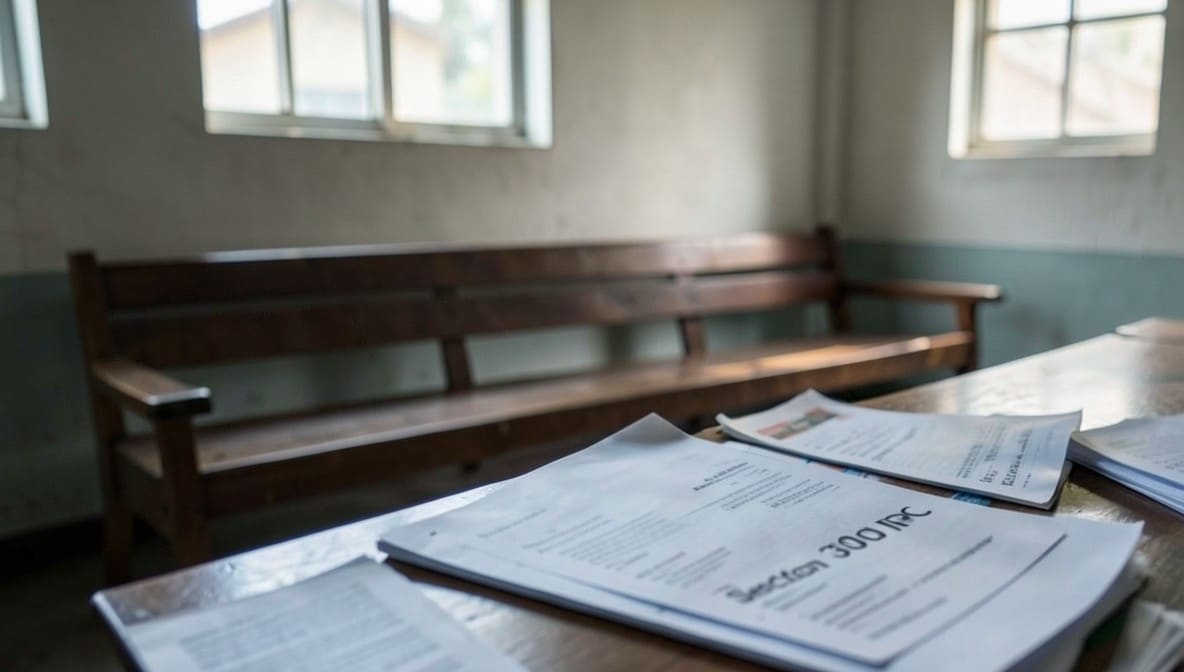
The Rajasthan High Court has underscored that a death attributed to COVID-19, without additional evidence of instigation or intentional aid, cannot sustain a conviction under Section 306 of the Indian Penal Code (IPC). This judgment clarifies the essential ingredients of abetment to suicide and sets a precedent for scrutinizing medical causes of death in criminal cases.
Background & Facts
The Dispute
The appellant, Sonuram alias Sohanram, was convicted by the Sessions Judge, Didwana, in Case No. 20/2020 for offences punishable under Sections 384 (extortion) and 306 (abetment to suicide) of the IPC. The deceased, whose identity is not disclosed in the judgment, was brought dead to the hospital, with the post-mortem report attributing the cause of death to COVID-19. The prosecution alleged that the appellant’s actions led the deceased to commit suicide, though the judgment does not detail the specific acts of instigation or aid.
Key Facts
- The appellant was convicted under Sections 384 and 306 IPC by the Sessions Judge, Didwana, in Case No. 20/2020
- The deceased tested positive for COVID-19 and was brought dead to the hospital
- The post-mortem report recorded the cause of death as COVID-19, with no mention of suicide or external injuries
- The appellant has no criminal antecedents
- The Public Prosecutor did not oppose the suspension of sentence on grounds of flight risk
Procedural History
- Date of Conviction: Not explicitly mentioned, but the appeal was filed in 2026
- 01.07.2026: The appellant filed S.B. Criminal Appeal No. 858/2026 and S.B. Criminal Misc. Application for Suspension of Sentence No. 809/2026 before the Rajasthan High Court
- 01.07.2026: The High Court heard the application for suspension of sentence and passed the present order
Relief Sought
The appellant sought suspension of the sentence pending the disposal of the criminal appeal, arguing that the conviction under Section 306 IPC was unsustainable due to the lack of evidence linking his actions to the deceased’s suicide.
The Legal Issue
The central question before the Court was whether a conviction under Section 306 IPC (abetment to suicide) can be sustained when the deceased’s cause of death is medically attributed to COVID-19, and the material on record does not prima facie establish instigation or intentional aid by the accused.
Arguments Presented
For the Appellant
- The appellant’s counsel argued that the post-mortem report conclusively established COVID-19 as the cause of death, with no evidence of suicide or external injuries
- The essential ingredients of Section 306 IPC, particularly instigation or intentional aid, were not borne out by the material on record
- The appellant has no criminal antecedents and poses no flight risk, warranting suspension of sentence pending appeal
For the Respondent
- The Public Prosecutor did not oppose the suspension of sentence, indicating no apprehension of the appellant absconding
- The complainant’s counsel, Mr. Firoz Khan, was heard but the judgment does not record any specific opposition to the appellant’s arguments
The Court's Analysis
The Court critically examined the trial court’s appreciation of evidence, particularly the post-mortem report, which attributed the deceased’s death to COVID-19. The Court observed:
"The post-mortem report of the deceased indicates that she was brought dead to the hospital and that the cause of death, as informed by the police, was recorded as COVID-19. The post-mortem report further notes that the deceased had tested positive for COVID-19. In the opinion of this Court, since the deceased was brought dead to the hospital and the cause of death was shown to be COVID-19, prima facie, the learned trial Court appears to have failed to appreciate that the essential ingredients of the offence under Section 306 IPC, particularly the element of instigation or intentional aid leading the deceased to commit suicide, do not appear to be borne out from the material available on record."
The Court emphasized that Section 306 IPC requires proof of active instigation or intentional aid by the accused to drive the deceased to suicide. Mere suspicion or circumstantial evidence, without a clear link to the accused’s conduct, is insufficient to sustain a conviction. The Court also noted the absence of criminal antecedents and the lack of opposition from the Public Prosecutor as factors favoring the suspension of sentence.
The Verdict
The High Court allowed the application for suspension of sentence under Section 430 of the Bharatiya Nagarik Suraksha Sanhita (BNSS). The appellant’s sentence was suspended pending the disposal of the appeal, and he was directed to be released on bail upon executing a personal bond of Rs. 50,000 with two sureties of Rs. 25,000 each, subject to the following conditions:
- The appellant must appear before the trial court in January of every year until the appeal is decided
- If the appellant or sureties change their place of residence, they must inform the trial court and the High Court counsel in writing
- The trial court shall maintain a separate file for the appellant’s attendance records, which shall not be counted for statistical purposes
- Non-compliance with these conditions will result in the cancellation of bail and a report to the High Court
What This Means For Similar Cases
COVID-19 Deaths and Section 306 IPC: A High Threshold for Conviction
- Medical Cause of Death is Determinative: Courts will scrutinize post-mortem reports and medical evidence to determine whether the deceased’s death was a result of suicide or an unrelated cause, such as COVID-19. A conviction under Section 306 IPC cannot be sustained without prima facie evidence of instigation or intentional aid
- Essential Ingredients Must Be Proved: Practitioners must emphasize that Section 306 IPC requires proof of active conduct by the accused that directly led the deceased to commit suicide. Mere allegations or circumstantial evidence are insufficient
Suspension of Sentence: When Flight Risk is Absent
- No Criminal Antecedents: The absence of prior criminal records and the lack of opposition from the prosecution can strengthen an application for suspension of sentence
- Bail Conditions as Safeguards: Courts may impose stringent bail conditions, such as periodic appearances and reporting changes of address, to ensure compliance without denying bail outright
- Trial Court’s Role in Monitoring Compliance: The trial court is directed to maintain a separate file for attendance records, ensuring that the appellant’s compliance is closely monitored without affecting statistical pendency
Implications for Trial Courts
- Evidence Appreciation: Trial courts must carefully evaluate medical evidence and avoid convicting under Section 306 IPC without clear proof of instigation or aid
- Procedural Compliance: The judgment reinforces the importance of maintaining separate records for bail compliance, ensuring transparency and accountability in criminal proceedings