The High Court of Orissa has affirmed a conviction under Section 304A of the Indian Penal Code for the death of a two-year-old child caused by an unqualified individual administering chloroquine injections. The judgment clarifies the boundary between criminal negligence and intentional harm, reinforcing that lack of medical qualification coupled with reckless conduct can sustain a conviction even in the absence of mens rea.
Background & Facts
The Dispute
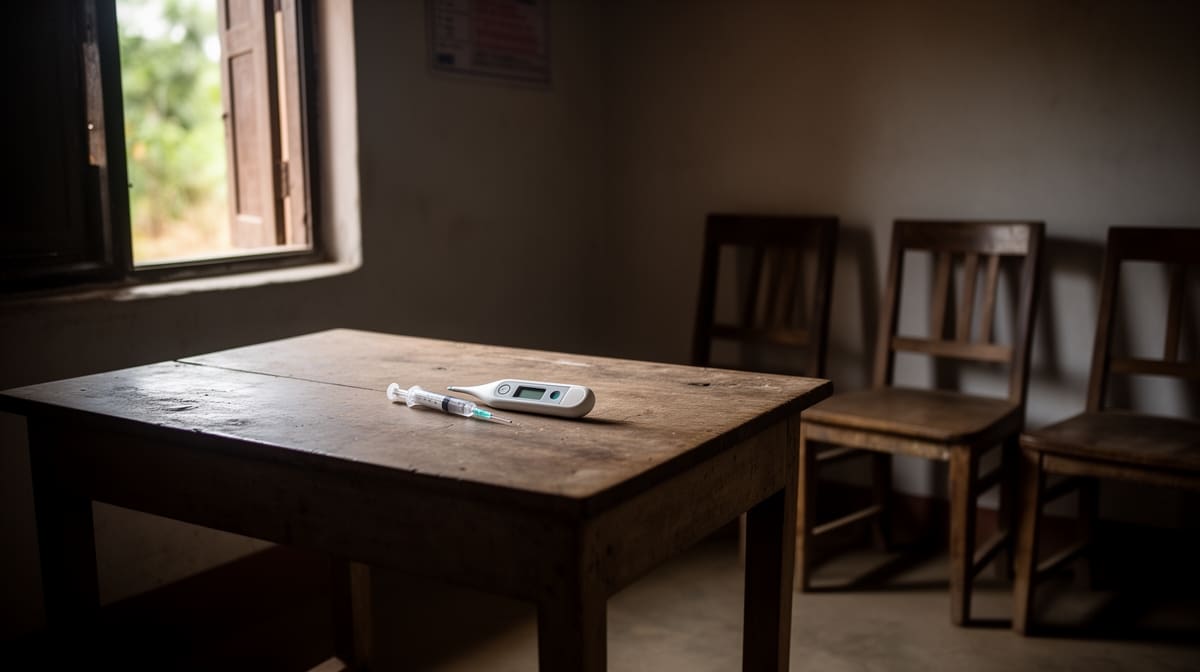
The appellant, Arakhit Tandi, was a local resident in Nuapada district, Orissa, who had no recognized medical qualification but was known in the community for providing medical treatment, including injections, to villagers. On the day of the incident, he treated a two-year-old child suffering from fever suspected to be malaria. The child’s mother, Punai Dei Harijan (P.W.1), brought the child to him after local medical facilities were inaccessible. The appellant used a thermometer and stethoscope, diagnosed malaria, and administered two chloroquine injections - one in each buttock. Within minutes, the child became unconscious and died.
Key Facts
- The child was approximately two years old and had no prior serious illness.
- The appellant had no formal medical training or registration under any recognized medical council.
- He had been providing medical services in the locality for an extended period without qualification.
- The child’s condition deteriorated immediately after the second injection.
- The body was taken to a pharmacist (P.W.5), who confirmed death.
- A First Information Report (FIR) was lodged by Chittrasen Harijan (P.W.8) at Jonk Police Station on the same day.
- The post-mortem report (P.W.10) concluded death was due to chloroquine toxicity.
- Chemical analysis of viscera confirmed presence of chloroquine.
- The appellant was arrested on 19.12.2000 and remained in judicial custody until 22.11.2001.
Procedural History
- 19.12.2000: Arrest of the appellant.
- 20.12.2000: FIR registered as Unnatural Death (UD) Case No. 243 of 2000.
- 05.01.2001: Charge sheet filed under Section 304 IPC.
- 05.09.2002: Trial Court convicted appellant under Section 304A IPC and sentenced him to two years’ rigorous imprisonment.
- 2002: Criminal Appeal (CRLA No. 67 of 2002) filed before the Orissa High Court.
- 2002 - 2025: Appeal remained pending due to non-appearance of appellant’s counsel.
- 16.12.2025: Mr. Satya Narayan Mishra (4) appointed as Amicus Curiae.
- 17.03.2026: Judgment delivered by the Orissa High Court.
The Parties' Positions
For the Appellant (via Amicus Curiae): The appellant acted without malice, in the absence of any medical infrastructure in the village. His conduct, though negligent, was not criminal in intent. He had already served eleven months in custody and the long pendency of the appeal warranted sentence modification.
For the Respondent (State): The appellant’s conduct was grossly negligent. He knowingly practiced medicine without qualification, exposing vulnerable patients to life-threatening risks. The evidence overwhelmingly established causation and recklessness.
Relief Sought
The appellant sought modification of the sentence to time already served, while the State sought affirmation of the conviction and sentence.
The Legal Issue
The central question was whether administering injections without medical qualification, resulting in death, constitutes gross negligence under Section 304A IPC, even in the absence of intention or knowledge of likely death.
Arguments Presented
For the Appellant
The Amicus Curiae argued that the appellant’s actions were motivated by community service, not malice. He emphasized the lack of healthcare access in rural areas and the absence of criminal intent. He cited the appellant’s eleven months of pre-trial custody and the two-decade delay in appeal as grounds for reducing the sentence to time already served.
For the Respondent
The Additional Standing Counsel contended that the appellant’s conduct was not mere negligence but gross recklessness. By holding himself out as a medical provider without qualifications, he created a foreseeable risk to life. The prosecution had established all elements of Section 304A IPC: a rash or negligent act, direct causation, and resulting death.
The Court's Analysis
The Court meticulously reviewed the testimonies of P.Ws.1, 2, and 3, who were present during the administration of the injections. Their accounts were consistent, unimpeached in cross-examination, and corroborated by the post-mortem and chemical reports. The Court noted:
"The testimonies of P.Ws.1, 2 and 3 clearly establish that the appellant administered two injections to the child. Their evidence is consistent and cogent and nothing material has been elicited in cross-examination to discredit their testimony."
The Court further emphasized that the appellant’s lack of qualification was not a mere technicality but a material fact that elevated his conduct to gross negligence. The act of administering chloroquine - a drug requiring precise dosage and clinical assessment - to a child without any medical training constituted a dangerous disregard for human life.
The Court distinguished Section 304 IPC (culpable homicide) from Section 304A IPC (death by negligence). It held that while the prosecution failed to prove intention or knowledge of likely death, the appellant’s conduct met the threshold of rashness and negligence under Section 304A. The Court relied on precedent, including Dr. Khushal Das v. State of Punjab, to affirm that unqualified medical practice resulting in death falls squarely within this provision.
The Court also addressed the prolonged pendency of the appeal, noting that the appellant had already undergone eleven months of custody and that the case had remained unresolved for over twenty-four years. It observed that justice would be better served by recognizing the time already served, without undermining the gravity of the offense.
The Verdict
The appeal was partly allowed. The conviction under Section 304A IPC was upheld, but the sentence of two years’ rigorous imprisonment was modified to the period already undergone - eleven months from 19.12.2000 to 22.11.2001. The appellant was directed to be released immediately upon production of the order. The Court awarded an honorarium of Rs. 7,500 to Mr. Satya Narayan Mishra (4) as Amicus Curiae.
What This Means For Similar Cases
Unqualified Medical Practice Is Gross Negligence
- Practitioners must recognize that practicing medicine without registration or qualification, even in rural areas, constitutes gross negligence under Section 304A IPC.
- Community goodwill or lack of intent does not negate criminal liability when life is endangered.
- Prosecutors may rely on this judgment to establish negligence in cases involving quacks, Ayurvedic practitioners, or unlicensed pharmacists administering injections.
Sentence Modification for Excessive Delay Is Possible
- Courts may reduce substantive sentences to time already served where appeals remain pending for over two decades.
- This does not imply acquittal or condonation of offense, but a recognition of procedural injustice.
- Practitioners should argue for sentence modification in long-pending cases where the accused has served significant pre-trial custody.
Medical Evidence Is Decisive
- Post-mortem and chemical reports are critical in establishing causation in negligence cases.
- Ocular testimony must be corroborated by scientific evidence to secure conviction under Section 304A.
- Defense arguments based on absence of intent must be countered with evidence of reckless conduct.