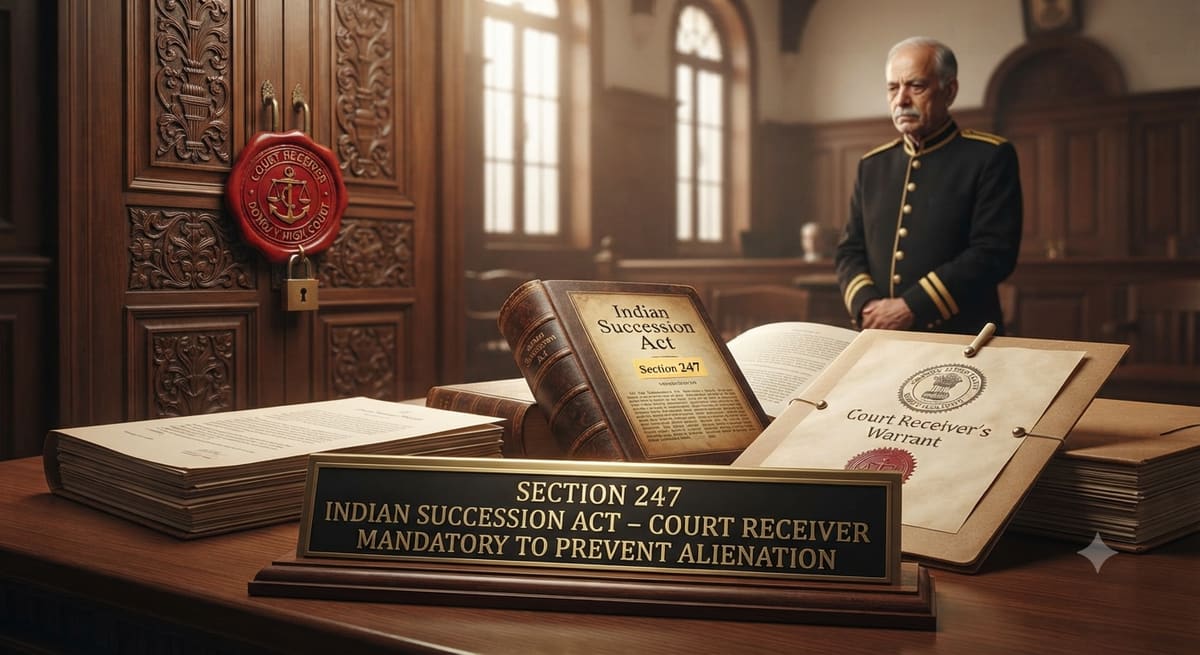
The Bombay High Court has affirmed the probate court’s duty to safeguard deceased estates from deterioration and financial erosion, even amid pending testamentary disputes. In a significant ruling under Section 247 of the Indian Succession Act, 1925, the Court appointed a Court Receiver as administrator pendente lite to manage a redeveloped flat with substantial unpaid maintenance dues, setting a clear precedent for proactive estate protection.
Background & Facts
The Dispute
The dispute centers on the estate of the deceased Mohini Chetanram Harisinghani, whose property included a flat in the Neel Kamal CHS building in Santacruz (West), Mumbai. The flat was redeveloped between 2015 and 2016, with a Permanent Alternate Accommodation Agreement executed on 06.12.2016. The new flat, bearing No. B-102 in Ekta Trinity, was handed over by the developer to the society on 15.06.2022. Despite this handover, neither the petitioner (Kavita Ashok Dodani), the alleged beneficiary under a contested Will, nor the applicant (Sachin Ramesh Singhani), the legal heir of the deceased’s daughter, have been placed in possession of the flat.
Key Facts
- The deceased Mohini Chetanram Harisinghani was the original owner of the old flat, which was transferred to her from her husband (applicant’s grandfather) and later from her mother (applicant’s grandmother)
- Nomination for the old flat was made in favor of the applicant’s father
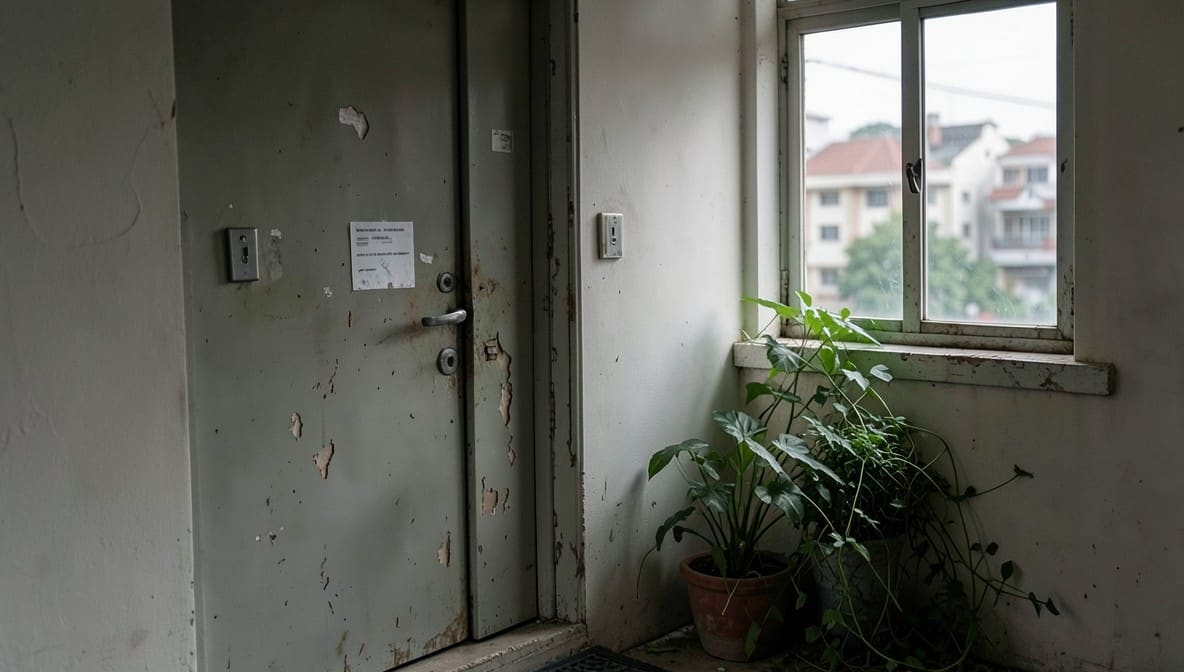
- The redeveloped flat (B-102) has remained vacant, locked, and unoccupied since 15.06.2022
- As of 01.10.2023, the society issued a maintenance bill showing arrears of Rs. 1,51,750.08
- Quarterly maintenance charges are Rs. 33,276
- No affidavit has been filed by the respondent or the society disputing the arrears or the handover of possession
- The petitioner resides in Pune and Spain; the applicant is based in Mumbai
- The Will’s validity is under challenge and will be decided at trial
Procedural History
- 25.05.2022: Interim Application No. 2940 of 2022 filed under Section 247 of the Indian Succession Act, 1925 seeking appointment of administrator pendente lite
- 08.04.2026: Court directed amendments to the application
- 10.04.2026: Court directed filing of affidavit-in-reply by 18.04.2026; matter adjourned to 28.04.2026
- 28.04.2026: Respondent sought two more weeks; direction issued to file reply by 30.04.2026; matter adjourned to 04.05.2026
- 04.05.2026: No affidavit-in-reply filed; respondent sought further adjournment
- 07.05.2026: Court heard application and declined further adjournment due to repeated delays and non-filing of reply
Relief Sought
The applicant sought appointment of an administrator pendente lite under Section 247 of the Indian Succession Act, 1925 to preserve the redeveloped flat, prevent deterioration, and enable payment of maintenance dues through a leave-and-license arrangement.
The Legal Issue
The central question was whether the Probate Court may appoint an administrator pendente lite under Section 247 of the Indian Succession Act, 1925 when a deceased’s property is left unoccupied, unmaintained, and burdened with mounting maintenance arrears, even if the validity of the Will remains contested.
Arguments Presented
For the Applicant
Counsel argued that the flat, having been handed over to the society in 2022, has remained vacant for over four years with no maintenance paid. The arrears of Rs. 1,51,750.08 as of October 2023, coupled with quarterly dues of Rs. 33,276, are accruing interest and risk forced sale by the society. The applicant, as legal heir, has no control over the property and cannot access it to pay dues. Appointment of an administrator is necessary to preserve the estate and prevent its dissipation.
For the Respondent
Counsel for the petitioner contended that no case has been made out for appointment of an administrator, as the society and developer have not filed any reply, and possession of the flat remains with the society. No evidence was presented to show that the petitioner is responsible for non-payment or that the estate is at risk of deterioration.
The Court's Analysis
The Court emphasized that the primary duty of a Probate Court is to preserve the estate of the deceased pending final adjudication of succession rights. The Court noted that the redeveloped flat has been in the society’s possession since 15.06.2022, yet remains unoccupied and unmaintained. The maintenance arrears, already exceeding Rs. 1.5 lakh as of October 2023, have grown substantially over three years with no payment from either party.
"The trial is going to take some time and it is the duty of the Probate Court to ensure that the property of the deceased is preserved."
The Court observed that neither the petitioner nor the applicant has taken any steps to clear the dues, and the society cannot be expected to indefinitely carry the burden. The risk of the flat being sold in a fire sale to recover dues is real and imminent. The Court held that the mere pendency of a Will contest does not absolve the Court of its obligation to protect the estate.
The Court further noted that while Section 247 permits appointment of an administrator with powers to manage but not distribute the estate, the applicant and petitioner have demonstrated neither capacity nor willingness to act in the estate’s interest. Therefore, a neutral officer - the Court Receiver - is the most appropriate appointee.
The Verdict
The Court allowed the interim application and appointed the Court Receiver as administrator pendente lite of Flat No. B-102, Ekta Trinity, Neel Kamal CHS, Santacruz (West), Mumbai - 400054, with all powers of administration under Section 247 of the Indian Succession Act, 1925, except the power of distribution. The Court Receiver is directed to take possession from the society and seek directions to let the flat on leave-and-license basis, with license fees used to clear arrears of Rs. 1,51,750.08 and future maintenance charges. The Court Receiver shall report to the Court within four weeks of taking possession.
What This Means For Similar Cases
Estate Preservation Trumps Pending Litigation
- Practitioners must now proactively seek appointment of administrator pendente lite when a deceased’s property is left unattended, regardless of whether the Will is contested
- Delay in maintenance payment by heirs or beneficiaries cannot be used to justify neglect of estate assets
- Courts will intervene even without formal proof of deterioration if financial erosion is demonstrable
Court Receiver as Default Administrator
- Where parties are in conflict or inactive, the Court Receiver is the preferred appointee under Section 247
- This avoids bias, ensures neutrality, and provides a mechanism for revenue generation (e.g., through leave-and-license)
- Practitioners should draft applications to specifically request Court Receiver appointment when parties are non-cooperative
Maintenance Arrears as Grounds for Intervention
- Unpaid society dues, property taxes, or utility arrears now constitute actionable grounds for estate preservation
- Documentation of arrears (e.g., bills, notices, interest calculations) must be annexed to Section 247 applications
- Courts will infer risk of asset loss from prolonged non-payment, even without physical damage evidence