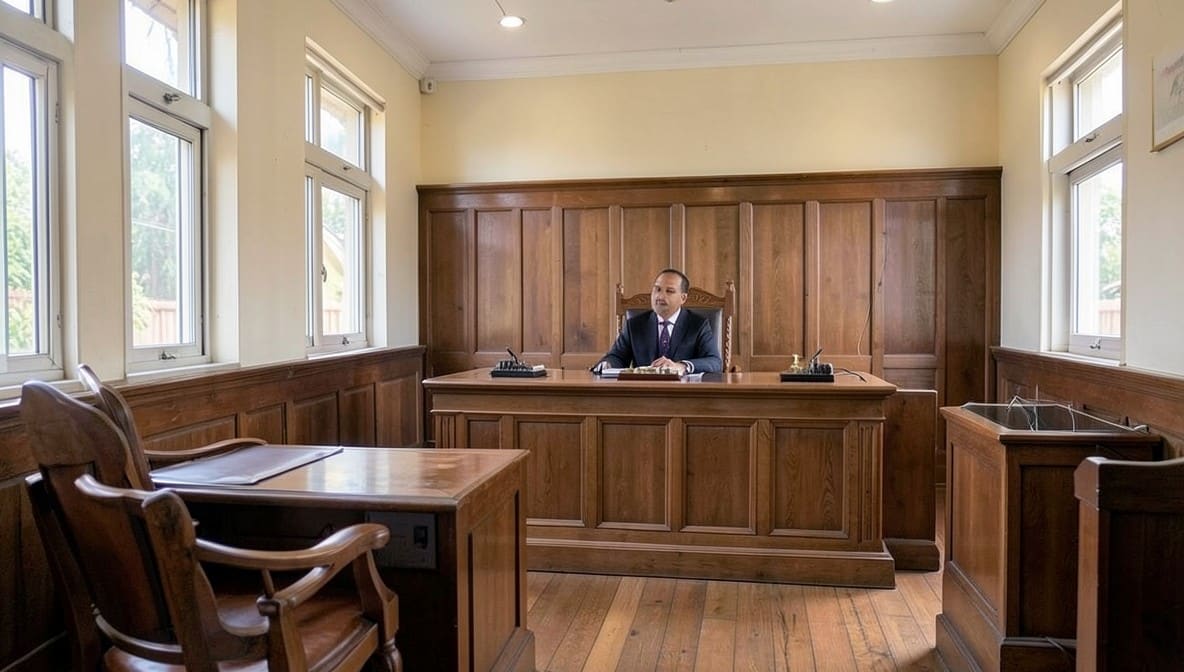
The Allahabad High Court has reaffirmed that the threshold for summoning accused under Section 204 CrPC is low, and minor inconsistencies in complainant statements cannot derail the initiation of criminal proceedings if a prima facie case is discernible. This ruling clarifies the limits of judicial scrutiny at the pre-trial stage and reinforces the principle that courts must not prematurely weigh evidence or demand corroboration.
Background & Facts
The Dispute
The dispute arose from a neighborhood altercation between the petitioners - Mohit Rastogi and another - and the complainant, Suresh Kumar Rastogi. The complainant alleged that on the date of the incident, the petitioners, along with unidentified persons, assaulted and abused him after he objected to them dumping garbage in front of his house. The complainant further claimed that the petitioners were intoxicated at the time of the incident.
Key Facts
- The petitioners are father and son, residing opposite the complainant’s house
- The alleged incident occurred in Bareilly, Uttar Pradesh
- The complainant filed Complaint No. 305 of 2021 before the Judicial Magistrate III, Bareilly, under Sections 323, 504, and 506 IPC
- The complaint alleged physical assault and verbal abuse
- The complainant claimed the incident was captured on CCTV footage, but no such footage was produced during proceedings
- No injury report or medical evidence was submitted to substantiate the claim of assault
- The petitioners contended that the complaint was a retaliatory measure in a minor civil dispute over property and sanitation
Procedural History
- Date of incident: Not explicitly stated, but complaint filed on or before 2021
- 07.12.2021: Judicial Magistrate III, Bareilly, issued summons to the petitioners under Section 204 CrPC in Complaint No. 305 of 2021
- 14.10.2025: Criminal Revision No. 150/2025 filed by petitioners before the Additional Sessions Judge, Bareilly, was dismissed
- 12.05.2026: Present petition under Article 227 of the Constitution filed before the Allahabad High Court
The Parties' Positions
The petitioners argued that the complaint was frivolous, lacked corroboration, and was an abuse of process. They emphasized the absence of injury reports and CCTV footage, and highlighted the implausibility of the allegation that both father and son, along with strangers, assaulted the complainant without leaving physical evidence.
The State, through the State Law Officer, contended that the complainant’s and witnesses’ statements under Sections 200 and 202 CrPC were consistent, plain, and credible. The absence of documentary evidence, it was argued, does not negate the probative value of oral testimony at the summoning stage.
Relief Sought
The petitioners sought:
- Quashing of the summoning order dated 07.12.2021
- Setting aside of the revisional order dated 14.10.2025
- Direction to the Additional Sessions Judge to reconsider the revision petition on merits
The Legal Issue
The central question was whether minor contradictions in the statements of the complainant and witnesses recorded under Sections 200 and 202 CrPC are sufficient to warrant quashing of a summoning order under Section 204 CrPC, absent injury reports or corroborative documentary evidence.
Arguments Presented
For the Petitioner
The petitioners relied on the principle that summoning under Section 204 CrPC requires only a prima facie case, but argued that the absence of any physical evidence - such as injury reports or CCTV footage - rendered the complaint inherently unreliable. They contended that the allegation of multiple assailants, including strangers, without any independent corroboration, was improbable. They cited State of Haryana v. Bhagwan Singh and Lalit Kumar v. State of U.P. to argue that courts must scrutinize complaints for patent absurdities or improbabilities before issuing summons.
For the Respondent
The State countered that the complainant’s statement and those of his witnesses were consistent, detailed, and free from material contradictions. It emphasized that at the stage of summoning, the court is not required to evaluate the credibility of witnesses or demand corroboration. The absence of CCTV footage or medical reports, it argued, does not automatically invalidate oral testimony, especially in cases of verbal abuse and minor assault where injuries may not be visible or documented.
The Court's Analysis
The Court examined the statements recorded under Sections 200 and 202 CrPC and found no material inconsistency or contradiction that would render the complaint frivolous or mala fide. The Court observed that the complainant’s version was straightforward and did not suffer from internal contradictions that would raise suspicion.
"There is no material infirmity or contradiction in their statements. Therefore, there is nothing to show that their statements do not prima facie give sufficient ground for the trial court to proceed against the petitioners."
The Court clarified that minor discrepancies - such as slight variations in the sequence of events or description of attire - are common in eyewitness accounts and must be disregarded at the summoning stage. The Court emphasized that the purpose of Section 204 CrPC is not to determine guilt or even credibility, but to ascertain whether there is a prima facie case warranting trial.
The Court further held that the absence of CCTV footage or injury reports cannot be treated as fatal to the prosecution’s case at this preliminary stage. Such evidence may be adduced during trial, but its non-production does not justify pre-trial dismissal of a complaint.
The Court rejected the petitioners’ argument that the familial relationship between the accused and the implausibility of multiple assailants rendered the complaint inherently unbelievable. It noted that such arguments go to the weight of evidence, not its sufficiency at the summoning stage.
The Verdict
The petition was dismissed. The Court upheld both the summoning order dated 07.12.2021 and the revisional order dated 14.10.2025. The trial court is directed to proceed with the case on its merits. No monetary relief or direction was issued, as the relief sought was procedural.
What This Means For Similar Cases
Summoning Under Section 204 CrPC Is Not a Trial
- Practitioners must not seek to quash summoning orders on grounds of evidentiary weakness - such as absence of medical reports or CCTV footage - at this stage
- Courts will not require corroboration or physical proof before issuing summons
- The threshold remains low: only a prima facie case, not a proven one, is needed
Minor Contradictions Are Not Fatal
- Minor inconsistencies in witness statements (timing, clothing, sequence) are to be ignored at the summoning stage
- Such contradictions are properly addressed during trial through cross-examination and evidence evaluation
- Petitioners must focus on patent absurdities or legally impossible allegations to challenge summoning
Abuse of Process Requires More Than Frivolity
- A complaint cannot be dismissed merely because it arises from a civil dispute
- Courts will not intervene unless the complaint is manifestly false, fabricated, or legally unsustainable
- The burden is on the accused to show that the complaint is a clear abuse of process, not merely inconvenient or improbable