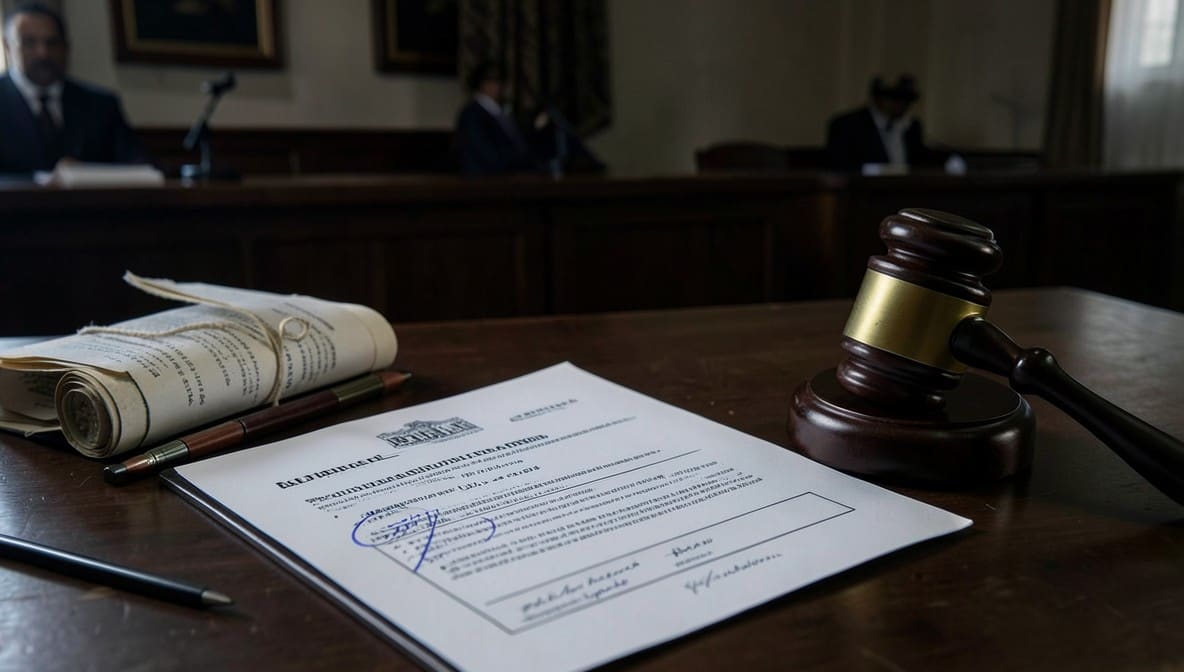
In a significant ruling on the validity of reassessment proceedings, the Income Tax Appellate Tribunal (ITAT), Delhi Bench, has quashed a reopening under Section 147 of the Income Tax Act, 1961 on grounds that the prescribed authority's approval was mechanical and lacked independent application of mind. The judgment reinforces that procedural compliance in reopening assessments is non-negotiable, offering critical protection to assessees against arbitrary reassessment actions.
Background & Facts
The Dispute
The appellant, Sh. Sanjay Rajput, a taxpayer, challenged the reopening of his assessment for the Assessment Year 2012-13 under Section 147 of the Income Tax Act, 1961. The reopening was initiated by the Income Tax Officer (ITO), Ward-43(1), Delhi, pursuant to an order dated 18.02.2026 passed by the Commissioner of Income Tax (Appeals)/National Faceless Appeal Centre (CIT(A)/NFAC) under DIN ITBA/NFAC/S/250/2025-26/1086167613(1).
Key Facts
- The reopening proposal was approved by the prescribed authority under Section 151 of the Act
- The approval recorded by the authority stated: "I am satisfied..." without demonstrating independent application of mind
- The appellant argued that the approval was mechanical and thus invalid
- The reassessment proceedings were challenged before the ITAT on grounds of procedural invalidity
Procedural History
- Assessment Year 2012-13: Original assessment completed under Section 143(3) of the Act
- Reopening Proposal: Initiated by the Assessing Officer (AO) under Section 147
- 18.02.2026: CIT(A)/NFAC passed order approving reopening, with mechanical approval language
- ITA No. 3765/Del/2026: Appeal filed before ITAT, Delhi Bench "SMC" challenging the reopening
- 01.06.2026: Hearing conducted; judgment reserved and pronounced on the same date
Relief Sought
The appellant sought quashing of the reopening proceedings and the consequent reassessment order dated 18.02.2026, on the ground that the approval under Section 151 was mechanical and thus invalid.
The Legal Issue
The central question before the ITAT was whether a reopening under Section 147 of the Income Tax Act, 1961, is valid when the prescribed authority's approval under Section 151 is mechanical and lacks independent application of mind.
Arguments Presented
For the Appellant
The appellant's counsel, Sh. Suresh Gupta, CA, contended that the approval granted by the prescribed authority under Section 151 was merely mechanical. Relying on the Supreme Court's decision in CIT v. S. Goyanka Lime and Chemicals Pvt. Ltd., (2015) 64 taxmann.com 313 (SC), the appellant argued that such mechanical approval vitiates the entire reopening proceedings, rendering them invalid.
For the Respondent
The Department, represented by Sh. Manoj Kumar, Sr. DR, did not present substantive counter-arguments on the validity of the approval. The focus of the proceedings remained on the appellant's challenge to the procedural validity of the reopening.
The Court's Analysis
The ITAT examined the language used by the prescribed authority in granting approval under Section 151. The authority's endorsement, "I am satisfied...", was held to be devoid of any independent application of mind, as it failed to demonstrate engagement with the merits of the reopening proposal.
The Tribunal relied heavily on the precedent set by the Supreme Court in CIT v. S. Goyanka Lime and Chemicals Pvt. Ltd., wherein it was held that:
"A mechanical approval by the prescribed authority under Section 151 of the Act renders the reopening proceedings invalid. The authority must apply its mind independently and record satisfaction based on the material on record."
The ITAT observed that the prescribed authority's approval in the present case mirrored the mechanical approach condemned in Goyanka Lime. Consequently, the reopening proceedings were quashed as invalid, and all subsequent actions based on such reopening were rendered academic.
The Verdict
The ITAT allowed the appellant's appeal, quashing the reopening proceedings initiated under Section 147 of the Income Tax Act, 1961. The order dated 18.02.2026 passed by the CIT(A)/NFAC was set aside, and the reassessment was held invalid. No further proceedings on merits were entertained, as the reopening itself was found to be procedurally flawed.
What This Means For Similar Cases
Procedural Compliance Is Non-Negotiable
This judgment underscores the critical importance of strict adherence to procedural requirements in tax reassessment proceedings. Practitioners must ensure that:
- The prescribed authority under Section 151 records satisfaction in a manner that reflects independent application of mind
- Approval language avoids mechanical endorsements such as "I am satisfied..." without substantive reasoning
- Reopening proposals are scrutinized for compliance with judicial precedents, particularly CIT v. S. Goyanka Lime and Chemicals Pvt. Ltd.
The Burden Shifts to the Revenue
- The Revenue must now demonstrate that the prescribed authority's approval was not mechanical but based on independent consideration
- Assessees can challenge reopening proceedings on procedural grounds, even if the merits of the case remain unaddressed
- Tribunals and courts are likely to adopt a strict approach in scrutinizing approvals under Section 151
When Delay Defeats Remedy
- This judgment serves as a cautionary tale for the Revenue to act diligently in reopening proceedings
- Assessees should promptly challenge mechanical approvals to avoid waiver of procedural rights
- The window for reopening may be foreclosed if procedural invalidity is not raised at the earliest opportunity.