The Himachal Pradesh High Court has affirmed that a cheque issued as security for a legally enforceable debt remains prosecutable under Section 138 of the Negotiable Instruments Act if dishonoured due to insufficient funds, rejecting the defence that such instruments are immune from criminal liability. This ruling reinforces the principle that the nature of the underlying transaction, not the label of "security," determines applicability of the Act.
Background & Facts
The Dispute
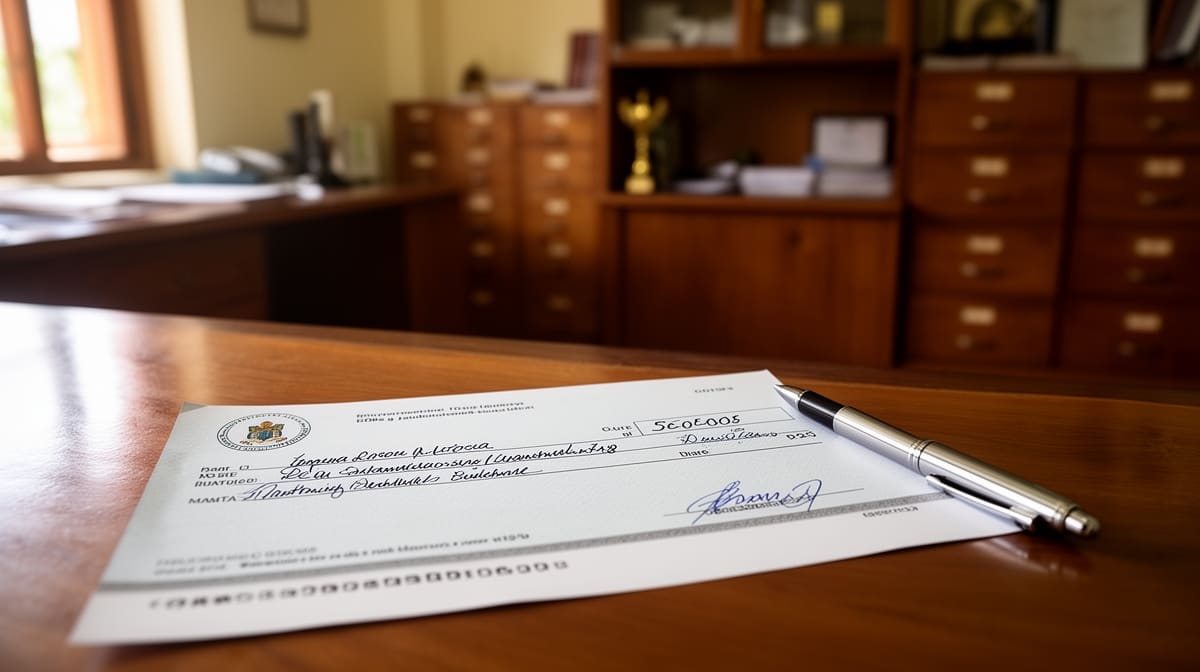
The respondent-complainant, operating as Chauhan Fruit Center in Rohru, Himachal Pradesh, deals in the sale and purchase of apples. On 10.09.2019, the petitioner-accused purchased apple boxes from the complainant, as evidenced by Bill No.678 dated 10.09.2019, for a total value of ₹3,80,393/-. To discharge this liability, the accused issued Cheque No.284651 dated 15.09.2019, drawn on H.P. State Cooperative Bank, Branch Batargalu. The cheque was presented for payment on 16.09.2019 and returned on 17.09.2019 with the remark "Funds Insufficient."
Key Facts
- The complainant issued a legal notice dated 20.10.2019 (Ex.C5/CW1) demanding payment within 15 days.
- The legal notice was sent via registered post and returned undelivered (Ex.C7/CW1), with postal receipt (Ex.C6/CW1) proving dispatch.
- The accused admitted in his statement under Section 313 Cr.P.C. that he purchased the apple boxes and issued the cheque.
- The accused claimed the cheque was issued as "security" and that payment had been made in cash in 2020, but failed to specify the date, mode, or recipient of such payment.
- The accused denied receiving the legal notice but admitted in cross-examination that the notice was sent.
- The complainant’s ledger and daily book (Ex.C8/CW1) corroborated the transaction.
- The accused did not produce any bank receipt, acknowledgment, or witness to substantiate his claim of cash payment.
Procedural History
- 10.09.2019: Purchase of apple boxes and issuance of cheque.
- 17.09.2019: Cheque dishonoured by bank.
- 20.10.2019: Legal notice issued by complainant.
- 25.11.2019: Notice returned undelivered.
- 05.01.2020: Complaint filed under Section 138 NI Act before Additional Chief Judicial Magistrate, Court No.1, Rohru.
- 26.07.2023: Trial Court convicted accused under Section 138 NI Act, sentenced to 10 months simple imprisonment and ordered payment of ₹4,70,000 as compensation.
- 29.02.2024: Additional Sessions Judge, Rohru, dismissed the appeal (Criminal Appeal No.112-R/10 of 2023), upholding conviction.
- 23.03.2026: Criminal Revision Petition dismissed by Himachal Pradesh High Court.
Relief Sought
The petitioner sought quashing of the conviction and sentence, arguing that the cheque was issued as security and not for discharge of a lawful liability, and that the legal notice was not received. He also sought release from custody and cancellation of the compensation order.
The Legal Issue
The central question was whether a cheque issued as "security" for a debt can attract criminal liability under Section 138 of the Negotiable Instruments Act upon dishonour due to insufficient funds, and whether the statutory presumption under Section 139 stands rebutted by such a defence.
Arguments Presented
For the Petitioner
Counsel argued that the cheque was issued as a security instrument, not for immediate discharge of liability, and therefore could not form the basis of a criminal complaint under Section 138. He contended that the complainant had misused the cheque by presenting it prematurely, and that the accused had already paid the amount in cash in 2020, rendering the cheque obsolete. He further argued that the legal notice was not received, thereby invalidating the procedural compliance required under the Act.
For the Respondent
The complainant’s counsel submitted that the cheque was issued in direct connection with a verifiable commercial transaction, evidenced by the bill and ledger entries. He emphasized that the accused admitted to the issuance of the cheque and the purchase of goods, and that the legal notice was duly dispatched and returned undelivered, fulfilling statutory requirements. He relied on the presumption under Section 139 and argued that the accused failed to adduce any credible evidence to rebut the presumption of lawful liability.
The Court's Analysis
The Court undertook a detailed review of the evidence and the legal framework governing Section 138 NI Act. It noted that the accused did not dispute the authenticity of the cheque, his signature, or the fact of purchase. The Court emphasized that the burden under Section 139 is not onerous - the accused need only raise a probable defence that creates doubt about the existence of a legally enforceable debt. However, mere assertion without corroboration is insufficient.
"The accused can rely on the materials submitted by the complainant in order to raise such a defence and it is inconceivable that in some cases the accused may not need to adduce the evidence of his/her own. If however, the accused/drawer of a cheque in question neither raises a probable defence nor able to contest existence of a legally enforceable debt or liability, obviously statutory presumption under Section 139 of the NI Act regarding commission of the offence comes into play."
The Court examined the Supreme Court’s ruling in Sripati Singh v. State of Jharkhand (2021), which held that a cheque issued as security for repayment of a loan or debt becomes enforceable upon default. The Court observed:
"If in a transaction, a loan is advanced and the borrower agrees to repay the amount in a specified timeframe and issues a cheque as security to secure such repayment; if the loan amount is not repaid in any other form before the due date or if there is no other understanding or agreement between the parties to defer the payment of amount, the cheque which is issued as security would mature for presentation and the drawee of the cheque would be entitled to present the same."
The Court found that the accused’s claim of cash payment was vague, unsupported by documents, and contradicted by his own admission that the notice was sent. The complainant’s evidence was consistent, documented, and unchallenged in material aspects during cross-examination. The Court further held that the trial and appellate courts had meticulously appreciated the evidence, and under Section 397 Cr.P.C., the High Court’s revisional jurisdiction does not permit re-appreciation of evidence absent a glaring miscarriage of justice.
The Court concluded that the defence of "security cheque" does not immunize the drawer from liability under Section 138 if the underlying debt remains unpaid and the cheque is dishonoured. The statutory presumption under Section 139 was not rebutted.
The Verdict
The petition was dismissed. The conviction under Section 138 of the Negotiable Instruments Act and the sentence of 10 months simple imprisonment were upheld. The compensation of ₹4,70,000/- ordered by the trial court was confirmed. The petitioner was directed to surrender before the trial court forthwith to serve the sentence. The interim order dated 20.04.2024, which had stayed the sentence subject to deposit of 30% compensation and a personal bond, was vacated. All bail bonds were cancelled.
What This Means For Similar Cases
Security Cheques Are Not Immune from Prosecution
- Practitioners must advise clients that issuing a cheque as "security" does not exempt it from Section 138 liability if the underlying debt remains unpaid.
- The label "security" is irrelevant; the existence of a legally enforceable debt and subsequent dishonour are the decisive factors.
Burden of Rebuttal Is on the Accused
- A bare assertion that a cheque was issued as security, without documentary or testimonial corroboration, will not rebut the presumption under Section 139.
- Accused must produce credible evidence - bank receipts, written agreements, or witness testimony - to establish that payment was made or that the cheque was not intended for discharge of liability.
Procedural Compliance Is Non-Negotiable
- A legal notice returned undelivered, supported by postal receipts and registered post records, satisfies the requirement of service under Section 138.
- Courts will not entertain claims of non-receipt without independent proof, especially when the complainant has demonstrated due diligence.
Appellate Courts Must Respect Concurrent Findings
- Revision petitions under Section 397 Cr.P.C. are not second appeals. Absent a manifest error or miscarriage of justice, concurrent findings of fact by trial and appellate courts are binding.
- High Courts must resist the temptation to re-evaluate evidence unless the record reveals a fundamental flaw.