The Allahabad High Court has affirmed that proceedings under the Scheduled Caste and Scheduled Tribes (Prevention of Atrocities) Act, 1989 may be quashed upon verified compromise when the underlying dispute is purely private and not motivated by caste-based animus. This ruling clarifies the limits of prosecutorial intervention in civil disputes masquerading as atrocities, reinforcing judicial discretion under Article 142 and Section 482 CrPC.
Background & Facts
The Dispute
The criminal appeal arises from Sessions Trial No.1369 of 2025, instituted based on Case Crime No.450 of 2024 registered at Police Station Rampura, District Jalaun. The case involved allegations under Sections 191(2), 76, 115(2), 352 BNS and 3(2)(va) of the Scheduled Caste and Scheduled Tribes (Prevention of Atrocities) Act, 1989 against seven accused persons, including Mukesh Sahu and others.
Key Facts
- The complainant, opposite party no.2, is a member of a Scheduled Caste
- The dispute originated from a personal and property-related conflict between the complainant and the accused, unrelated to caste identity
- No evidence was presented to establish that the alleged acts were committed because of the complainant’s caste status
- The accused were not charged with any offence under the SC/ST Act that inherently involves caste-based humiliation or violence
- Minor offences under the Bharatiya Nyaya Sanhita (BNS) were also impleaded alongside the SC/ST Act provision
Procedural History
- 15.04.2024: FIR No.450 of 2024 registered at Police Station Rampura, District Jalaun
- 20.05.2024: Chargesheet filed by police under Sections 191(2), 76, 115(2), 352 BNS and 3(2)(va) of SC/ST Act
- 10.07.2024: Sessions Court framed charges and committed the case for trial
- 03.01.2026: Special Judge (SC/ST Act) submitted verification report confirming compromise between parties
- 09.02.2026: High Court directed verification of compromise by Special Judge
- 27.03.2026: Criminal Appeal No.1368 of 2026 filed under Section 14-A(1) of SC/ST Act seeking quashing of proceedings
- 27.05.2026: Judgment delivered by the High Court
The Parties' Positions
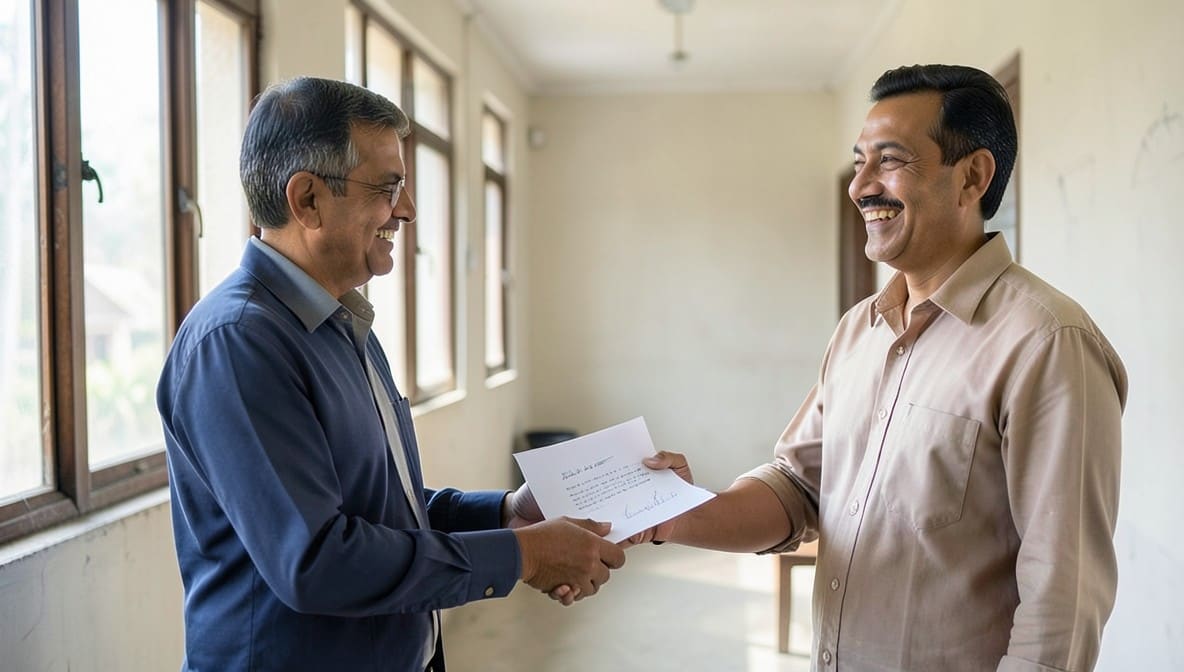
The appellants contended that the dispute was purely civil in nature, arising from a land and personal disagreement, and that the invocation of the SC/ST Act was an abuse of process. They submitted a compromise deed executed voluntarily by the complainant, which was verified by the Special Judge.
The State, through the Additional Government Advocate, did not oppose the quashing, acknowledging the verified compromise and the absence of caste-based motive.
Relief Sought
The appellants sought quashing of the entire criminal proceedings under Sessions Trial No.1369 of 2025, including all charges framed under the SC/ST Act and BNS, on the basis of a bona fide compromise.
The Legal Issue
Can criminal proceedings under the Scheduled Caste and Scheduled Tribes (Prevention of Atrocities) Act, 1989 be quashed upon verified compromise between parties when the alleged offence is not motivated by caste animus and is essentially a private civil dispute?
Arguments Presented
For the Appellant
Learned counsel for the appellants relied on Ramawatar v. State of M.P. (2022) 13 SCC 635 to argue that the SC/ST Act is not an absolute bar to compromise where the offence lacks a caste-based dimension. He submitted that the compromise was voluntary, verified by the Special Judge, and that the complainant had no grievance against the accused beyond the civil dispute. He further cited the Full Bench decision in Ghulam Rasool Khan v. State of U.P. (2022) 8 ADJ 691 to establish that compounding is permissible under Section 14-A(1) of the SC/ST Act without invoking Section 482 CrPC.
For the Respondent
The State, through the Additional Government Advocate, did not oppose the prayer. It accepted the verified compromise and acknowledged that the allegations did not reflect the classic pattern of atrocities under the SC/ST Act. The State conceded that the continuation of proceedings would serve no public interest and would amount to an abuse of process.
The Court's Analysis
The Court undertook a two-pronged analysis: first, whether the offence was caste-motivated; second, whether the compromise was voluntary and genuine.
The Court observed that the allegations under Sections 191(2), 76, 115(2) and 352 BNS were primarily civil in nature - pertaining to false statements, trespass, and minor assault - and did not involve acts of humiliation, denial of access to public resources, or caste-based violence as contemplated under Section 3(1) of the SC/ST Act. The sole SC/ST Act provision invoked, Section 3(2)(va), was applied without any factual nexus to caste-based animus.
The Court emphasized the Supreme Court’s holding in Ramawatar v. State of M.P. that where the offence is primarily private or civil, and not committed on account of the victim’s caste, the Court may exercise its inherent powers under Article 142 or Section 482 CrPC to quash proceedings. The Court quoted Paragraph 17:
"On the other hand, where it appears to the Court that the offence in question, although covered under the SC/ST Act, is primarily private or civil in nature, or where the alleged offence has not been committed on account of the caste of the victim, or where the continuation of the legal proceedings would be an abuse of the process of law, the Court can exercise its powers to quash the proceedings."
The Court further noted Paragraph 19 of Ramawatar, which mandates heightened vigilance to ensure the victim’s consent is free from coercion, given the vulnerability of Scheduled Caste and Scheduled Tribe communities. However, the Court found no evidence of duress: the compromise was verified by the Special Judge, the complainant did not retract his consent, and the State did not raise any objection.
The Court also relied on the Full Bench decision in Ghulam Rasool Khan, which held that compounding is permissible under Section 14-A(1) of the SC/ST Act itself, eliminating the need to invoke Section 482 CrPC. The Court concluded that the procedural route taken by the appellants was legally sound.
The Verdict
The criminal appeal was allowed. The entire proceedings in Sessions Trial No.1369 of 2025, arising out of Case Crime No.450 of 2024 under Sections 191(2), 76, 115(2), 352 BNS and 3(2)(va) of the SC/ST Act, were quashed. The compromise deed verified by the Special Judge was upheld as valid and binding. All outstanding warrants, if any, stand cancelled. The accused are discharged from all charges.
What This Means For Similar Cases
Compromise Is Permissible in Non-Caste Atrocities
- Practitioners may now file applications under Section 14-A(1) of the SC/ST Act seeking quashing where the alleged offence lacks a caste-based motive
- The burden shifts to the accused to prove the compromise is voluntary and the dispute is civil in nature
- Courts must scrutinize whether the SC/ST Act provision invoked is being misused to enforce civil liabilities
Verification by Special Judge Is Sufficient
- A compromise verified by the Special Judge designated under the SC/ST Act satisfies due process requirements
- No separate application under Section 482 CrPC is necessary if the appeal is filed under Section 14-A(1)
- Courts should not mechanically reject compromises merely because the case falls under a special statute
Caste Motive Must Be Evidenced, Not Assumed
- Mere membership of the victim in a Scheduled Caste or Tribe does not automatically convert a civil dispute into an atrocity
- Prosecutors must establish a direct nexus between the offence and caste-based hostility
- Defence counsel should challenge the applicability of SC/ST Act provisions where no caste-based humiliation or exclusion is alleged