The Gujarat High Court quashed an FIR alleging criminal breach of trust and cheating against a bus body manufacturer, holding that post-warranty quality grievances cannot be retroactively transformed into criminal offences. The Court found the prosecution to be a mala fide counterblast to ongoing civil litigation over bank-guarantee encashment, thereby constituting an abuse of process under Section 482 CrPC.
Background & Facts
The Dispute
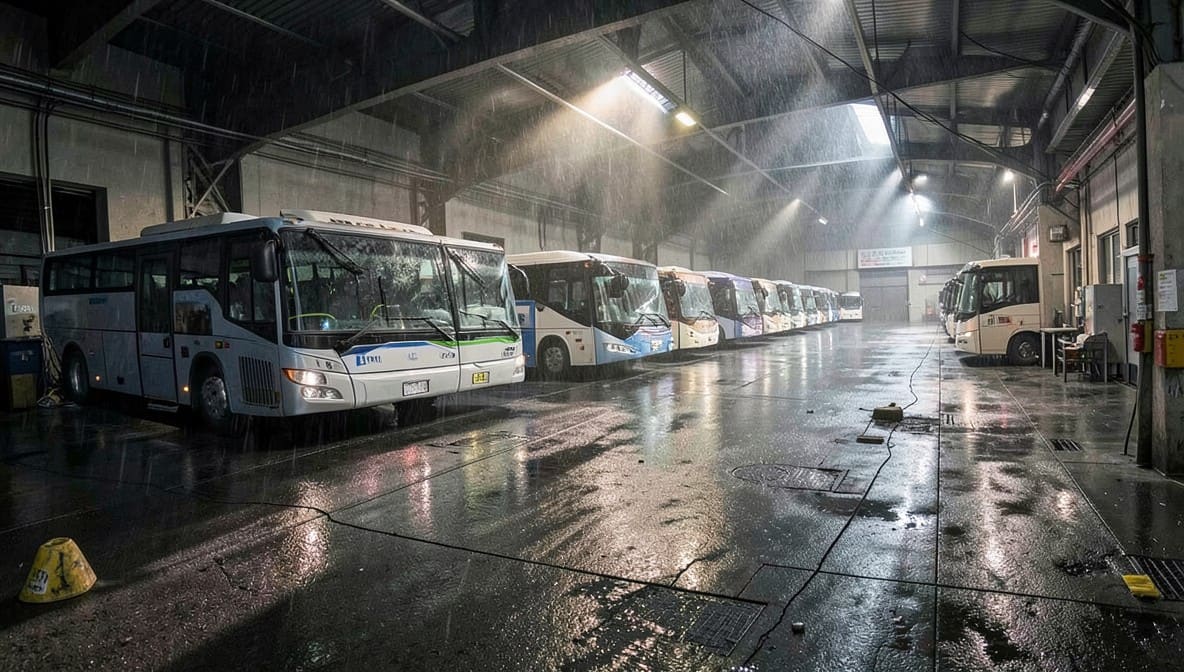
The petitioner, M/s Paras Motor Industries through its authorized representative Adishkumar Jain, entered into a contract with the Gujarat State Road Transport Corporation (GSRTC) for the construction of bus bodies on 360 chassis under tender GSRTC-E-Tender-No.01/2015-16. The Letter of Acceptance was issued on 31 May 2016 and the Work Order on 10 August 2016, stipulating compliance with AIS-052 Bus Body Code standards and a five-year warranty.
Key Facts
- The total contract value was Rs. 23,89,00,000/- (Twenty-Three Crore Eighty-Nine Lakhs).
- The petitioner executed an Undertaking Agreement, an Indemnity Bond and a Bank Guarantee deed, each on a Rs. 100 stamp paper.
- Buses were handed over to GSRTC, inspected and cleared by RTO Gandhinagar, and deployed across State Transport depots from March 2017.
- During the warranty period, complaints were received regarding structural defects in approximately fifty buses.
- A joint inspection accompanied by videography was conducted on 03 July 2018 and 04 July 2018 in the presence of GSRTC officers and the petitioner’s representative. Serious defects were found in ten buses, including:
- structural body pillars detached from welds,
- cracked centre pillars,
- pillars detached due to incomplete/defective welding,
- rusted metal parts,
- detached/loose roof sheet panels.
- The petitioner allegedly showed negligence and lack of seriousness in rectifying these defects.
- Four formal letters were issued to the petitioner via email and registered post seeking an inspection and rectification plan; no response was forthcoming.
- GSRTC estimated a current financial loss of Rs. 15,00,000/- (Fifteen Lakhs) due to the structural flaws.
- On 05 August 2018, Pragnesh Manubhai Patel, Chief Mechanical Engineer, GSRTC, lodged FIR No. CR I-251/2018 before Naroda Police Station, Ahmedabad, alleging offences under Sections 406 (criminal breach of trust) and 420 (cheating) of the Indian Penal Code, 1860.
Parties' Positions
Petitioner’s contentions:
- The bus bodies were manufactured strictly in accordance with AIS-052 standards and underwent mandatory three-stage inspections (raw material, framework structure, final assembly) by GSRTC officials.
- The buses were duly verified, certified, passed by RTO Gandhinagar and deployed from March 2017.
- They had been in commercial operation for over two years, covering approximately three to four lakh kilometres each; any wear-and-tear after such extensive usage falls within routine warranty maintenance and cannot be termed a criminal act.
- Prior to the FIR, the petitioner had extended its bank guarantee of Rs. 2,38,90,000/- up to 30 April 2019 as requested, but GSRTC arbitrarily encashed the entire guarantee. The petitioner challenged this encashment by filing a Special Civil Application before the High Court; an arbitral award had already been passed in its favour.
- The FIR was lodged immediately thereafter as a counterblast and tool of coercion to defeat the pending civil litigation, lacking any fraudulent or dishonest intention at the inception of the contract.
Respondent’s (State) contentions:
- The joint inspection report of 03-04 July 2018 prima facie establishes the use of substandard materials and improper welding, disclosing serious structural deficiencies that endanger commuter lives.
- The power under Section 482 CrPC must be exercised sparingly; investigation should not be curtailed at the threshold when a prima facie case of cheating is disclosed.
- The allegations disclose a prima facie case of criminal breach of trust and cheating, warranting continuation of the criminal investigation.
Procedural History
- 31 May 2016: Letter of Acceptance issued to M/s Paras Motor Industries.
- 10 August 2016: Work Order No. CWA/P/NBB850/Out Agency/e-TNDR01/15-16/WO/3048 issued.
- March 2017: First batch of buses deployed after RTO clearance.
- 03 July 2018 & 04 July 2018: Joint inspection of sixteen buses revealing serious defects in ten vehicles.
- 05 August 2018: FIR No. CR I-251/2018 lodged before Naroda Police Station, Ahmedabad.
- Post-05 August 2018: Four formal letters issued to the petitioner seeking rectification plan (no response).
- On or before 30 April 2019: Petitioner extended bank guarantee of Rs. 2,38,90,000/- as requested.
- Thereafter: GSRTC arbitrarily encashed the entire bank guarantee.
- Subsequent to encashment: Petitioner filed a Special Civil Application before the High Court challenging the encashment; an arbitral award was passed in its favour.
- 23 September 2026: Judgment delivered by the Gujarat High Court quashing the FIR.
Relief Sought
The petitioner sought quashing of the FIR No. CR I-251/2018 and all consequential proceedings arising therefrom, with a direction that the rule be made absolute.
The Legal Issue
The central question was whether the allegations in the FIR disclosed a prima facie case of cheating under Section 420 IPC or criminal breach of trust under Section 406 IPC, given that the alleged defects emerged after two years of commercial use and the petitioner had cleared all mandatory quality inspections. Further, the Court had to determine whether the criminal proceeding was a mala fide counterblast to ongoing civil litigation over bank-guarantee encashment, thereby constituting an abuse of process under Section 482 CrPC.
Arguments Presented
For the Petitioner
The petitioner relied on State of Haryana v. Bhajan Lal (AIR 1992 SC 604) to argue that uncontroverted allegations in the FIR do not prima facie constitute any cognizable offence under Sections 406 or 420 IPC. It emphasized that the bus bodies cleared three mandatory inspections, obtained RTO clearance and had run for over two years covering three to four lakh kilometres each, thus any post-warranty defect could not retroactively attract criminal liability. The petitioner further contended that the FIR was filed immediately after GSRTC’s arbitrary encashment of the bank guarantee and after the petitioner had challenged that encashment via a Special Civil Application, indicating a mala fide motive to harass the petitioner and to gain an advantage in the civil dispute. Reliance was also placed on G. Sagar Suri v. State of U.P. (2000 2 SCC 636) and Rejib Ranjan v. R. Vijaykumar (2015 2 SCC 513) to show that criminal proceedings cannot be used as a shortcut for civil remedies and that allegations manufactured after civil disputes arise are indicative of malicious prosecution.
For the Respondent
The State, through the Additional Public Prosecutor, argued that the joint inspection report of 03-04 July 2018 prima facie established the use of substandard materials and improper welding, thereby disclosing a prima facie case of cheating and criminal breach of trust. It urged the Court to exercise caution under Section 482 CrPC but not to curtail investigation at the threshold when such a prima facie case is made out. The State emphasized the risk to public safety posed by the defective buses operating in public transit and maintained that the allegations were not mala fide but based on genuine concerns about structural defects that could lead to major accidents.
The Court's Analysis
The Court first examined the ingredients of cheating under Section 420 IPC and held that fraudulent or dishonest intention must exist at the very inception of the contract. It observed that the petitioner had submitted a valid tender, cleared all three mandatory stages of quality inspection, obtained RTO clearance and delivered 360 buses that ran on public roads for over two years covering three to four lakh kilometres. Consequently, a breach of warranty or post-performance quality grievance after two years of heavy commercial usage could not retroactively convert a commercial transaction into a criminal offence of cheating.
Regarding criminal breach of trust under Section 406 IPC, the Court noted that the transaction was purely contractual, governed by the tender terms and conditions. The bus chassis handed over for body building were returned as completed buses and put into operation. Disputes concerning routine maintenance, wear-and-tear or defect liability under a warranty clause did not amount to criminal entrustment or misappropriation under Sections 405/406 IPC.
On the issue of abuse of process, the Court relied on the principles laid down in Manidersingh Jolly v. State of Gujarat (2017 3 GLR 1957) and Rejib Ranjan v. R. Vijaykumar (supra). It found that the chronology of events showed that the FIR was lodged immediately after the petitioner challenged the unlawful encashment of its bank guarantee via a Special Civil Application and after an arbitral award had been passed in its favour. The Court held that allowing the criminal investigation to continue would amount to a gross abuse of the process of law and cause unnecessary harassment to the petitioner.
"Allowing the criminal investigation to continue would amount to a gross abuse of the process of law and cause unnecessary harassment to the petitioner."
Accordingly, the Court exercised its power under Section 482 CrPC to quash the FIR and set aside all consequential proceedings.
The Verdict
The petition was allowed. The First Information Report being CR No. I-251/2018 registered on 05 August 2018 before the Naroda Police Station, Ahmedabad for alleged offences punishable under Sections 406 and 420 of the Indian Penal Code (IPC), along with all consequential proceedings arising therefrom, was hereby quashed and set aside qua the petitioner. Rule was made absolute. No compensation, costs or interest were awarded.
What This Means For Similar Cases
Post-Warranty Defects Do Not Attract Criminal Liability
Where a product or service has been inspected, accepted and used for a substantial period, any subsequent quality grievance arising after the warranty period cannot be treated as a criminal offence of cheating or criminal breach of trust. Practitioners should emphasize that the absence of fraudulent intent at the time of contract formation defeats prosecution under Sections 420 and 406 IPC, and that post-warranty disputes remain purely civil in nature.
Criminal Law Cannot Be Used as a Shortcut for Civil Disputes
The judgment reinforces that criminal proceedings under Section 482 CrPC must not be employed as a pressure tactic to gain leverage in pending civil litigation. When a dispute is fundamentally contractual and civil remedies have already been invoked, lodging an FIR to harass the opposite party constitutes an abuse of process. Lawyers facing such tactics should promptly invoke the High Court’s inherent jurisdiction to quash the FIR and seek costs where appropriate.
Strict Scrutiny of Mala Fide Prosecutions Under Section 482 CrPC
The Court’s reliance on State of Haryana v. Bhajan Lal categories 1, 2 and 7 signals that FIRs lacking prima facie ingredients, or those filed with an ulterior motive to retaliate against civil suits, will be scrutinized closely. Practitioners should prepare a chronological timeline showing that the criminal complaint followed civil steps such as notices, guarantees encashment or civil suits, and argue that the prosecution is mala fide and an abuse of process.