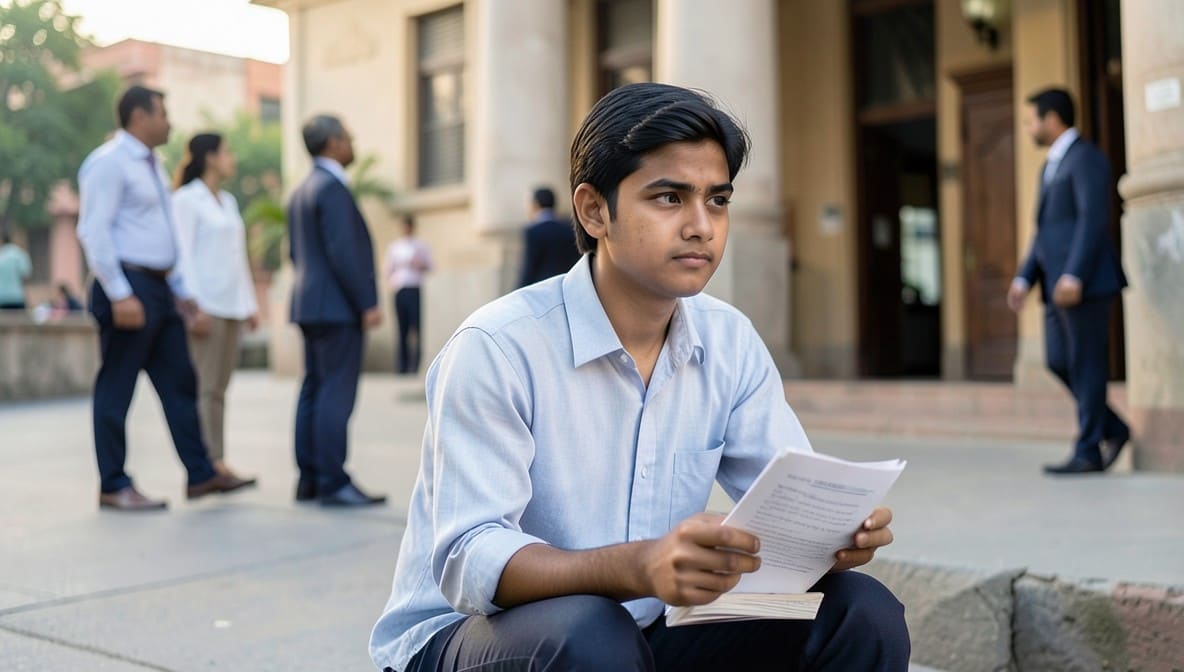
The Madhya Pradesh High Court has granted regular bail to a 20-year-old student accused under the POCSO Act and Bharatiya Nagarik Suraksha Sanhita, 2023, emphasizing that prolonged judicial custody without prima facie evidence of tampering or flight risk cannot be sustained. The order underscores the principle that bail is the rule and jail the exception, particularly for first-time accused with no criminal antecedents.
Background & Facts
The Dispute
The applicant, Prince Patel, is accused in Crime No. 41/2026 registered at Police Station Barela, District Jabalpur, in connection with the suicide of a minor girl on 16.01.2026. The prosecution alleges that the applicant, through persistent communication and harassment, drove the victim to take her own life. The case was initially registered under Sections 108 and 351(2) of the Bharatiya Nagarik Suraksha Sanhita, 2023 (BNS), and later expanded to include Sections 78(2) of BNS and Sections 11(iv) and 12 of the Protection of Children from Sexual Offences Act, 2012 (POCSO Act).
Key Facts
- The victim, a minor girl, was found dead by hanging with a saree at her residence on 16.01.2026.
- The victim’s parents alleged that the applicant had been stalking her and subjecting her to constant harassment, leading to her suicide.
- The call detail record (CDR) shows the last communication between the applicant and the victim occurred on 25.12.2025, nearly three weeks before the victim’s death.
- There is no forensic, digital, or eyewitness evidence linking the applicant to any act of sexual assault, threat, or coercion.
- The applicant is 20 years old and is currently pursuing his studies.
- The applicant has no prior criminal record or history of misconduct.
- The applicant has been in judicial custody since his arrest on 20.01.2026.
- The final report has been submitted by the police, concluding the investigation.
- The applicant’s counsel submitted that the allegations arose under family pressure and that the relationship between the applicant and the victim was friendly, not hostile.
Procedural History
- 16.01.2026: Death of the minor girl; suicide reported.
- 17.01.2026: FIR registered at Police Station Barela under Sections 108 and 351(2) of BNS, 2023.
- 19.01.2026: Additional charges under Sections 78(2) of BNS and Sections 11(iv) and 12 of POCSO Act added.
- 20.01.2026: Applicant arrested and placed in judicial custody.
- 29.04.2026: Application for regular bail filed under Section 483 of BNS, 2023.
- 29.04.2026: Hearing conducted before the High Court at Jabalpur.
The Parties' Positions
For the Applicant
- The applicant is a young student with no criminal background.
- The last communication with the victim was over a month before her death, negating any direct link to the suicide.
- There is no incriminating material to substantiate the allegations.
- The applicant is not in a position to influence witnesses or tamper with evidence, given his age, status, and custody.
- The trial is likely to be protracted, and continued incarceration amounts to undue hardship.
- The applicant is willing to cooperate fully with the trial.
For the Respondent/State
- The gravity of the offences under POCSO and BNS warrants denial of bail.
- The suicide of a minor is a serious matter and public interest demands strict custody.
- However, the State’s counsel conceded that no criminal antecedents are reported against the applicant.
- The State did not dispute the applicant’s student status or the absence of evidence of tampering.
Relief Sought
The applicant sought regular bail with appropriate conditions, seeking release from judicial custody pending trial, and requested that the conditions be framed to ensure trial integrity without unnecessary detention.
The Legal Issue
The central question was whether the applicant, a first-time accused with no criminal antecedents, no evidence of tampering, and no likelihood of flight, can be denied regular bail solely on the ground of the gravity of the alleged offences under POCSO and BNS, in the absence of any concrete material linking him to the commission of the offence.
Arguments Presented
For the Appellant/Petitioner
The applicant’s counsel relied on the principle that bail is the rule and jail the exception, as affirmed in Arnesh Kumar v. State of Bihar. He argued that the gravity of the offence alone cannot override the presumption of innocence, particularly where there is no evidence of witness tampering, flight risk, or criminal history. He cited the absence of any incriminating material beyond the victim’s family’s allegations and the CDR showing no contact for three weeks prior to death. He emphasized the applicant’s status as a student and the hardship caused by prolonged custody.
For the Respondent/State
The State opposed bail on the basis of the seriousness of the offences under POCSO and BNS, which attract stringent punishment. However, the State’s counsel conceded that the applicant has no prior criminal record, is a student, and there is no material suggesting he can influence witnesses or tamper with evidence. The State did not present any evidence to rebut the applicant’s claim of false implication or lack of proximity to the incident.
The Court's Analysis
The Court examined the nature of the allegations, the stage of investigation, and the applicant’s personal circumstances. It noted that the final report has been filed, indicating the investigation is complete and the prosecution’s case is now before the trial court. The Court observed that the veracity of the allegations and the applicant’s complicity can only be determined after evidence is adduced at trial.
"The trial would take time. The veracity of the prosecution and complicity of the applicant in the alleged offence will be considered after evidence in trial."
The Court emphasized that the applicant’s age, student status, and lack of criminal antecedents are material factors under Section 483 of BNS, 2023, which mandates consideration of the likelihood of tampering, flight, or recidivism. The Court found no basis to conclude that the applicant poses a threat to witnesses or the investigation. The Court also noted that the last communication occurred weeks before the incident, weakening the causal link alleged by the prosecution.
The Court further held that the mere gravity of the offence, without any corroborative evidence or risk factors, cannot justify continued incarceration. The Court distinguished this case from those involving active threats, repeated offences, or attempts to influence the investigation.
The Verdict
The applicant succeeded. The High Court granted regular bail to Prince Patel in connection with Crime No. 41/2026. He is directed to furnish a personal bond of Rs. 25,000 with one surety of the same amount, subject to the following conditions: (1) appear on all hearing dates; (2) not commit any offence; (3) not intimidate or induce witnesses; (4) not tamper with evidence; and (5) comply with Section 346 of BNS, 2023 regarding witness examination. The bail order remains in force until the conclusion of the trial, subject to cancellation for breach. The trial court is directed to ensure conditions are explained and recorded on the bond.
What This Means For Similar Cases
Bail Cannot Be Denied Solely on Gravity of POCSO Allegations
- Practitioners must argue that gravity alone is insufficient to deny bail under Section 483 BNS; the court must assess risk factors: flight, tampering, recidivism.
- Absence of criminal history and student status are strong mitigating factors, even in serious cases.
- CDRs and timelines must be scrutinized to challenge causal links between accused and incident.
Evidence of Proximity Is Critical in Suicide-Linked Cases
- In cases where suicide is alleged to result from harassment, the timing and frequency of communication must be established with evidence.
- A gap of three weeks between last contact and death, as here, weakens the prosecution’s narrative absent corroborative proof.
- Courts must avoid presumption of guilt based on familial allegations alone.
Trial Courts Must Record Bail Conditions Clearly
- The High Court’s directive to reproduce conditions in Hindi and ensure scribe certification sets a precedent for procedural clarity.
- Practitioners should insist on written, explained, and signed conditions to prevent future disputes over compliance.