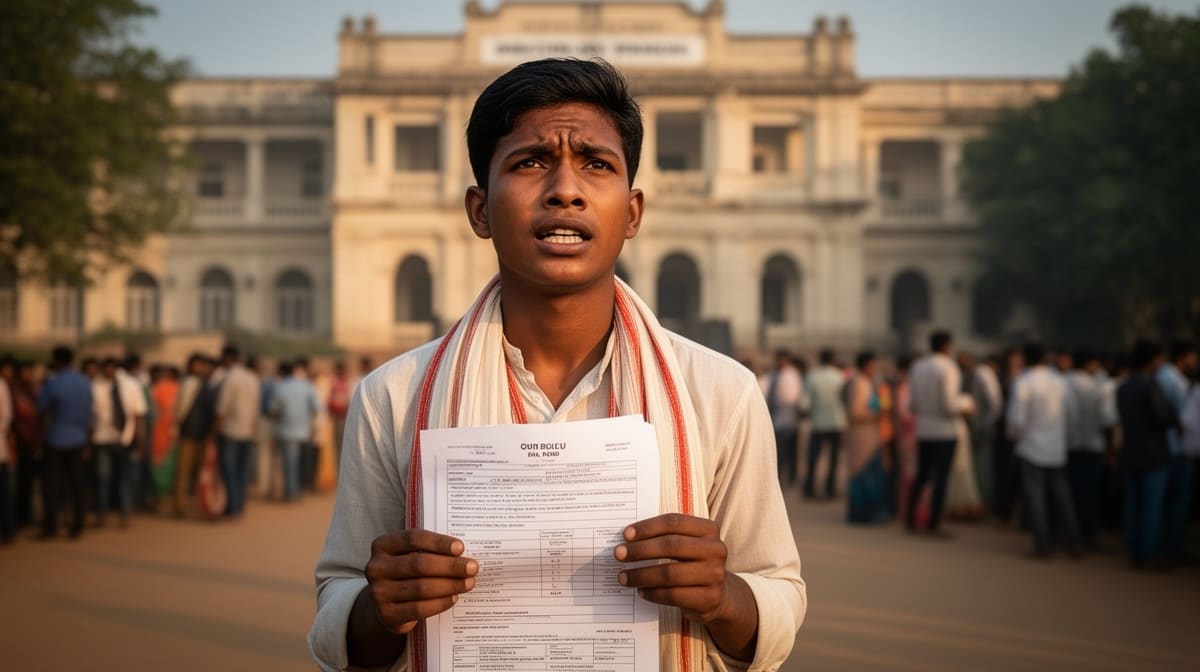
The Allahabad High Court recently granted bail to an accused charged under the Protection of Children from Sexual Offences (POCSO) Act, highlighting a critical procedural lapse in the investigation. The Court underscored that charges under the POCSO Act cannot be sustained if the victim is found to be a major based on documentary evidence, such as a high school certificate. This judgment reinforces the necessity of verifying age before invoking stringent legal provisions designed to protect minors.
Background & Facts
The Dispute
The applicant, Aazam, was charged under Sections 137(2), 87, 64(1), 318(4), 338, 336(3), 340(2) of the Bharatiya Nyaya Sanhita (BNS), Section 3/4 of the POCSO Act, and Section 3/5 of the U.P. Prevention of Religious Conversion Act. The charges stemmed from allegations that the applicant had engaged in a physical relationship with the victim when she was a minor. However, the victim’s high school certificate indicated her date of birth as 07.01.2008, suggesting she was a major at the time of the alleged offence.
Key Facts
- The victim’s high school certificate recorded her date of birth as 07.01.2008, making her 18 years old at the time of the alleged offence.
- The chargesheet was filed under the POCSO Act, which applies only to offences committed against minors.
- The victim admitted in her statements under Section 180 and 183 of the Bharatiya Nagarik Suraksha Sanhita (BNSS) that she had established a physical relationship with the applicant after attaining majority.
- The victim also admitted that her name was changed in her Aadhaar card at her request, raising questions about the forgery allegations.
- The applicant had no prior criminal history and had been in custody since 02.03.2026.
Procedural History
- Case Crime No. 108 of 2026 was registered at Police Station Gangoh, District Saharanpur under the aforementioned sections.
- 05.06.2026: The matter was heard by the Allahabad High Court, where the applicant’s counsel argued that the victim was a major as per her high school certificate.
- The Court directed the Investigating Officer (I.O.), Sub-Inspector Sanjeev Kumar, to explain why the chargesheet was filed under the POCSO Act despite the victim’s age.
- The I.O. submitted that the victim had admitted in her BNSS statements that she had established a physical relationship with the applicant prior to attaining majority, justifying the POCSO charges.
- The Court accepted the I.O.’s explanation but proceeded to consider the bail application.
- 08.07.2026: The Court granted bail to the applicant.
Relief Sought
The applicant sought release on bail during the pendency of the trial, arguing that:
- The victim was a major at the time of the alleged offence, rendering the POCSO charges unsustainable.
- The victim had voluntarily left her home and was in a love affair with the applicant.
- No case of forgery was made out, as the victim admitted to changing her name in the Aadhaar card at her request.
- The applicant had no criminal history and did not require custodial interrogation.
The Legal Issue
The central question before the Court was whether the POCSO Act could be invoked when the victim’s age, as per documentary evidence, indicated she was a major at the time of the alleged offence. Additionally, the Court had to determine whether the applicant was entitled to bail given the procedural irregularities in the chargesheet.
Arguments Presented
For the Applicant
- The victim’s high school certificate clearly established her date of birth as 07.01.2008, making her a major at the time of the alleged offence. Thus, the POCSO Act was inapplicable.
- The victim’s statements under Section 180 and 183 BNSS indicated that she had voluntarily left her home and was in a love affair with the applicant, negating any coercion or offence under the POCSO Act.
- The victim admitted to changing her name in her Aadhaar card at her request, undermining the forgery allegations.
- The applicant had no criminal history and had been in custody since 02.03.2026, making further detention unnecessary.
- The chargesheet had already been filed, eliminating the need for custodial interrogation.
For the Opposite Party
- The first informant’s counsel and the learned Additional Government Advocate (A.G.A.) opposed the bail application but did not dispute the factual submissions regarding the victim’s age or her statements.
The Court's Analysis
The Court carefully examined the submissions and the procedural history of the case. Key observations included:
-
Age Determination: The Court noted that the victim’s high school certificate indicated she was a major, which should have precluded the application of the POCSO Act. The I.O.’s explanation that the victim had admitted to a physical relationship prior to attaining majority was accepted, but the Court emphasized the importance of verifying age through documentary evidence before invoking stringent legal provisions.
-
Procedural Lapse: The Court implicitly criticized the investigation for filing the chargesheet under the POCSO Act without conclusively verifying the victim’s age. This lapse underscored the need for thorough investigation before invoking special statutes.
-
Bail Considerations: The Court relied on the judgment of the Supreme Court in Kapil Wadhawan vs. Central Bureau of Investigation (2025 SCC OnLine SC 3038) and the Allahabad High Court’s guidelines in Maya Tiwari Vs. State of U.P. (2024 SCC Online All 6765), which emphasize the principles for granting bail. The Court considered factors such as:
- The nature of the offence.
- The evidence on record.
- The applicant’s complicity.
- Overcrowded jails and pendency of criminal cases.
-
No Opinion on Merits: The Court explicitly stated that it was not expressing any opinion on the merits of the case, focusing solely on the bail application.
"Considering the entire facts and circumstances of the case, submissions of learned counsel for the parties and keeping in view the nature of offence, evidence, complicity of the accused and taking into account overcrowded jails and heavy pendency of criminal cases before the trial courts as well as considering the mandate of the judgement of the Apex Court in the case of Kapil Wadhawan vs Central Bureau of Investigation reported in 2025 SCC OnLine SC 3038 as well as guideline of this Court in the case of Maya Tiwari Vs. State of U.P. reported in 2024 SCC Online All 6765 regarding grant of bail and without expressing any opinion on the merits of the case, I am of the opinion that the applicant is entitled to be enlarged on bail."
The Verdict
The Court allowed the bail application and directed the release of the applicant, Aazam, on furnishing a personal bond and two sureties each in the like amount, subject to the following conditions:
- The applicant shall not induce, threaten, or promise any person acquainted with the facts of the case to dissuade them from disclosing such facts to the Court or police.
- The applicant shall cooperate in the trial and not seek unnecessary adjournments.
- The applicant shall not indulge in any criminal activity after release.
- The applicant shall attend court as per the conditions of the bond.
The Court further directed:
- Verification of identity, status, and residence proof of the applicant and sureties by the concerned court.
- Verification of mobile numbers and Aadhaar cards of the applicant and sureties.
- The release order to be sent to the concerned jail through the Bail Order Management System (BOMS) for early release.
- A copy of the order to be sent to the applicant via Saharanpur Jail Superintendent (email/e-prison portal) and to the Trial Court within 24 hours, in compliance with the Supreme Court’s directives in Policy Strategy for Grant of Bail, In Re (2024) 10 SCC 685 and Pila Pahan@Peela Pahan and others Vs. State of Jharkhand (Writ Petition (Criminal) No. 169 of 2025).
What This Means For Similar Cases
Age Verification Is Non-Negotiable Under POCSO Act
- Documentary Evidence Trumps Oral Statements: The judgment reinforces that age determination under the POCSO Act must be based on conclusive documentary evidence, such as birth certificates or school records. Oral statements or admissions by the victim, even under BNSS, cannot override documentary proof.
- Investigative Due Diligence: Investigating officers must verify the victim’s age before filing charges under the POCSO Act. Failure to do so may lead to procedural lapses and undermine the prosecution’s case.
Bail Considerations in Cases with Procedural Irregularities
- Procedural Lapses Can Favor Bail: Courts may be inclined to grant bail where there are glaring procedural irregularities, such as incorrect application of legal provisions. Practitioners should highlight such lapses to argue for bail.
- Custodial Interrogation Not Automatic: If the chargesheet has been filed, the need for custodial interrogation diminishes, strengthening the case for bail.
Compliance with Supreme Court Directives on Bail
- Expedited Release Mechanisms: The Court’s direction to use BOMS and e-prison portals aligns with the Supreme Court’s emphasis on expediting bail orders. Practitioners should ensure compliance with these mechanisms to avoid delays in release.
- Judicial Guidelines Are Binding: The reliance on Kapil Wadhawan and Maya Tiwari underscores that judicial guidelines on bail are binding and must be followed by lower courts. Practitioners should cite these precedents to strengthen bail applications.