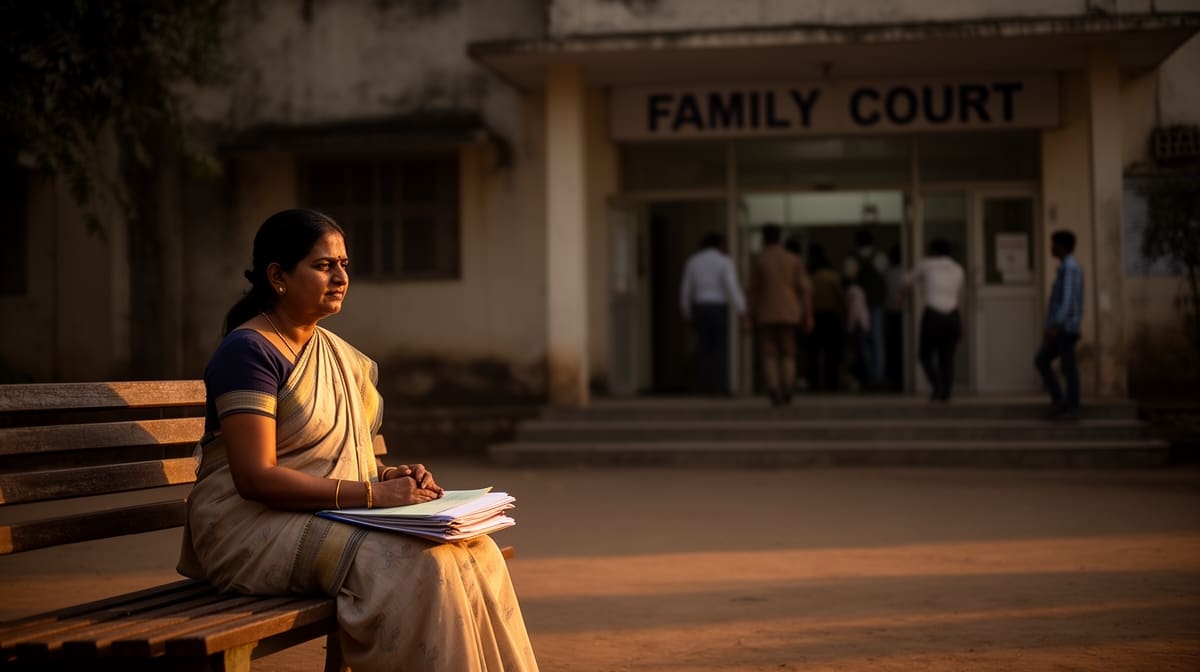
The Bombay High Court has reaffirmed a foundational principle of civil procedure: courts cannot grant relief not prayed for in the pleadings. In a divorce proceeding under the Hindu Marriage Act, the Family Court’s award of permanent alimony without any corresponding prayer or evidence was set aside, with the matter remanded for proper adjudication. This judgment reinforces the necessity of procedural fairness and the limits of judicial discretion in matrimonial disputes.
Background & Facts
The Dispute
The appellant, Nandkumar Mohan Bhat, and the respondent, Aditi Nandkumar Bhat alias Aditi Shraikant Kulkarni, were married on 07.03.2006. The wife filed a petition for divorce under Section 13(b) of the Hindu Marriage Act, 1955, on the ground of mutual consent. The petition was allowed by the Family Court No.2, Pune, in an order dated 21.01.2026, dissolving the marriage. The order also directed the husband to pay monthly maintenance of Rs.20,000 to the couple’s son, with a 10% annual increase until the child attains majority.
Key Facts
- The marriage was solemnized on 07.03.2006
- The divorce petition (No.1174/2019) was filed by the wife under Section 13(b) of the Hindu Marriage Act
- The petition sought dissolution of marriage and custody of the child
- No prayer was made in the petition for permanent alimony under Section 25 of the Hindu Marriage Act
- The husband did not contest the divorce or the child maintenance terms
- The Family Court, suo motu, directed payment of Rs.15,00,000 as permanent alimony to the wife in Para 4 of the order
Procedural History
- 07.03.2006: Marriage solemnized
- Date unspecified, prior to 21.01.2026: Wife files divorce petition (No.1174/2019) in Family Court, Pune
- 21.01.2026: Family Court grants divorce under Section 13(b), directs child maintenance, and awards Rs.15,00,000 as permanent alimony without any prayer or evidence
- 08.03.2026: Husband files Family Court Appeal No.21 of 2026 challenging the alimony direction
- 21.03.2026: Interim Application No.2132 of 2026 filed seeking stay on alimony payment
- 08.05.2026: Hearing before Division Bench of Bombay High Court
The Parties' Positions
- Appellant (Husband): Argued that the Family Court exceeded its jurisdiction by granting permanent alimony without any pleading, prayer, or evidence. He submitted that he had not raised any counter-claim, nor adduced evidence on alimony.
- Respondent (Wife): Conceded before the High Court that no specific prayer for permanent alimony was made in the petition.
Relief Sought
The appellant sought setting aside of the alimony direction in Para 4 of the Family Court’s order dated 21.01.2026. He did not challenge the divorce decree or the child maintenance order.
The Legal Issue
Can a Family Court grant permanent alimony under Section 25 of the Hindu Marriage Act when no prayer for such relief has been made in the petition, no evidence has been adduced, and the opposing party has not been given an opportunity to respond?
Arguments Presented
For the Appellant
The learned counsel for the appellant relied on the settled principle that courts are bound by the pleadings and cannot grant relief beyond what is claimed. He cited Smt. Sushila Devi v. Harish Chandra and Rajesh Kumar v. Sunita Devi to emphasize that alimony is not a matter of judicial discretion to be exercised suo motu. He argued that the husband was deprived of his right to cross-examine, file counter-affidavits, or present evidence on financial capacity, assets, or need - essential elements under Section 25. The award, he submitted, violated natural justice and the adversarial framework of civil procedure.
For the Respondent
The counsel for the respondent-wife conceded that no prayer for permanent alimony was made in the petition. He did not contest the appellant’s submission that the Family Court acted without jurisdiction on this specific point. He sought liberty to amend the petition to include a prayer for alimony, if permitted by the High Court.
The Court's Analysis
The Division Bench of Justices Bharati Dangre and Manjusha Deshpande examined the procedural irregularity with strict adherence to the principles of natural justice and the adversarial system. The Court observed that while Section 25 of the Hindu Marriage Act empowers courts to grant permanent alimony, such power is not unfettered. It must be exercised only after a proper adjudication based on pleadings, evidence, and opportunity of hearing.
"A court cannot grant a relief which has not been claimed, nor can it assume jurisdiction over a matter which has not been placed before it by the parties. The grant of permanent alimony is not a mere formality; it requires adjudication on the financial status, needs, and conduct of both parties."
The Court noted that the Family Court had not framed any issue on alimony, nor had the husband been given an opportunity to contest the claim. The absence of any pleading meant the husband was never on notice that alimony was in issue. The Court emphasized that even in matrimonial proceedings, where courts are encouraged to act in the interest of justice, they cannot bypass the foundational rules of pleading and evidence.
The Bench further held that the wife’s concession before the High Court was a critical admission that the Family Court had acted without jurisdiction on this point. The Court declined to decide the merits of the alimony claim at this stage, as it would amount to deciding a matter without affording the husband a fair hearing.
The Verdict
The Family Court Appeal and Interim Application were disposed of with the following directions: the order granting permanent alimony of Rs.15,00,000 is set aside; the divorce petition is remanded to the Family Court, Pune, for adjudication of the claim for permanent alimony only; the wife is granted liberty to amend her petition to include a prayer for permanent alimony; the Family Court shall frame a specific issue on alimony, afford both parties full opportunity to lead evidence, and decide the matter within six months from the date of this order; the husband shall continue paying child maintenance of Rs.20,000 per month with 10% annual increase and deposit any arrears due; all other findings of the Family Court remain undisturbed.
What This Means For Similar Cases
Pleadings Are Non-Negotiable in Matrimonial Proceedings
- Practitioners must ensure that every claim for alimony, lump-sum settlement, or property adjustment is explicitly pleaded in the petition or written statement
- Courts cannot grant relief under Section 25 of the Hindu Marriage Act without a specific prayer, even if the facts suggest entitlement
- Failure to plead alimony cannot be cured by judicial fiat; the matter must be remanded for proper adjudication
Judicial Restraint in Sua Sponte Awards
- Family Courts must avoid acting sua sponte on financial claims, even when motivated by equity
- The doctrine of audi alteram partem applies with full force in matrimonial disputes
- Any award of alimony without notice and opportunity to respond is voidable and liable to be set aside on appeal
Strategic Implications for Drafting Petitions
- Drafters of divorce petitions should include a separate prayer under Section 25, even if alimony is not immediately sought
- If alimony is to be claimed later, a formal application for amendment must be filed before the court proceeds to judgment
- Respondents must raise objections to unpleaded claims at the earliest opportunity to preserve appellate rights