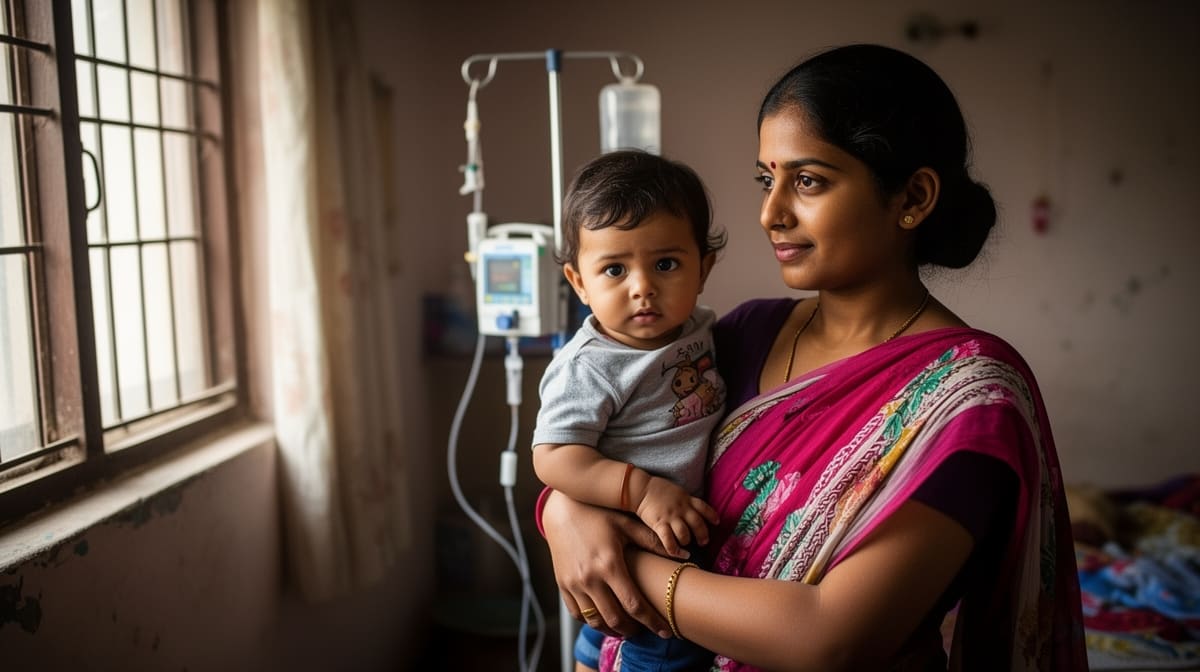
The Bombay High Court has reaffirmed that in all custody disputes, the welfare of the minor child is the sole and paramount consideration, superseding any presumption in favor of the natural father under personal law. This ruling clarifies that legal status alone cannot override the factual and emotional needs of the child.
Background & Facts
The Dispute
The present writ petition challenges an order dated 12.07.2023 passed by the Adhoc District Judge-1, Udgir, in Civil M.A. No. 35 of 2021, which granted custody of a minor boy to his biological father, the Respondent. The Petitioner, Mushir Yusuf Shaikh, is the maternal uncle of the child and has been the primary caregiver since the child’s mother died by suicide at her matrimonial home.
Key Facts
- The minor child was born to the Respondent and his deceased wife.
- The mother died by suicide at her matrimonial home, after which the child, then approximately three years old, came into the care of his maternal uncle, the Petitioner.
- At the time of the mother’s death, the Respondent and his family members were in judicial custody pending criminal proceedings initiated by the deceased wife’s parents.
- The Petitioner and his family have provided continuous care, shelter, education, and emotional support to the child since 2020.
- The Respondent was released from custody sometime after the child’s placement with the Petitioner.
- The child is currently between six and seven years of age.
- The Respondent is financially stable, educated, and from a well-established family.
- The Petitioner and his household are engaged in manual labor and frequently relocate for work.
Procedural History
- Date of mother’s death: Approximately 2020 (child aged ~3 years)
- 2021: Respondent filed Civil M.A. No. 35 of 2021 seeking custody of the minor
- 12.07.2023: Adhoc District Judge-1, Udgir, allowed the application and directed transfer of custody to the Respondent
- 15.07.2023: Writ Petition No. 10294 of 2023 filed before the Bombay High Court, Aurangabad Bench
- 01.07.2026: Final order passed by the High Court
The Parties' Positions
Petitioner’s Position: The child has lived with the Petitioner since infancy, forming strong emotional bonds. The Petitioner’s family provides consistent care despite economic hardship. The Respondent’s prior incarceration and absence during the child’s formative years undermine his claim to immediate custody.
Respondent’s Position: As the biological father, he is the natural guardian under Mohammedan Law and has an inherent right to custody. He is financially secure, educated, and capable of providing superior material and educational conditions.
Relief Sought
The Petitioner sought quashing of the order dated 12.07.2023 and continuation of custody with him, arguing that the child’s welfare is best served in his care.
The Legal Issue
The central question was whether the natural guardian status of a father under Mohammedan Law automatically entitles him to custody of a minor child, or whether the welfare of the child remains the overriding and decisive factor in all custody determinations.
Arguments Presented
For the Petitioner
The Petitioner’s counsel argued that custody is not a right but a responsibility, and must be determined by the child’s best interests. Citing Gaurav Nagpal v. Sumedha Nagpal, the counsel emphasized that emotional security, continuity of care, and the child’s attachment to the caregiver are critical. The Respondent’s prolonged absence during the child’s early years and the child’s established life with the Petitioner made disruption harmful. The court was urged to recognize de facto guardianship.
For the Respondent
The Respondent’s counsel contended that under Mohammedan Law, the father is the natural guardian with superior rights to custody, as affirmed in Mohd. Hanif v. State of Maharashtra. Financial stability, educational background, and social standing were presented as indicators of superior capacity to nurture the child. The District Court’s findings were argued to be well-reasoned and entitled to deference.
The Court's Analysis
The Court began by affirming the settled principle that in all matters concerning the custody of a minor, the welfare of the child is the paramount and overriding consideration. This principle is not displaced by any personal law, including Mohammedan Law, which may recognize the father as the natural guardian.
"The fact that the Respondent is the biological father does not, by itself, confer an absolute right to custody. The law requires the court to examine the actual circumstances of the child’s life, emotional bonds, and future prospects."
The Court noted that the District Judge had correctly applied the welfare test, evaluating the financial and educational capacity of both parties. However, the Court observed that the District Judge did not personally interact with the child, which is a standard practice in custody matters, especially when the child has reached an age of discernment.
The Court emphasized that while the Respondent’s financial and social advantages are relevant, they cannot override the child’s psychological attachment to the Petitioner, who has been the primary caregiver for over six years. The Court further noted that the child, now aged six to seven, is at a critical developmental stage where stability and familiarity are essential.
The Court held that the District Judge’s order, while legally sound in its reasoning, lacked a direct assessment of the child’s own views and emotional state. The Court declined to interfere with the substantive conclusion but imposed a procedural safeguard.
The Verdict
The writ petition was dismissed. The order dated 12.07.2023 directing transfer of custody to the Respondent is upheld, but its execution is stayed until the concerned court conducts a personal interaction with the minor child, aged six to seven years, to ascertain his wishes and emotional state. The court shall record the child’s views in camera and pass a final order in execution proceedings within four weeks of such interaction. Costs of Rs. 10,000 are awarded to the Petitioner.
What This Means For Similar Cases
Welfare Trumps Legal Status
- Practitioners must now argue that even under personal laws granting automatic guardianship rights, courts must conduct a holistic welfare assessment
- Natural guardian status is a starting point, not a conclusive presumption
- Evidence of emotional bonding, continuity of care, and child’s attachment must be systematically documented and presented
Judicial Interaction with the Child Is Mandatory
- Courts must now routinely interview minors aged five years and above in custody disputes
- The interview must be conducted in a child-friendly environment, recorded, and placed on record
- Failure to do so may render the order vulnerable to challenge on procedural grounds
Economic Advantage Alone Is Insufficient
- Financial stability, education, and social status are relevant but not determinative
- Courts must weigh these against the child’s psychological needs, routine, and attachment to caregivers
- A child’s emotional security in a modest but stable home may outweigh material advantages in a less nurturing environment